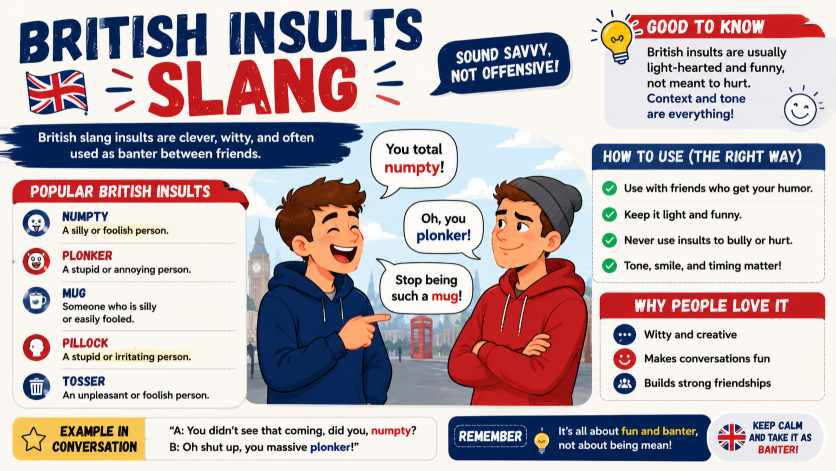
British insults slang refers to informal words and phrases that people in the UK use to tease, criticize, or jokingly insult someone. Some expressions are playful between friends, while others can be rude or offensive depending on the situation and tone.
If you’ve searched for British insults slang, you probably want to understand what these words mean, where they come from, and it’s safe to use them. This guide explains the most common British insult slang in simple English, with real-life examples, usage tips, and important context.
Quick Answer: British Insults Slang
British insults slang is a collection of informal UK expressions used to mock, tease, or criticize someone. Some are lighthearted and used among friends, while others are offensive and should be avoided in polite or professional conversations.
What Is British Insults Slang?
British insult slang includes casual words that describe someone’s behavior, personality, intelligence, or actions.
Not every British insult is meant to start an argument. Friends often use mild insults jokingly, especially when everyone understands the humor.
However, the same word can become offensive if said angrily or to someone you don’t know well. Context and tone are very important.
Common British Insults Slang
| Slang | Meaning | Tone |
| Muppet | A foolish or silly person | Mild |
| Numpty | Someone who makes silly mistakes | Mild |
| Plonker | A foolish person | Mild |
| Twit | A slightly silly person | Mild |
| Git | An annoying person | Mild to Moderate |
| Pillock | A person | Moderate |
| Berk | A foolish or annoying person | Mild |
| Tosser | An insulting word for an annoying person | Strong |
| Wally | A silly person | Mild |
| Knob | A rude insult for someone behaving badly | Strong |
What Do These British Insults Mean?
Muppet
Muppet describes someone acting in a silly or careless way.
Example:
“You forgot your keys again, you muppet.”
This is usually playful among friends.
Numpty
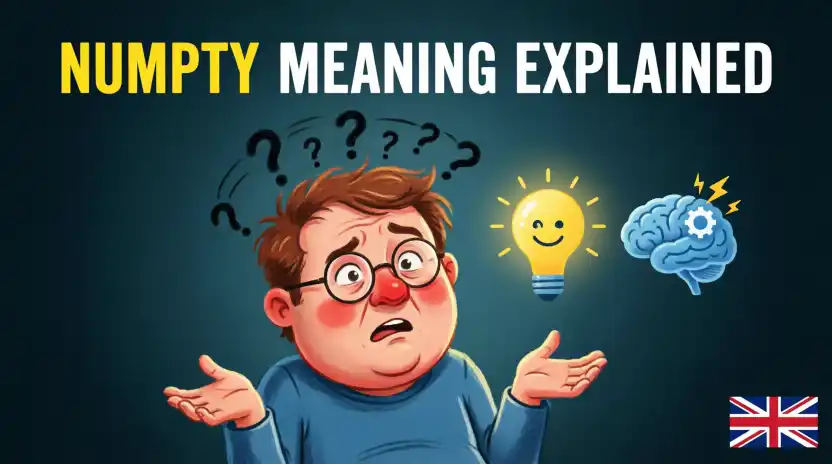
Numpty means someone who has done something foolish.
Example:
“Only a numpty would miss that easy question.”
Many people use it jokingly.
Plonke
A plonker is someone who behaves foolishly.
Example:
“Don’t be such a plonker.”
This word is common in British TV shows and everyday conversation.
Twit
A twit is a slightly silly person.
Example:
“You parked in the wrong place, you twit.”
It is generally considered a mild insult.
Git
Git describes someone who is annoying or unpleasant.
Example:
“He’s acting like a complete git today.”
Depending on tone, it can sound playful or genuinely rude.
Pillock
Pillock is a stronger way to call someone foolish.
Example:
“What a pillock! He left the tickets at home.”
Use it carefully because not everyone finds it friendly.
Berk
Berk means someone is acting foolishly.
Example:
“You silly berk.”
Many younger people recognize the word even if they don’t use it often.
Tosser
Tosser is a stronger British insult.
It usually describes someone who behaves selfishly, arrogantly, or annoyingly.
Example:
“That driver was a complete tosser.”
Avoid using this word in formal situations because many people consider it offensive.
Wally
A wally is someone behaving in a silly or clumsy way.
Example:
“You dropped your phone again, you wally.”
It is one of the lighter British insults.
Knob
Knob is a rude British insult for someone acting unpleasantly or selfishly.
Example:
“Stop being a knob.”
Because it can be offensive, it is best avoided unless you fully understand the situation and the people involved.
Where Is British Insults Slang Commonly Used?
These expressions appear in many informal situations, including:
- Everyday conversations
- British TV shows
- Comedy programs
- Football discussions
- TikTok videos
- Instagram comments
- YouTube videos
- Reddit discussions
- Discord chats
- Group text messages
Some insults are also common in British films and sitcoms, where they are often used for humor rather than serious arguments.
Is British Insults Slang Rude, Offensive, or Harmless?
It depends on the word, your tone, and the relationship between the speakers.
| Type | Examples | Should You Use It? |
| Mild | Muppet, Wally, Numpty, Twit | Usually safe among friends |
| Moderate | Git, Pillock, Berk | Use with caution |
| Strong | Tosser, Knob | Best avoided in polite or professional settings |
Even mild insults can upset someone if they are used with strangers or spoken angrily.
A good rule is this: if you are unsure someone will appreciate the joke, don’t use the insult.
Origin and History of British Insults Slang
British insults have developed over hundreds of years. Some words come from old English dialects, while others became popular through television, comedy shows, football culture, and everyday conversation.
Unlike internet slang, many British insults existed long before social media. However, platforms like TikTok, YouTube, Instagram, and Reddit have introduced these expressions to people around the world.
Many insults also vary by region. A word commonly heard in London may be less popular in Scotland, Wales, or Northern Ireland.
Why Do People Use British Insults Slang?
People often use British insults to:
- Joke with close friends
- Show frustration
- Tease someone playfully
- Add humor to conversations
- React to mistakes
- Express annoyance without using stronger swear words
In many British friendships, light insults can actually show familiarity rather than hostility. However, this depends entirely on the relationship and tone of voice.
British Insults on Social Media
British insults appear regularly on:
TikTok
Comedy creators and British influencers often use mild insults like muppet, numpty, and plonker for humorous videos.

Friends may use playful insults in captions and comments.
Example:
“Nice parking, you numpty 😂”
UK-focused communities frequently use British slang in discussions, football threads, and humorous stories.
Discord
Gamers sometimes jokingly call friends a muppet or wally after a mistake.
YouTube
British creators often include these expressions in gaming videos, reaction channels, and comedy content.
British Insults vs American Insults
| British Slang | Similar American Meaning |
| Muppet | Idiot / Goofball |
| Numpty | Dummy |
| Plonker | Fool |
| Wally | Silly person |
| Git | Jerk |
| Tosser | Jerk (stronger tone) |
| Pillock | Idiot |
| Berk | Fool |
The words are different, but many express similar ideas.
When Should You Avoid Using British Insults?
Avoid using British insult slang in:
- Job interviews
- Business meetings
- Professional emails
- School assignments
- Conversations with teachers
- Speaking to customers
- Formal presentations
- First meetings with strangers
Even mild slang can sound disrespectful if the listener is unfamiliar with British humor.
Similar British Slang Words
If you’re learning British English, you may also hear these expressions:
| Slang | Meaning |
| Mate | Friend |
| Bloke | Man |
| Cheeky | Slightly playful or bold |
| Gobsmacked | Very surprised |
| Chuffed | Very pleased |
| Knackered | Very tired |
| Dodgy | Suspicious or unreliable |
| Skint | Having little or no money |
| Gutted | Very disappointed |
| Lush | Excellent or lovely (common in some regions) |
These words are not insults, but they are common in everyday British conversations.
Common Misunderstandings
Every British person uses these insults.
False.
The UK has many regional dialects. Some words are common in England but rarely used elsewhere.
British insults are always offensive.
False.
Words like muppet, wally, and numpty are often playful among friends.
You can use them with anyone
Not always.
Using slang with strangers or in professional situations can cause misunderstandings.
Are British Insults Still Popular?
Yes.
Many classic insults remain common because they appear in:
- British television
- Comedy shows
- Football culture
- Social media
- Everyday conversations
However, newer generations may prefer internet slang alongside traditional British expressions.
Tips for Using British Insults Correctly
- Learn the meaning before using a word.
- Pay attention to the speaker’s tone.
- Use mild insults only with friends who understand the joke.
- Avoid stronger insults in public or professional settings.
- Remember that regional differences exist across the UK.
- When in doubt, choose polite language instead.
Understanding the context is just as important as knowing the definition.
Frequently Asked Questions
Q.1 What are British insults slang?
British insults slang are informal words and phrases people in the UK use to tease, criticize, or joke about someone. Some are playful, while others can be offensive depending on the situation and tone.
Q.2 Are British insults always offensive?
No. Many British insults are used jokingly between close friends. However, the same word can sound rude or insulting if used with strangers or in an argument.
Q.3 Can I use British insults at work?
It is usually best not to. Even mild slang can be misunderstood in professional settings. Use polite language at work, school, or formal events.
Q.4 Which British insults are considered mild?
Words like ignorant, plonker, muppet, numpty, and twit are generally seen as light-hearted in many situations. Even so, context and tone matter.
Q 5 Which British insults are stronger?
Terms such as wanker, bellend, and some stronger swear words are much more offensive. Avoid using them unless you fully understand the context and accept the risk of causing offense.
Q.6 Are British insults the same across the UK?
No. England, Scotland, Wales, and Northern Ireland all have their own local slang. Some words are common across the UK, while others are mainly regional.
Q.7Why do British people use insults as jokes?
British humor often includes playful teasing, sarcasm, and banter. Friends may use mild insults to show familiarity rather than anger. However, this style is not appropriate with everyone.
Q. 8Are British insults common on social media?
Yes. You may see them on TikTok, Instagram, X, Reddit, Discord, YouTube comments, and online gaming chats. Online conversations often use slang more casually than face-to-face communication.
Q.9 How can I tell if someone is joking?
Pay attention to:
- Their tone of voice
- Facial expressions
- Your relationship with them
- The conversation’s mood
. everyone is laughing
If you’re unsure, it’s safer not to copy or repeat the insult.
Q.10Should English learners use British insults?
It is better to learn what they mean before using them. Understanding slang helps you follow conversations, but using insults incorrectly can easily offend someone.
Conclusion
British insults slang is an important part of everyday British English and online culture. Some expressions are friendly jokes shared between close friends, while others are genuinely rude and should be avoided
. The meaning often depends on the speaker’s tone, the relationship between the people, and the situation.
If you’re learning English, focus first on understanding these words rather than using them. Knowing the context will help you enjoy British TV shows, social media, podcasts, and conversations without causing misunderstandings. When in doubt, choose polite language it’s always the safest option.
Read more about!
- Slaying Meaning Slang: Definition, Origin, Examples
- Honey Badger Meaning Slang: Definition, Origin & Examples
- Bitchin Slang: Meaning, Origin, Examples & How to Use It
- BTK Meaning Slang: Is It Common in Text Messages?

Daniel Brooks is an English vocabulary educator and content editor with experience creating educational resources about English words, idioms, and everyday communication. He reviews language content for clarity, accuracy, and readability to ensure readers receive reliable and easy-to-understand information.