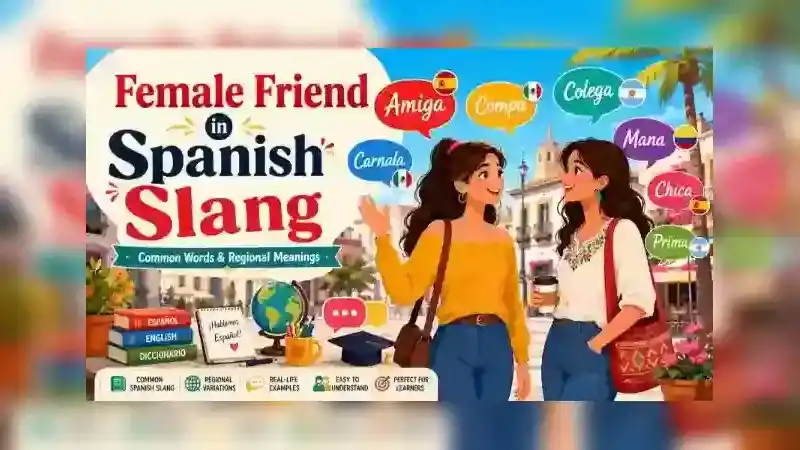
Female friend in Spanish slang is a phrase many people search for when they hear Spanish speakers using casual words in conversations, social media posts, movies, or songs.
If you’re learning Spanish or chatting with Spanish-speaking friends, you may notice that people don’t always use formal words like amiga. Instead, they often choose slang terms that sound more relaxed, friendly, or local.
The meaning of these slang words can change depending on the country, the relationship between the speakers, and the situation.
A word that is common in one Spanish-speaking country may sound unusual or even rude in another. Understanding these differences helps you communicate naturally while avoiding misunderstandings.
Whether you found these expressions on TikTok, Instagram, YouTube, Reddit, or while texting a friend, this guide explains what they mean, how people use them, and when they are appropriate.
Female Friend in Spanish
If you are searching for female friend in spanish, the standard word is amiga. The phrase female friend spanish usually refers to the Spanish translation of “female friend,” while my female friend in spanish can be translated as mi amiga. Regional slang may offer other options, but amiga is the clearest choice across Spanish-speaking countries.
Quick Answer
A female friend in Spanish slang is usually described with informal words such as amiga, comadre, morra, chama, piba, or mina, depending on the country. The correct slang depends on the region and the relationship between the speakers.
What Does Female Friend in Spanish Slang Mean in Text?
In everyday conversations, Spanish speakers often use slang instead of formal vocabulary. Rather than saying amiga every time, people may use local expressions that sound warmer, more natural, or more casual.
For example, teenagers texting each other may choose different slang than adults speaking at work. Likewise, people in Mexico, Argentina, Spain, and Venezuela often use completely different words for a female friend.
Some slang terms simply mean “female friend,” while others may also mean “girlfriend,” “girl,” or “young woman.” Because of this, context is very important.
Female Friend in Spanish Slang Full Form / Definition
Unlike internet abbreviations, female friend in Spanish slang does not have a full form.
Instead, it refers to informal Spanish words people use instead of the standard word amiga.
Some of the most common examples include:
| Slang | Common Region | Meaning |
| Amiga | All Spanish-speaking countries | Female friend |
| Morra | Mexico | Girl or female friend |
| Chama | Venezuela | Girl or female friend |
| Piba | Argentina | Young woman or female friend |
| Mina | Argentina, Uruguay | Girl or young woman |
| Comadre | Latin America | Close female friend, especially among families |
| Colega | Spain | Friend or colleague, depending on context |
Remember that these words are regional. A slang term popular in one country may not be common somewhere else.
Is Female Friend in Spanish Slang Rude, Offensive, or Neutral?
Most slang terms for a female friend are neutral or friendly when used correctly.
However, the tone depends on:
- The country
- The relationship
- The age of the speakers
- The situation
For example:
Friendly
- “Ella es mi amiga.”
- “Mi morra viene más tarde.” (Common in some parts of Mexico.)
Casual
Friends often use regional slang while texting or chatting online.
Potentially Offensive
Some words can sound disrespectful if used with strangers or in another country where the slang has a different meaning.
Because Spanish slang changes from place to place, it’s always safer to use amiga if you are unsure.
Where Is Female Friend in Spanish Slang Commonly Used?
These expressions appear in many informal situations, including:
- Everyday conversations
- Text messages
- TikTok videos
- Instagram captions
- YouTube content
- Reddit discussions
- WhatsApp chats
- Snapchat messages
- Online gaming communities
- Podcasts and interviews
- Latin music lyrics
- TV shows and movies
Young people are usually the biggest users of regional slang, although many expressions are also common among adults.
The exact slang depends on where the speaker comes from. Someone from Spain may choose a completely different word than someone from Mexico or Argentina.
Popular Spanish Slang Words for a Female Friend
1. Amiga
The standard and safest word for a female friend.
Example:
- Ella es mi mejor amiga.
- Mi amiga estudia conmigo.
2. Morra (Mexico)
A casual word for a girl or female friend.
It is common among younger speakers and in informal conversations.
3. Chama (Venezuela)
A friendly word meaning girl or young woman.
It is widely used in everyday speech.
4. Piba (Argentina)
This word refers to a young woman or female friend.
It is very common in Argentina.
5. Mina (Argentina & Uruguay)
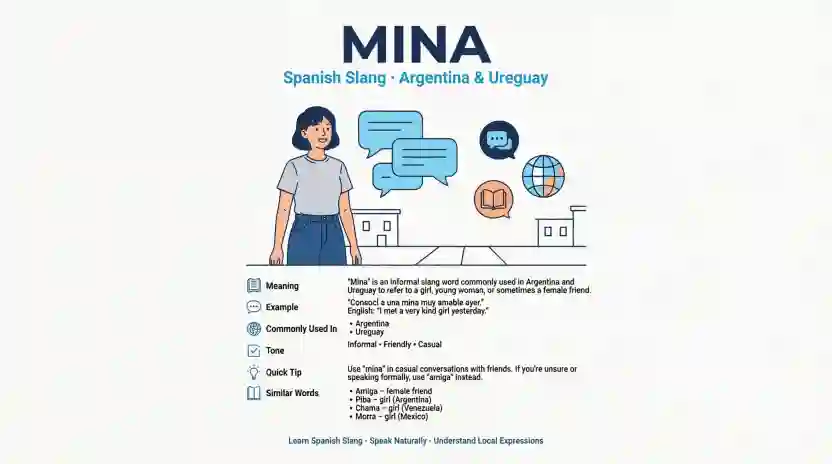
Depending on the context, mina may simply mean girl or young woman.
Because meanings can vary, it’s best to hear how native speakers use it before using it yourself.
Slang for Female Friend in Spanish
The best slang for female friend depends on the Spanish-speaking country. When talking about female friends in spanish, speakers may use regional expressions such as morra, piba, or chama
. If you want to say my friends in spanish female, the exact wording depends on whether you mean one female friend or a group of female friends.
Origin and Background of Female Friend in Spanish Slang
Spanish is spoken by hundreds of millions of people across many countries, including Spain, Mexico, Argentina, Colombia, Venezuela, Chile, Peru, and others. While the language is shared, each region has developed its own slang over time.
Many slang words come from local culture, history, music, television, and everyday conversations. Some expressions have been used for generations, while others became popular through social media, memes, and online videos.
For example:
- Morra is widely heard in Mexico.
- Piba is common in Argentina.
- Chama is popular in Venezuela.
- Mina is frequently used in Argentina and Uruguay.
These words all relate to girls or young women, but their exact tone and meaning depend on where they are used.
Why Do People Use Spanish Slang for a Female Friend?
People often choose slang because it sounds more natural and relaxed than formal language.
Common reasons include:
- It feels friendly.
- It matches local culture.
- It helps people sound more natural.
- Friends often use it in casual conversations.
- It creates a sense of belonging within a community.
However, native speakers usually know when to switch back to formal language in schools, workplaces, or professional settings.
Real-Life Examples of Usage
Friendly Conversation
Friend 1: Is Laura coming tonight?
Friend 2: Yes, she’s my amiga. She’ll be here soon.
Casual Text Message
Message:
“My morra is meeting us after class.”
(Common in parts of Mexico.)
Social Media Example
Instagram Caption:
“Weekend with my pibas ❤️”
This type of caption is common among close friends in Argentina.
Gaming Chat
Player 1:
“My amiga is joining the team.”
Player 2:
“Great! Let’s start.”
Group Conversation
“We’ve known each other since school. She’s more than a friend—she’s like family.”
Informal Family Conversation
“My comadre is visiting this weekend.”
Depending on the culture, comadre can describe a close female friend or a godparent relationship.
Comparison Table
| Word | Region | Formal or Informal | Notes |
| Amiga | All Spanish-speaking countries | Neutral | Safe everywhere |
| Morra | Mexico | Informal | Popular among younger speakers |
| Chama | Venezuela | Informal | Friendly everyday term |
| Piba | Argentina | Informal | Common for a young woman |
| Mina | Argentina, Uruguay | Informal | Meaning depends on context |
| Comadre | Latin America | Friendly | Often used for close family friends |
| Colega | Spain | Neutral | Friend or colleague |
When Should You Avoid Using These Slang Words?
Although these expressions are common, they are not always the best choice.
Avoid using regional slang when:
- You are speaking to someone in a formal business setting.
- You do not know the local meaning.
- You are talking to older people who prefer formal language.
- You are visiting a country where the slang has a different meaning.
- You are writing academic or professional documents.
If you are unsure, amiga is usually the safest option.
Polite Alternatives
Instead of regional slang, you can use:
- Amiga
- Compañera (female companion or classmate)
- Colega (colleague or friend)
- Amistad (friendship, depending on the sentence)
- Compañera de trabajo (female coworker)
- Compañera de clase (female classmate)
These words are widely understood and are less likely to cause confusion.
How to Say My Friend in Spanish Female
If you want to know my friend in spanish female, the natural phrase is mi amiga. For example, Ella es mi amiga means “She is my friend.” The word amiga identifies a female friend, while amigo is normally used for a male friend.
Impact of Using Slang in Communication
Using slang correctly can make your Spanish sound more natural and help you connect with native speakers.
Benefits include:
- Better understanding of movies and TV shows.
- Easier conversations with friends.
- Improved listening skills.
- Greater cultural awareness.
- More confidence in casual situations.
However, using slang without understanding its meaning can sometimes create awkward situations. Learning the local context is just as important as learning the word itself.
Is It Safe for Social Media?
In most cases, yes.
Words like amiga, piba, or chama are commonly seen in:
- Instagram captions
- TikTok comments
- WhatsApp chats
- Snapchat messages
- Facebook posts
- Reddit discussions
- YouTube comments
Still, remember that slang meanings vary by country. Before using a regional expression publicly, make sure it matches the audience you are speaking to.
Frequently Asked Questions (FAQs)
1. What does female friend in Spanish slang mean?
It refers to informal Spanish words used for a female friend instead of the standard word amiga. The exact slang depends on the country and local culture.
2. What is the most common Spanish slang for a female friend?
The answer varies by region. Some common examples include:
- Morra (Mexico)
- Chama (Venezuela)
- Piba (Argentina)
- Mina (Argentina and Uruguay)
If you are unsure which slang to use, amiga is the safest and most widely understood choice.
3. Is female friend in Spanish slang offensive?
Usually, no. Most of these expressions are friendly and informal when used in the right context. However, some regional slang may sound unusual or carry different meanings in other Spanish-speaking countries, so it’s important to understand the local usage.
4. What does female friend in Spanish slang stand for?
It does not stand for anything because it is not an abbreviation. Instead, it refers to informal words that Spanish speakers use for a female friend in everyday conversation.
5. Can I use these slang words while traveling?
Yes, but it’s best to learn the local expressions of the country you are visiting. A word that is common in Mexico may not be common in Spain or Argentina. When in doubt, use amiga, which is understood across the Spanish-speaking world.
6. Where can I hear these slang words?
You may hear them in:
- Everyday conversations
- TikTok videos
- Instagram Reels
- YouTube content
- WhatsApp messages
- Snapchat chats
- Reddit discussions
- TV shows
- Movies
- Music lyrics
Social media often spreads regional slang, but remember that meanings can vary depending on the speaker and location.
Quick Summary
Here are the key points to remember:
- Female friend in Spanish slang does not have one universal translation.
- Different countries use different informal words.
- Amiga is the safest and most widely accepted term.
- Regional slang like morra, chama, piba, and mina is common in specific countries.
- Always consider the local culture, audience, and situation before using slang.
- When speaking in professional or formal settings, standard Spanish is usually the better choice.
Conclusion
Understanding female friend in Spanish slang helps you communicate more naturally with Spanish speakers and better understand conversations on social media, in movies, and in everyday life. While informal expressihttps://dictionary
.org/dictionary/english/expressionons can make your Spanish sound more authentic, they should always be used with the right audience and in the right context.
Because slang changes from one country to another, there is no single word that works everywhere. Learning where each expression is commonly used will help you avoid misunderstandings and speak with greater confidence. If you’re ever unsure, amiga is the safest and most universally understood option.
Whether you’re learning Spanish for travel, school, work, or simply to enjoy conversations online, understanding regional slang is a valuable step toward becoming a more confident and culturally aware speaker.
Read more about!
- Perico Slang: Meaning, Origin, Uses & Examples
- Bitchin Slang: Meaning, Origin, Examples & How to Use It
- BTK Meaning Slang: Is It Common in Text Messages?
- Grape Slang Meaning: What Does Grape Mean in Slang?
- Birdie Slang Meaning: Everything You Need to Know

Daniel Brooks is an English vocabulary educator who creates simple, practical guides on slang, word meanings, and everyday English. His goal is to help students, writers, and English learners expand their vocabulary and communicate with confidence.