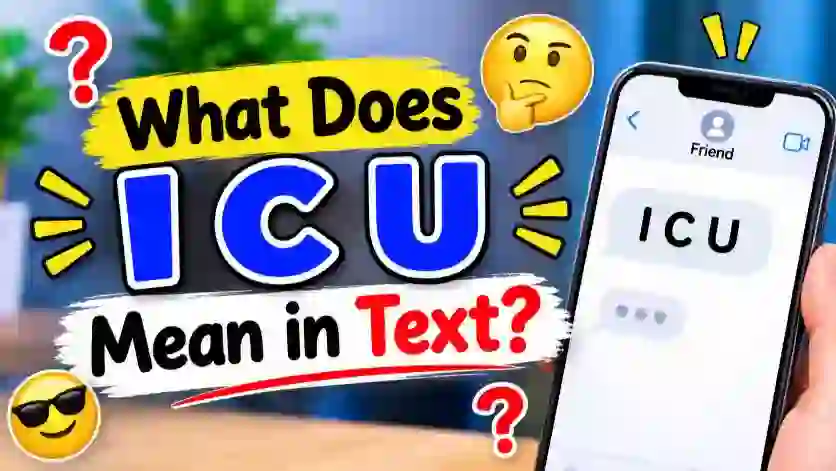
I C U means “I see you” in text messages. People use it to show they noticed someone, understand what they are doing, or recognize something about them. It can sound friendly, funny, playful, or serious, depending on the conversation.
You may see “I C U” in text messages, TikTok comments, Snapchat chats, Instagram captions, or WhatsApp conversations. It is a short way to say something without typing a full sentence.
For example, if your friend posts a great photo, you might reply, “I C U 👀.” This can mean you noticed their new look, style, or achievement.
However, the meaning can change with context. Sometimes it shows support, while other times it suggests that someone has noticed what another person is doing.
Quick Answer: I C U stands for “I see you.” It is an informal texting abbreviation that people use to show attention, recognition, support, or playful suspicion. The letters sound like the words when spoken aloud. It is usually harmless, but its tone depends on the message and relationship between the people chatting.
What Does I C U Mean in Text?
Simple Meaning of I C U
In texting, I C U means “I see you.”
It is a short expression that tells someone you have noticed them or something they have done.
People may use it when they:
- Notice a friend’s new style.
- Recognize someone’s achievement.
- Understand what another person means.
- Catch someone making a joke.
- Notice something surprising.
- Want to show friendly support.
For example:
A: Just got my first job!
B: I C U! Congratulations! 🎉
Here, the second person uses I C U to recognize and celebrate their friend’s success.
The phrase does not always mean someone is literally looking at another person. It can also mean they understand or recognize something.
Is I C U an Acronym or Slang?
I C U is best described as a texting abbreviation or phonetic shorthand.
Each letter sounds like a word:
- I = I
- C = See
- U = You
When you say the letters aloud, they sound like “I see you.”
Unlike many traditional acronyms, I C U does not create a new word from the first letters of a longer phrase. Instead, it uses letter sounds to replace complete words.
This style of writing has been part of online communication for many years.
Other examples include:
- C U = See you
- B4 = Before
- U = You
- R U = Are you
- L8R = Later
These shortened forms help people write quick messages in casual conversations.
Quick Answer Table
| Question | Answer |
| Meaning | I see you |
| Full form | I See You |
| Type | Texting shorthand |
| Tone | Friendly, playful, supportive, or serious |
| Used by | People of different ages |
| Platforms | TikTok, Snapchat, Instagram, WhatsApp, SMS |
| Offensive? | Usually no |
| Formal? | No |
| Common purpose | Showing attention or recognition |
Does I C U Have Other Meanings?
Yes. The meaning depends on how the letters appear and where you see them.
In healthcare, ICU means “Intensive Care Unit.” This is a hospital department that provides specialized care for seriously ill patients.
In casual messages, however, spaced letters such as “I C U” often mean “I see you.”
For example:
Text message: “I C U showing off your new shoes!”
Meaning: Someone noticed the shoes.
Hospital conversation: “She was moved to the ICU.”
Meaning: Intensive Care Unit.
The surrounding words usually make the intended meaning clear.
Where Do People Use I C U?

People use I C U in informal digital conversations. It can appear in private messages, comments, captions, and group chats.
The meaning is generally similar across platforms, but the situation can change how it sounds.
I C U on TikTok
On TikTok, someone might use I C U in a comment to recognize a creator’s outfit, dance, joke, or achievement.
For example:
Creator: Finally learned this dance!
Comment: I C U! You did great! 🔥
Here, the phrase shows support and appreciation.
Sometimes, it can also suggest playful suspicion.
Comment: I C U trying to hide that smile 👀
This means the commenter noticed something that the other person may have wanted to keep private.
I C U on Snapchat
Snapchat users may send I C U when reacting to a photo, story, or casual message.
For example:
A: Posts a photo wearing a new jacket.
B: I C U with the new style!
The message means the friend noticed the new jacket and is giving a friendly compliment.
The phrase may also appear in playful conversations between friends.
I C U on Instagram
Instagram users may write I C U in comments or direct messages.
It can show appreciation for someone’s style, creativity, or success.
For example:
Caption: Finally finished my art project.
Comment: I C U! Amazing work!
In this example, the phrase recognizes the person’s effort.
However, I C U is not a special Instagram feature or an official platform term. It is simply informal language that users may choose to write.
I C U on WhatsApp
On WhatsApp, people can use I C U in personal conversations and group chats.
For example:
A: I finished all my homework early today.
B: I C U being productive!
This is a friendly way to recognize someone’s good habits.
Because WhatsApp conversations often involve friends and family, the phrase can sound relaxed and natural.
I C U in SMS Text Messages
I C U can also appear in regular SMS messages.
Shortened spellings became useful when typing on older mobile phones took more time and effort.
For example:
A: I finally passed my driving test!
B: I C U! Great job!
The response shows recognition and support.
Platform Usage Comparison
| Platform | Common Use | Example |
| TikTok | Noticing a video or trend | I C U doing that dance! |
| Snapchat | Reacting to a story | I C U with the new shoes! |
| Complimenting a post | I C U! Great photo! | |
| Friendly conversation | I C U working hard! | |
| SMS | Quick personal message | I C U! Well done! |
These are possible uses, not platform-specific definitions.
10 Real Chat Examples of I C U in Text
Understanding a slang expression becomes easier when you see how people might use it in everyday conversations.
Here are ten realistic examples showing different situations.
Example 1: Complimenting a Friend
A: I finally bought the jacket I wanted.
B: I C U! Looking stylish!
A: Thanks! I’ve wanted it for months.
Meaning: The friend notices and compliments the new jacket.
Example 2: Celebrating Good Grades
A: Guess what? I got an A on my science test!
B: I C U! All that studying worked!
A: It really did!
Meaning: I C U recognizes someone’s achievement.
Example 3: Playful Suspicion
A: I definitely didn’t eat the last cookie.
B: I C U acting innocent 👀
A: Okay, maybe I ate it.
Meaning: The phrase shows playful suspicion.
Example 4: Reacting to a New Haircut
A: Just got a haircut. What do you think?
B: I C U with the fresh look!
A: Thanks! I like it too.
Meaning: The friend notices the change and offers a compliment.
Example 5: Gaming Conversation
A: I finally reached the next level!
B: I C U improving your skills!
A: I’ve been practicing a lot.
Meaning: The phrase recognizes progress in a game.
Example 6: School Project
A: Our teacher picked my project for the display.
B: I C U! Your hard work paid off.
A: I’m so happy!
Meaning: I C U shows encouragement.
Example 7: Instagram Post
A: Did you see my new photo?
B: Yes! I C U with that cool background!
A: The place was amazing.
Meaning: The friend notices a detail in the photo.
Example 8: Funny Conversation
A: I’m not excited about the weekend.
B: I C U already packing your bag 😂
A: Okay, I’m a little excited.
Meaning: The phrase is used as a playful joke.
Example 9: Recognizing Kindness
A: I helped my neighbor carry some groceries.
B: I C U being helpful!
A: It only took a few minutes.
Meaning: The message recognizes someone’s kind action.
Example 10: Friendly Support
A: I was nervous, but I gave my speech today.
B: I C U being brave! Proud of you!
A: Thank you! It went better than I expected.
Meaning: I C U acknowledges effort and offers support.
What These Examples Show
I C U does not have one fixed emotional tone.
In some conversations, it is a compliment. In others, it is a joke or a way to show that someone has noticed something.
To understand the message correctly, look at the words before and after it.
How to Reply When Someone Says “I C U”
You do not need a special response when someone sends I C U.
Your reply should match the tone of the conversation.
If the message is friendly, you can thank the person. If it is playful, a funny response may work better.
Funny Replies
Use these when a friend is joking with you.
- “Haha, you caught me! 😂”
- “Nothing gets past you!”
- “I was trying to be sneaky!”
- “You’ve got sharp eyes! 👀”
- “Pretend you didn’t notice!”
For example:
A: I C U taking another snack!
B: Haha, you caught me!
This keeps the conversation light and funny.
Casual Replies
These work well in normal conversations.
- “Haha, yeah!”
- “You noticed!”
- “For sure!”
- “Yep, that’s me.”
- “I guess you did!”
For example:
A: I C U with the new backpack!
B: You noticed!
The reply is simple and natural.
Friendly Replies
Choose these when someone is giving you a compliment or showing support.
- “Thank you!”
- “That means a lot!”
- “I appreciate it!”
- “Thanks for noticing!”
- “You’re so kind!”
For example:
A: I C U working hard on your project!
B: Thanks for noticing!
This shows appreciation.
Neutral Replies
Neutral replies are useful when you do not know if the person is joking or being serious.
- “Okay.”
- “I understand.”
- “What do you mean?”
- “Thanks.”
- “Can you explain?”
For example:
A: I C U.
B: What do you mean?
This is a good response when the message is unclear.
Best Replies by Situation
| Situation | Suggested Reply |
| Someone compliments you | Thanks for noticing! |
| Someone makes a joke | Haha, you caught me! |
| Someone supports you | I appreciate it! |
| Someone notices your achievement | Thank you! |
| The message is unclear | What do you mean? |
| You want a simple response | Haha, yeah! |
The best response depends on the relationship and the message’s tone.
Is I C U Rude or Offensive?
Is I C U a Bad Word?
No. I C U is not normally a bad word or an offensive expression.
Its usual meaning, “I see you,” is harmless.
People often use it to recognize someone’s actions or give friendly attention.
However, a harmless phrase can still sound uncomfortable in the wrong situation.
When Can I C U Sound Rude?
The phrase may sound unfriendly if someone uses it to accuse, mock, or intimidate another person.
For example:
Friendly: “I C U helping everyone today!”
This sounds supportive.
Uncomfortable: “I C U. I know what you’re doing.”
This may sound suspicious or threatening, depending on the situation.
The difference comes from context, not the letters themselves.
Is I C U Safe to Use on Social Media?
Yes, I C U is generally safe to use in ordinary social media conversations.
It can work well when complimenting friends, celebrating achievements, or making harmless jokes.
Still, avoid using it to make someone feel watched or uncomfortable.
If a message could be misunderstood, write the full phrase or explain what you mean.
Is I C U Appropriate at School?
I C U can be fine in casual conversations with classmates.
For example:
“I C U working hard on that project!”
This sounds encouraging.
However, formal school assignments usually require standard English.
Instead of writing I C U in an essay, use a clearer expression such as:
“I noticed your effort.”
Is I C U Appropriate at Work?
In a relaxed workplace chat, some coworkers may understand the expression.
However, it is better to avoid informal shorthand in professional emails, reports, or messages to unfamiliar people.
For example:
Informal: “I C U doing great work!”
Professional: “I noticed your excellent work on this project.”
The second sentence is clearer and more suitable for formal communication.
Who Uses I C U in Text Messages?
Do Gen Z Users Say I C U?
Some Gen Z users may use I C U in texting and social media conversations.
However, it is not an expression that belongs only to Gen Z.
The letter-based spelling is part of an older style of digital shorthand, and people from different age groups may recognize it.
It would also be inaccurate to describe I C U as a major new Gen Z trend without reliable evidence.
Do Teenagers Use I C U?
Teenagers may use I C U when chatting with friends, especially when making jokes or reacting to posts.
For example:
“I C U getting better at basketball!”
This can sound encouraging and casual.
Still, many people simply write “I see you” instead of using the shortened spelling.
Do Adults Use I C U?
Yes. Adults may recognize or use this shorthand, particularly if they are familiar with older texting styles.
However, the full phrase is often clearer in everyday writing.
The choice depends more on personal habits and the conversation than on age.
Is I C U Popular Online?
“I see you” is a familiar English expression, but there is no reliable basis for claiming that the exact spelling “I C U” is among today’s most popular slang terms.
It can appear in online conversations, yet its frequency may vary by community and platform.
Some people prefer “ICU,” while others write “I C U” or simply “I see you.”
Who Is Most Likely to Understand It?
People familiar with English texting shortcuts are more likely to understand I C U immediately.
Someone who is new to internet slang may confuse it with the medical abbreviation ICU.
For that reason, writing the full phrase is sometimes the better choice.
Origin of I C U in Texting
Where Did I C U Come From?
I C U comes from a simple idea: replacing words with letters that sound like them.
The letter C sounds like “see,” and U sounds like “you.”
Together, the letters form the phrase “I see you.”
This kind of spelling is called phonetic shorthand because it relies on sound.
It is related to other informal forms such as “C U” for “see you” and “R U” for “are you.”
Connection to Early Text Messaging
Shortened spellings became especially useful during the early years of mobile texting.
Older mobile phones often had small keyboards or number pads, making long messages slower to type.
Some SMS services also had message-length limits.
As a result, users often shortened words and phrases to save time and space.
Examples included:
- U instead of you.
- R instead of are.
- C instead of see.
- 2 instead of to or too.
- 4 instead of for.
I C U follows the same basic pattern.
However, this does not prove exactly when the expression first appeared.
Did Social Media Create I C U?
No clear evidence shows that TikTok, Instagram, or Snapchat created the expression.
The spelling fits a much older tradition of English letter-based shorthand.
Social media gives people more places to use and share informal language, but the basic idea predates today’s major social platforms.
Is the Exact Origin Known?
The exact first use of I C U as texting shorthand is not clearly documented.
It is reasonable to connect the expression to phonetic writing and early digital communication.
However, naming a specific creator, year, or platform would be speculative without a trustworthy historical source.
I C U vs. IDK, IDC, IMO, and BRB
I C U is different from many common texting abbreviations because its letters sound like complete words.
Other abbreviations usually use the first letters of a longer phrase.
Texting Slang Comparison Table
| Term | Meaning | Type | Usage | Popularity |
| I C U | I see you | Phonetic shorthand | Recognition or attention | Less established as a common shorthand |
| IDK | I don’t know | Initialism | Showing uncertainty | Very common |
| IDC | I don’t care | Initialism | Showing lack of concern | Common |
| IMO | In my opinion | Initialism | Sharing an opinion | Common |
| BRB | Be right back | Initialism | Announcing a short absence | Very common |
Popularity labels are general observations, not measured rankings.
I C U vs. IDK
I C U means “I see you,” while IDK means “I don’t know.”
These expressions serve different purposes.
Example:
A: Did you notice my new shoes?
B: I C U!
Here, the person noticed something.
Another example:
A: Where is my notebook?
B: IDK.
Here, the person does not know the answer.
I C U vs. IDC
IDC stands for “I don’t care.”
It may sound dismissive in some conversations.
I C U usually shows that someone has noticed or recognized something.
For example:
“I C U working hard!”
This sounds supportive.
“IDC about your project.”
This may sound unfriendly.
I C U vs. IMO
IMO means “In my opinion.”
People use it when sharing personal views.
For example:
“IMO, this movie is great.”
I C U is not mainly about giving opinions. Instead, it is about noticing or recognizing something.
I C U vs. BRB
BRB stands for “Be right back.”
It tells someone that you are leaving a conversation for a short time.
For example:
“BRB, getting some water.”
I C U does not communicate an absence. It communicates attention or recognition.
Which Abbreviation Should You Use?
Choose the abbreviation that matches your message.
If you want to recognize someone’s effort, I C U may work in a casual conversation.
If you do not know something, IDK is more suitable.
Real-World Usage of I C U
A Simple School Situation
Imagine two classmates, Emma and Ryan.
Emma has been practicing for a school presentation. She feels nervous because speaking in front of people is difficult for her.
After several days of preparation, she gives her presentation successfully.
Later, Ryan sends her a message.
Ryan: Hey, your presentation was really good today!
Emma: Thanks! I was nervous.
Ryan: I C U working hard! It paid off.
Emma: Thank you! I’m glad I practiced.
In this situation, I C U means that Ryan noticed Emma’s effort and wants to encourage her.
He is not literally saying that he can see her at that moment.
Instead, he is recognizing something positive about her actions.
Why the Phrase Works Here
The expression fits because the two classmates already know each other.
The message is friendly, and the surrounding words make the meaning clear.
If Ryan had written only “I C U” without any explanation, Emma might have been unsure what he meant.
This shows why context matters when using shortened expressions.
Another Everyday Situation
Imagine that a friend posts a photo of a handmade birthday card.
Someone comments:
“I C U putting so much effort into that card!”
The comment recognizes the person’s creativity and care.
A simple reply could be:
“Thank you! I spent all afternoon making it.”
This is an example of how the phrase can support a positive conversation.
Common Mistakes People Make With I C U
Mistake 1: Confusing I C U With ICU
The most common source of confusion is the medical abbreviation ICU.
In healthcare, ICU means Intensive Care Unit.
In informal texting, I C U may mean “I see you.”
The context usually helps you tell the difference.
Mistake 2: Thinking It Always Means Something Romantic
I C U does not automatically express romantic interest.
A friend, classmate, family member, or coworker might use it simply to acknowledge something.
For example:
“I C U getting better at drawing!”
This is a compliment, not necessarily a romantic message.
Mistake 3: Assuming It Is Always Friendly
Although I C U often sounds friendly, it can also sound suspicious or uncomfortable.
For example:
“I C U trying to change the subject.”
This may be a joke or a serious observation.
Read the full conversation before deciding.
Mistake 4: Using It in Formal Writing
I C U is informal shorthand.
It is not the best choice for school essays, official letters, professional reports, or formal emails.
Instead, write the full phrase or choose more precise wording.
Mistake 5: Assuming Everyone Understands It
Not everyone knows what I C U means.
Some readers may think of a hospital ICU or simply find the message confusing.
If clarity matters, write “I see you” instead.
Similar Slang and Alternatives to I C U
Other Short Texting Expressions
Several texting shortcuts use letters or numbers to represent sounds.
| Expression | Meaning | Example |
| C U | See you | C U tomorrow! |
| C U L8R | See you later | C U L8R! |
| U | You | How are U? |
| R U | Are you | R U ready? |
| B4 | Before | Call me B4 dinner. |
| ILY | I love you | ILY, Mom! |
These expressions show how digital communication often favors short, easy-to-type messages.
Friendly Alternatives to I C U
If you want to sound more natural or avoid confusion, you can use:
- “I noticed!”
- “Look at you!”
- “Nice work!”
- “Good job!”
- “I see what you mean.”
- “That’s impressive!”
- “You did great!”
For example, instead of writing:
“I C U improving!”
You could say:
“Nice work! You’re improving!”
Both messages recognize progress, but the second is clearer.
When Should You Use the Full Phrase?
Use “I see you” when you want the message to be easy to understand.
For formal or sensitive situations, an even more specific sentence may be better.
For example:
“I noticed how much effort you put into this.”
This avoids confusion and communicates appreciation directly.
Why Do People Use I C U in Text?
It Saves Typing Time
One reason people use shorthand is convenience.
Typing three letters can be faster than writing a complete phrase.
This was especially useful with older mobile phones, but people still use shortened spellings today.
It Can Make a Message Feel Playful
Informal spelling may make a conversation sound relaxed.
For example:
“I C U with those dance moves! 😂”
This feels different from a formal sentence such as:
“I noticed your dancing skills.”
The shorter version can sound more playful.
It Shows Recognition
Another reason is to acknowledge something about another person.
Someone may use I C U to recognize a friend’s success, effort, or funny behavior.
This makes the phrase useful for casual encouragement.
It Matches Informal Online Language
Social media conversations often include emojis, abbreviations, and shortened expressions.
I C U fits this style because it is brief and easy to combine with other words.
However, it is not necessary to use slang to sound friendly or natural online.
When Should You Avoid Using I C U?
In Serious Conversations
If someone is discussing a serious problem, a short expression may not communicate enough care or understanding.
Instead of writing only “I C U,” consider saying:
“I understand what you’re saying.”
This gives the other person a clearer response.
With People Who May Misunderstand It
If someone is unfamiliar with texting slang, write the complete phrase.
For example:
“I noticed your new artwork. It looks great!”
This is easier to understand than:
“I C U!”
In Professional Communication
Formal messages should use clear language.
Avoid I C U in business emails, job applications, school reports, and official documents.
When It Could Sound Threatening
Do not use I C U to make someone feel watched, followed, or unsafe.
A message such as “I C U” without context may sound unsettling to someone who does not know your intention.
Friendly communication should be clear and respectful.
Key Takeaways About I C U
Here are the most important points to remember:
- I C U means “I see you” in casual texting.
- It is a form of phonetic shorthand.
- People may use it to show attention, support, or playful suspicion.
- It can appear on TikTok, Snapchat, Instagram, WhatsApp, and SMS.
- It is not usually rude or offensive.
- The tone depends on the conversation.
- ICU can also mean Intensive Care Unit in a medical setting.
- The exact origin of the texting expression is uncertain.
- It is better to avoid informal shorthand in professional writing.
- When in doubt, ask what the sender means.
The main thing to remember is that I C U is a short expression whose meaning depends on context.
Frequently Asked Questions
1. What Does I C U Mean in Text Messages?
I C U usually means “I see you” in text messages. People use it to show that they noticed someone’s actions, understand something, or recognize an achievement. It can sound friendly, playful, or serious depending on the conversation.
2. What Does I C U Mean on TikTok?
On TikTok, I C U can mean “I see you.” Someone might use it in a comment to compliment a creator’s video, recognize a dance move, or make a playful observation. The phrase is not an official TikTok feature or platform-specific term.
3. Is I C U Slang?
Yes. I C U is a form of informal texting shorthand. Its letters sound like the words “I see you.” People may use it in casual messages and social media conversations, but it is not suitable for most formal writing.
4. Is I C U Rude or Offensive?
I C U is not normally rude or offensive. It often expresses friendly attention or recognition. However, it can sound uncomfortable if someone uses it in a threatening, mocking, or accusatory way. The surrounding words help determine the tone.
5. How Should You Reply to I C U?
You can reply with “Thanks for noticing!”, “Haha, you caught me!”, or “I appreciate it!” depending on the situation. If you do not understand the message, simply ask, “What do you mean?” A clear response is always better than guessing.
6. Does I C U Mean I See You?
Yes. In informal texting, I C U is a shortened way to write “I see you.” The letters C and U sound like “see” and “you.” The phrase may express recognition, understanding, or playful attention.
7. What Is the Difference Between I C U and ICU?
I C U can mean “I see you” in casual messages. ICU is also the standard abbreviation for “Intensive Care Unit” in hospitals. Since people may write the letters without spaces, the surrounding conversation is important for understanding the intended meaning.
8. Is I C U a Gen Z Slang Term?
Some Gen Z users may understand or use I C U, but the expression is not exclusive to their generation. It follows an older style of letter-based texting shorthand. There is no clear evidence that it originated with Gen Z.
Conclusion
I C U means “I see you” in informal text messages. It is a simple form of shorthand that uses letters to represent the sounds of complete words.
People may use the expression to recognize a friend’s achievement, compliment someone’s style, acknowledge their effort, or make a playful joke. It can appear in SMS conversations and on platforms such as TikTok, Snapchat, Instagram, and WhatsApp.
Although I C U is usually harmless, its meaning depends on the situation. A friendly message may sound supportive, while an unclear message can sometimes feel uncomfortable.
It is also important to remember that ICU has a different meaning in healthcare, where it stands for Intensive Care Unit.
For casual chats with people who understand texting shortcuts, I C U can be a quick and playful expression. However, when clarity matters, especially in school assignments, professional messages, or serious conversations, writing the full phrase is the better choice.
Read more about!
- What Does HYH Mean in Text? Meaning & Examples
- What Does DWAI Mean in Text? Real Meaning, Examples & Social Media Use
- What Does HYHY Mean in Text? Meaning, Examples & Usage

Daniel Brooks is an English vocabulary educator and content editor with experience creating educational resources about English words, idioms, and everyday communication. He reviews language content for clarity, accuracy, and readability to ensure readers receive reliable and easy-to-understand information.