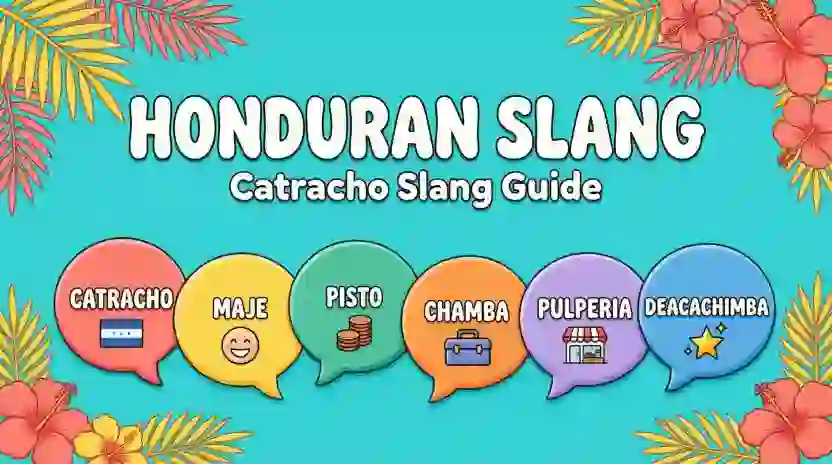
Honduran slang refers to the informal words and expressions commonly heard in Honduras. These terms can make everyday Spanish sound very different from the Spanish taught in textbooks.
Words such as maje, pisto, cipote, catracho, and chamba are useful examples because their meanings may not be obvious to someone who knows only standard Spanish.
People search for Honduran slang to understand conversations, social media posts, messages, travel conversations, and Spanish spoken by Honduran friends or family members.
Some expressions are friendly, while others depend heavily on tone and context. This guide explains the most useful examples in simple English, including their meanings, common uses, and situations where a more neutral Spanish word is better.
Quick Answer:
Honduran slang is the informal vocabulary and expressions used in everyday Honduran Spanish.
It includes casual words for people, money, work, friends, children, agreement, and everyday situations.
What Does Honduran Slang Mean?
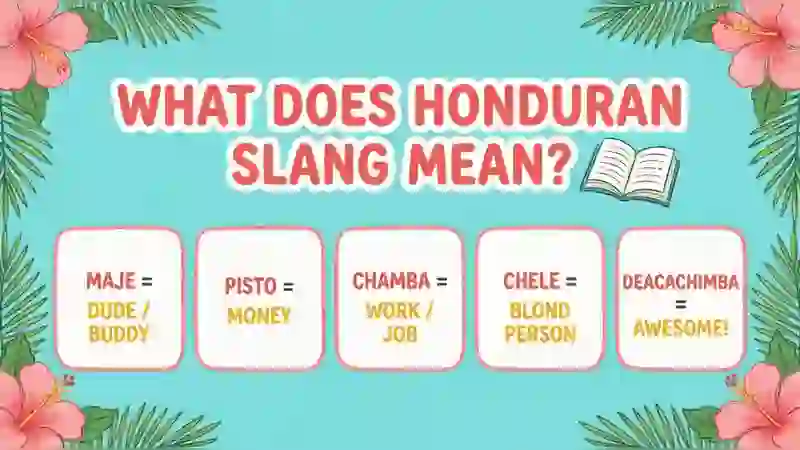
Honduran slang is the casual language used by many people in Honduras in everyday conversation. It is not one single word or phrase. Instead, it is a broad group of regional expressions that can differ from standard Spanish.
Honduran Spanish vs. Standard Spanish
A person may understand Spanish grammar perfectly and still have trouble following a casual Honduran conversation. That happens because regional vocabulary can change the meaning of familiar words.
For example:
- Pisto can mean money.
- Maje can mean dude, friend, or sometimes fool.
- Cipote/cipota can mean a child or young person.
- Chamba can mean work or a job.
- Catracho/catracha refers to a Honduran person.
- Alero/alera can refer to a close friend.
These words are especially useful when trying to understand informal conversations rather than formal writing.
Why Context Matters
Not every Honduran expression has the same meaning everywhere. Some words are also used in neighboring Central American countries.
Tone matters too. For example, maje can be friendly between close friends but can sound insulting when used toward someone in the wrong situation.
Common Honduran Slang Words and Their Meanings
The following words are among the useful expressions learners may encounter in Honduran Spanish.
1. Maje — Dude or Friend
Maje is a very common informal word in Honduras. Depending on the situation, it can mean dude, guy, friend, or mate.
Among friends, it can sound natural and relaxed. However, it can also refer to someone as a fool or idiot when the speaker uses a negative tone.
Example:
“¿Qué onda, maje?”
Meaning: “What’s up, dude?”
2. Pisto — Money
Pisto is an informal Honduran word for money or cash. It is one of the most recognizable examples of regional Honduran vocabulary.
Example:
“No tengo pisto hoy.”
Meaning: “I don’t have any money today.”
3. Catracho / Catracha — Honduran Person
Catracho for a man and catracha for a woman are informal terms used to refer to someone from Honduras. The words often carry a sense of national identity or pride.
Example:
“Soy catracho.”
Meaning: “I’m Honduran.”
Unlike an insult, catracho is normally a positive or familiar identity term.
4. Cipote / Cipota — Kid or Young Person
Cipote generally refers to a boy, child, or young person, while cipota can refer to a girl or young person. The terms are also found elsewhere in Central America, so they are not exclusive to Honduras.
Example:
“Ese cipote es mi sobrino.”
Meaning: “That kid is my nephew.”
5. Chamba — Job or Work
Chamba is an informal word for work, employment, or a job. It is useful in casual conversations about working or looking for employment.
Example:
“Estoy buscando chamba.”
Meaning: “I’m looking for work.”
6. Alero — Close Friend
Alero can refer to a close friend or someone who is always on your side. The feminine form alera may also be used.
Example:
“Él es mi alero.”
Meaning: “He’s my close friend.”
7. Macizo — Cool or Awesome
In Honduran usage, macizo can describe something that is cool, impressive, excellent, or solid.
Example:
“Ese carro está macizo.”
Meaning: “That car is awesome.”
8. Paja — Nonsense or a Lie
Paja can be used informally for nonsense, a lie, or something someone is saying that should not be taken seriously.
Example:
“No me digás paja.”
Meaning: “Don’t tell me nonsense.”
This expression is casual, so it is better suited to informal conversation.
9. Cheque — Okay or All Right
In some Honduran conversations, cheque can be used to mean okay, fine, or all right.
Example:
“Nos vemos mañana, ¿cheque?”
Meaning: “See you tomorrow, okay?”
10. Yuca — Difficult or Tough
Yuca can describe something that is difficult, tough, or challenging. It may also describe someone who is strict.
Example:
“El examen estuvo yuca.”
Meaning: “The exam was really hard.”
Where Is Honduran Slang Commonly Used?
Honduran slang is mainly heard in informal communication. It can appear in spoken conversations, text messages, social media posts, and casual interactions.
Everyday Conversation
Friends and family may use regional words naturally without thinking of them as special slang.
A person might use maje with a friend or pisto when talking about money.
Texting and Social Media
Informal regional expressions can also appear in messages and social media conversations. However, usage varies from person to person.
Someone who lives in Honduras may use more local vocabulary than a Honduran living abroad.
Online Communities
Honduran users may bring local expressions into online communities, including comments, group chats, and casual posts. The meaning usually becomes clear from the surrounding sentence.
Formal Communication
Regional slang is generally less suitable for formal documents, academic writing, job applications, or professional emails.
For example, dinero is safer than pisto in a formal document, while trabajo is more neutral than chamba.
Is Honduran Slang Rude or Offensive?
Most Honduran slang is not automatically rude. The tone depends on the specific word, the relationship between speakers, and the situation.
Friendly Expressions
Words such as catracho, alero, and macizo can have positive or friendly meanings.
Words That Need More Care
Maje is a good example of a context-sensitive term. Between close friends, it can sound like “dude” or “bro.” In another situation, it may sound disrespectful.
Descriptive Terms
Chele is used in Honduras to describe someone with light skin or light features. Sources describing Honduran usage generally present it as a descriptive regional term, but appearance-based labels can still feel personal depending on the speaker and listener.
When speaking with someone you do not know well, neutral language is usually the safer choice.
Real-Life Examples of Honduran Slang
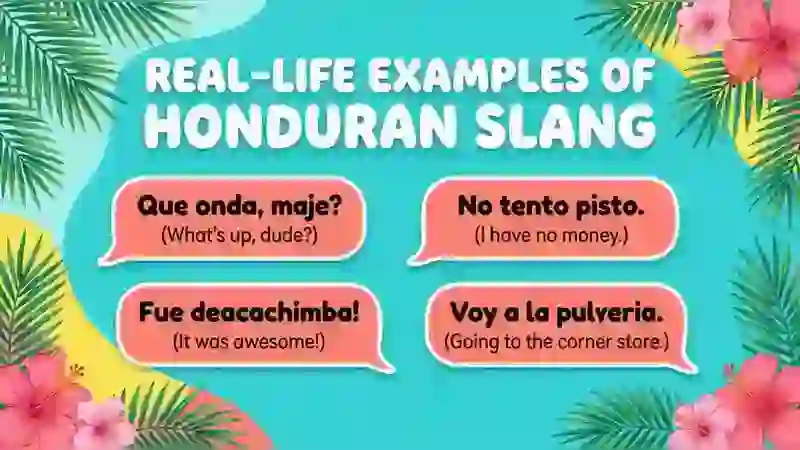
Seeing slang in complete sentences makes the meaning much easier to understand.
Friendly Conversation
“¿Qué onda, maje?”
Meaning: “What’s up, dude?”
This sounds casual and works best between people who are comfortable with each other.
Talking About Money
“No tengo pisto para salir.”
Meaning: “I don’t have money to go out.”
Here, pisto simply replaces the more standard dinero.
Talking About Work
“Tengo que ir a la chamba.”
Meaning: “I have to go to work.”
The expression is informal and conversational.
Talking About a Friend
“Mi alero viene conmigo.”
Meaning: “My close friend is coming with me.”
Talking About Something Difficult
“Este proyecto está yuca.”
Meaning: “This project is difficult.”
Talking About Something Cool
“Ese lugar está macizo.”
Meaning: “That place is really cool.”
These examples show why translating individual words is not always enough. The surrounding sentence gives the expression its practical meaning.
Origin and Background of Honduran Slang
Honduran Spanish developed through contact between Spanish and the languages and cultures present in Honduras. Regional vocabulary also reflects contact among different communities and neighboring Central American varieties.
The Word “Catracho”
One of the best-known Honduran identity terms is catracho. Modern explanations connect the word to Florencio Xatruch, a nineteenth-century Honduran military figure. His surname is commonly given as the historical source behind the nickname.
Indigenous and Regional Influences
Honduran Spanish has been influenced by Indigenous languages and by contact with other linguistic communities. Sources note influences involving languages and communities connected with Nahuatl, Lenca, Maya Chortí, Tolupán, Garifuna, and English-speaking Creole communities.
This is one reason Honduran vocabulary can have a distinct local flavor even though the main language is Spanish.
Honduran Slang vs. Standard Spanish
The easiest way to understand regional slang is to compare it with a more neutral Spanish word.
| Honduran Expression | Standard Spanish | English Meaning |
| Pisto | Dinero | Money |
| Chamba | Trabajo | Job / Work |
| Maje | Hombre / Amigo | Dude / Friend |
| Cipote | Niño | Kid / Child |
| Catracho | Hondureño | Honduran |
| Macizo | Genial | Cool / Great |
| Alero | Amigo cercano | Close friend |
| Paja | Mentira / Tontería | Lie / Nonsense |
| Yuca | Difícil | Difficult |
| Cheque | Está bien | Okay |
Not every regional word has a perfect one-word replacement. Meaning can shift with context.
When Should You Avoid Honduran Slang?
The safest rule is simple: use slang when the setting is clearly informal and you understand the relationship between the speakers.
Avoid It in Formal Writing
For school assignments, official documents, business emails, and formal applications, standard Spanish is usually better.
Be Careful With New People
If you have just met someone, avoid slang that can sound disrespectful until you understand how they communicate.
Do Not Assume Every Central American Country Uses the Same Terms
Some Honduran expressions are also used in nearby countries. Others have different meanings elsewhere.
For example, pisto can have different meanings in different Spanish-speaking regions. In Honduras, it is commonly associated with money.
Why Do People Use Honduran Slang?
People use regional slang because it makes communication feel natural and connected to their local culture.
It Shows Regional Identity
Words such as catracho can express connection to Honduras and a shared national identity.
It Makes Conversations Casual
Expressions like maje and chamba can make everyday speech feel less formal.
It Creates Familiarity
Friends may use local words as part of their normal way of speaking. The words can signal that the conversation is relaxed.
It Reflects Local Culture
Regional vocabulary often carries cultural information that a direct translation cannot fully capture.
Common Misunderstandings About Honduran Slang
One common mistake is assuming that every slang word has one fixed meaning.
Slang Can Change With Tone
Maje can be friendly or insulting depending on how it is said and who says it.
A Literal Translation May Sound Strange
Expressions such as pisto or yuca demonstrate why word-for-word translation can be misleading.
Regional Spanish Is Not “Wrong Spanish”
Honduran slang is part of a regional variety of Spanish. A word being uncommon in a textbook does not make its everyday use incorrect.
Not Every Word Is Unique to Honduras
Some expressions are shared with other Central American countries. Therefore, calling every regional term “Honduras-only slang” would be inaccurate.
Honduran Slang for Social Media and Texting
Honduran slang can work naturally in casual online communication when the people involved understand the regional expressions.
Texting
Short expressions such as maje, pisto, or cheque may appear in casual messages.
TikTok and Instagram
Regional slang may appear in captions, comments, or videos made for Honduran audiences. Meaning usually depends on the surrounding conversation.
Discord and Gaming Chats
Honduran players may bring local expressions into gaming conversations, especially when chatting with friends from the same region.
The key point is that platform does not automatically determine meaning. The speaker’s country, age, community, and relationship with other users matter too.
Is Honduran Slang Safe to Use?
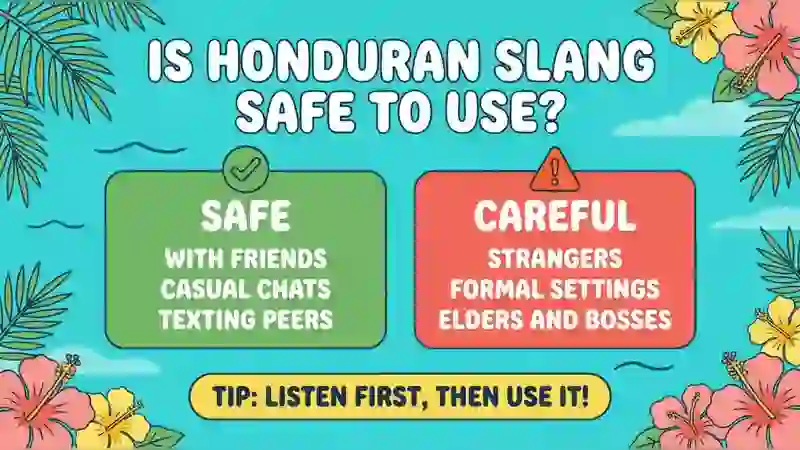
Most everyday Honduran slang is harmless when used correctly. The main concern is social appropriateness, not the slang itself.
If you are learning these expressions, start with neutral or clearly friendly words such as catracho, chamba, pisto, or macizo. Be more careful with words whose meaning can become insulting depending on tone, such as maje.
If you are unsure if a phrase sounds natural, standard Spanish is usually the safer choice.
Frequently Asked Questions
1. What is Honduran slang?
Honduran slang is the informal vocabulary and expressions used in everyday Spanish in Honduras. Examples include maje, pisto, chamba, cipote, and catracho.
2. What does “maje” mean in Honduras?
Maje can mean “dude,” “guy,” or “friend” in casual conversation. Depending on tone and context, it can also be used negatively to suggest that someone is foolish.
3. What does “pisto” mean in Honduran Spanish?
Pisto is an informal Honduran word meaning money or cash. For example, “No tengo pisto” means “I don’t have money.”
4. What does “catracho” mean?
Catracho means a person from Honduras. Catracha is the feminine form. It is commonly used as an informal identity term and can express Honduran pride.
5. What does “cipote” mean in Honduras?
Cipote is commonly used for a boy, child, or young person, while cipota can refer to a girl or young person. The terms are also used in parts of Central America outside Honduras.
6. Is Honduran slang appropriate at work?
Some expressions may be fine in a relaxed workplace among people who already use them, but standard Spanish is better for formal emails, official documents, interviews, and professional communication.
Conclusion
Honduran slang gives everyday Spanish in Honduras its own local character. Words such as maje, pisto, chamba, cipote, alero, macizo, and catracho can help learners understand conversations that standard Spanish alone may not explain.
The most important lesson is to pay attention to context, tone, and relationship. Some expressions are friendly, while others can sound disrespectful if used with the wrong person. Regional differences also matter because a word used naturally in Honduras may have another meaning somewhere else.
If you are learning Honduran slang, start with common, easy-to-understand expressions and listen to how native speakers use them before adding them to your own conversations. That approach will help you sound more natural without using regional slang in situations where standard Spanish is more appropriate.
Read more about!
- HP Meaning Slang: What Does HP Mean in Text, Gaming & Online?
- Slaying Meaning Slang: Definition, Origin, Examples
- Trenches Slang Meaning in Text: What Does “Trenches” Mean?
- Grape Slang Meaning: What Does Grape Mean in Slang?
Hi, I’m Ryan Mitchell. I write simple guides about slang, internet language, and everyday English to make modern expressions easy to understand. My goal is to help learners use real-life English with confidence.