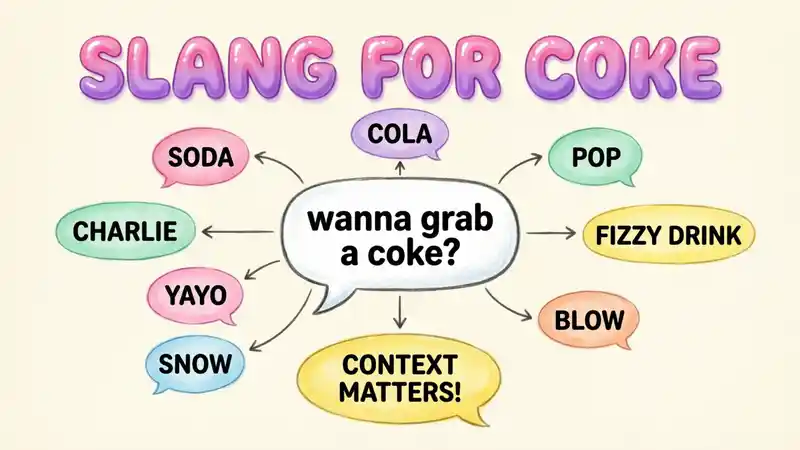
“Slang for coke” refers to informal words or nicknames people may use when talking about cocaine
. These terms can appear in movies, music, online conversations, social media, or older texts, but their meaning can depend on the context. People often search for this phrase because they have seen an unfamiliar word and want to understand what it means.
The important thing to remember is that these expressions do not always have one fixed meaning.
Some terms may have different meanings in other settings, while others can be regional, dated, or connected to drug-related conversations. Understanding the context can help you recognize what someone means without confusing slang with ordinary language.
Quick Answer: “Slang for coke” means informal terms used to refer to cocaine. The exact term and meaning can vary by region, time period, and context.
Quick Answer: What Does “Slang for Coke” Mean?
“Coke” is a common slang term for cocaine, an illegal and potentially dangerous stimulant drug. The phrase “slang for coke” usually refers to informal words or expressions people may use when talking about cocaine instead of its formal name.
What Does “Slang for Coke” Mean?
Simple Meaning
When people search for “slang for coke,” they are usually trying to understand informal language connected with cocaine.
“Coke” itself is already a slang term for cocaine. It may appear in text messages, online conversations, songs, movies, social media posts, or everyday speech. The meaning can sometimes depend on context because “coke” can also refer to Coca-Cola or other products in unrelated conversations.
For that reason, it is important to read the surrounding sentence before deciding what someone means.
Why People Search for This Phrase
Someone might encounter unfamiliar language in a message, comment, video, or conversation and want to know if it refers to cocaine.
Understanding the meaning can help parents, teachers, students, writers, and readers interpret conversations accurately without assuming that every use of the word “coke” refers to drugs.
Coke as Slang for Cocaine
What Does Coke Mean?
In drug-related conversations, “coke” is an informal name for cocaine.
Cocaine is a powerful stimulant that affects the brain and nervous system. It can produce serious health risks and can lead to dependence.
The word “coke” is therefore different from ordinary uses of “Coke,” which may refer to Coca-Cola.
Context Changes the Meaning
Consider these two examples:
“Can you buy some Coke?”
This could refer to a soft drink, depending on the conversation.
But:
“He was talking about Coke at the party.”
could have a drug-related meaning if the surrounding conversation clearly concerns substances.
The safest approach is to examine the complete context instead of assuming the meaning from one word.
Is “Coke” a Slang Word?
Yes, in Drug-Related Contexts
“Coke” is widely recognized as an informal term for cocaine.
It is not a medical or scientific name. In formal writing, “cocaine” is the clearer term.
Why Informal Names Exist
People sometimes use informal names because they are shorter or fit casual conversation. In some situations, people may also use indirect language because they do not want to state the drug’s formal name.
That does not mean every informal reference has a drug-related meaning.
Where Might This Slang Appear?
Text Messages
Drug-related slang can appear in private or group conversations. A single word is not enough to determine what a person means, especially when the same word has ordinary meanings.
Social Media
Informal drug references may appear in comments, captions, memes, or discussions. Social platforms also contain educational conversations about drugs, so context remains important.
Online Communities
Forums, chat groups, and other online communities can use informal language when discussing drug culture, entertainment, news, or personal experiences.
Movies and Music Discussions
The word may also appear when people discuss fictional characters, lyrics, films, or historical events involving cocaine.
Understanding the term does not require participating in drug use.
Is “Coke” Rude or Offensive?
The Word Is Informal
“Coke” is not normally considered a swear word. However, using it in a conversation about illegal drugs can be inappropriate in school, work, or other formal settings.
The larger issue is the subject being discussed rather than the word itself.
Professional Communication
In a workplace or academic setting, it is better to use precise language when discussing drugs.
For example:
“The article discusses cocaine use.”
is clearer and more professional than using an informal slang term.
Why Do People Use Slang for Drugs?
Informal Communication

Slang can make conversations sound casual. People may use informal expressions when talking with friends or discussing popular culture.
Avoiding Formal Language
Some people use slang instead of a drug’s formal name because it feels less direct.
Cultural and Media Influence
Drug-related slang can appear in movies, television, music, books, and online discussions. As a result, people may recognize words without personally using or understanding drugs.
Group Language
Different communities can develop their own vocabulary. However, slang changes over time and may vary between locations and groups.
Real-Life Context Examples
Educational Context
“The teacher explained that ‘coke’ can be slang for cocaine.”
Here, the word is being discussed for educational purposes.
News Context
“The report mentioned cocaine and explained the slang term used in the conversation.”
This is a formal discussion about drug-related language.
Fictional Context
“The movie uses ‘coke’ when its characters discuss drugs.”
Here, the word is part of a fictional story.
Ordinary Conversation
“Do you want a Coke?”
In this context, the word may simply refer to a soft drink.
These examples show why context matters.
Coke vs. Cocaine
| Term | Meaning | Typical context |
| Coke | Informal term that can refer to cocaine | Drug-related or casual contexts |
| Cocaine | Formal name of the drug | Medical, educational, legal, and general contexts |
| Coke | Coca-Cola or a cola drink | Food and beverage conversations |
The same spelling can therefore have completely different meanings.
How to Tell Which Meaning Is Intended
Look at the Surrounding Words
Ask what the conversation is about.
If the topic involves:
- Soft drinks
- Restaurants
- Food
- Shopping
then “Coke” may simply refer to a beverage.
If the topic clearly involves drugs or substance use, the meaning may instead refer to cocaine.
Consider the Source
A health article, movie review, school lesson, or news report may use the word differently from a casual text message.
Do Not Assume From One Word
This is especially important when reading online posts. Slang can be ambiguous, and guessing incorrectly can lead to misunderstandings.
When Should You Avoid Using Drug Slang?
In School
Drug slang is usually unnecessary in ordinary school writing. Use clear, standard language instead.
At Work
Professional communication should avoid ambiguous slang. If drugs are relevant to the subject, use precise terminology.
When Speaking With Younger Audiences
Clear language is usually better when explaining drug-related topics to children or younger students. Educational explanations should be factual and calm.
When the Meaning Is Unclear
If you are unsure what someone means by “coke,” do not assume. The word has a common non-drug meaning as well.
Is “Coke” Safe to Use on Social Media?
The Word Itself Is Not the Main Concern
Mentioning the word in an educational, news, or discussion context is different from promoting drug use.
For example, explaining that “coke” can mean cocaine is an informational use.
However, conversations that encourage illegal drug use or provide instructions for obtaining or consuming drugs can create serious safety concerns.
Keep Educational Content Neutral
A responsible slang article should explain the meaning without glamorizing drug use.
The goal should be understanding language, not encouraging behavior.
Health and Safety Context
Cocaine Can Be Dangerous
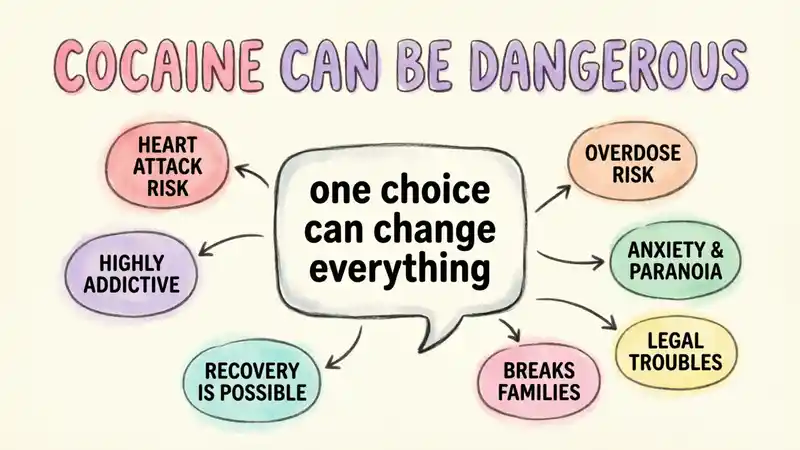
Cocaine is a powerful stimulant and can cause serious physical and mental health effects. Illegal drugs may also contain unexpected substances, which can increase the risks.
For that reason, recognizing a slang term should not be confused with learning how to use the substance.
Why Context Matters for Parents and Teachers
Adults may encounter drug-related slang while reading messages, social media content, or online discussions. Knowing that “coke” can refer to cocaine may help them understand what a conversation is discussing.
At the same time, slang alone does not prove that someone is using drugs.
Common Misunderstandings
“Coke” Always Means Cocaine
Not necessarily.
“Coke” can also refer to Coca-Cola or another cola drink. Context determines the intended meaning.
Everyone Uses the Same Slang
No. Informal language varies by community, location, age group, and time.
A term that appears in one online community may be unfamiliar elsewhere.
Seeing Drug Slang Proves Drug Use
No.
Someone may mention a drug term because they are discussing a movie, song, news story, school topic, or educational resource.
Polite and Clear Alternatives
For Educational Writing
Use “cocaine” rather than slang.
For News Writing
Use the formal name unless quoting or analyzing the slang itself.
For General Explanations
You can say:
- “the drug cocaine”
- “a slang term for cocaine”
- “an informal drug reference”
These phrases make the meaning clear without relying on coded language.
Frequently Asked Questions
1. What does “coke” mean in slang?
In a drug-related context, “coke” is a common informal term for cocaine. However, “Coke” can also mean Coca-Cola, so context matters.
2. Is “coke” always a drug reference?
No. In many everyday conversations, “Coke” simply refers to Coca-Cola or a cola drink.
3. Is “coke” a formal word for cocaine?
No. “Cocaine” is the formal name. “Coke” is an informal slang term.
4. Can “coke” appear in social media posts?
Yes. It can appear in educational discussions, news, entertainment, or drug-related conversations. The meaning depends on context.
5. Is “coke” appropriate in professional writing?
Generally, formal writing should use “cocaine” when the drug is the subject. “Coke” is better treated as informal language unless you are specifically discussing the slang.
6. Does seeing “coke” prove someone is talking about drugs?
No. The word has common non-drug meanings, especially when referring to Coca-Cola or a cola beverage.
Conclusion
“Slang for coke” usually refers to informal language connected with cocaine, while “coke” itself is a common slang term for cocaine in drug-related contexts. However, the same word can also refer to Coca-Cola, so context is essential.
For educational, medical, school, and professional writing, “cocaine” is the clearer term. When you encounter “coke” in a message or social media post, look at the surrounding conversation before deciding what it means.
The most useful rule is simple: do not judge the meaning from one word alone. Context tells you if “Coke” refers to a beverage, cocaine, or simply a discussion about slang.
Read more about!
- Bitchin Slang: Meaning, Origin, Examples & How to Use It
- BTK Meaning Slang: Is It Common in Text Messages?
- Grape Slang Meaning: What Does Grape Mean in Slang?
- Birdie Slang Meaning: Everything You Need to Know

Hi, I’m Nathan Collins. I create easy-to-understand English language content focused on internet slang, texting abbreviations, modern expressions, vocabulary, and word meanings. My goal is to help students, writers, professionals, and English learners communicate with confidence through clear explanations, practical examples, and reliable language guides.