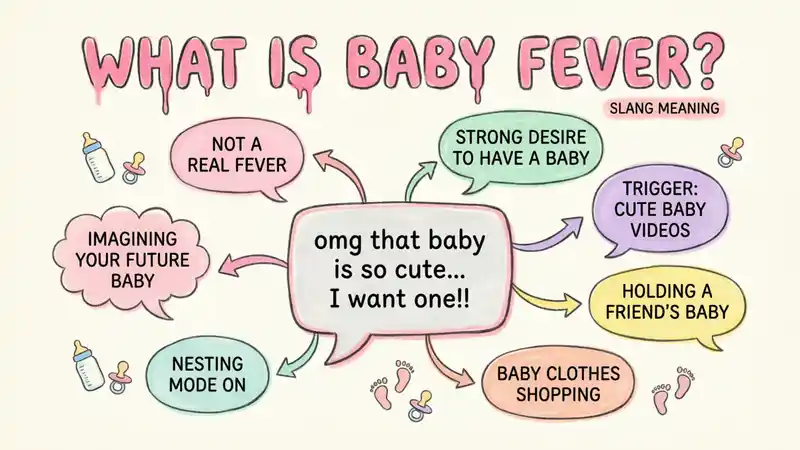
Baby fever slang means having a strong emotional desire to have a baby or feeling excited about the idea of becoming a parent. People often use the phrase after seeing a cute baby, watching family videos, or spending time with young children. It is an informal expression, not a medical condition.
If you’ve searched what is baby fever slang, you have probably seen the phrase on TikTok, Instagram, Reddit, Facebook, or in text messages.
Many people wonder whether it is real slang, if it is offensive, or if it has another hidden meaning. The good news is that the phrase is simple and usually harmless. Most of the time, it describes someone’s emotions rather than a literal fever.
In this guide, you’ll learn the exact meaning of what is baby fever slang, where it came from, how people use it on social media, when you should avoid using it, and how it compares with similar expressions
. This article is written in simple English so anyone can understand it, even if they’ve never heard the phrase before.
Quick Answer
What Is Baby Fever Slang?
Baby fever is a slang expression that describes a strong emotional desire to have a baby or become a parent. It is commonly used after someone sees an adorable baby, watches parenting content, or starts thinking about family life. The phrase is informal, friendly, and widely used on social media and in everyday conversations.
Quick Facts
| Topic | Answer |
| Meaning | A strong desire to have a baby |
| Tone | Casual, emotional, playful |
| Used On | TikTok, Instagram, Reddit, Facebook, texting |
| Offensive? | No |
| Safe to Use? | Yes |
| Formal? | No |
| Common Users | Adults, couples, friends, and families |
What Does What Is Baby Fever Slang Mean?
The Basic Meaning
The phrase baby fever means someone suddenly feels a strong wish to have a baby or becomes excited about the idea of becoming a parent. It does not mean they have an actual fever or illness.
People usually use this expression after an emotional moment, such as holding a newborn, seeing a baby smile, or watching heartwarming family videos online.
For example:
- “After meeting my nephew, I have baby fever.”
- “That TikTok baby is so adorable. Now I have baby fever.”
- “Seeing all those newborn pictures gave me baby fever.”
In every example, the speaker is talking about feelings, not physical health.
Why Do People Say “Fever”?
The word fever is used figuratively in English. It describes a strong feeling, excitement, or enthusiasm rather than sickness.
For example, English speakers also say:
- Football fever
- Travel fever
- Holiday fever
- Wedding fever
In the same way, baby fever means an intense emotional interest in babies or parenthood.
Full Form or Complete Meaning
Does Baby Fever Have a Full Form?
No.
Baby fever is not an acronym, abbreviation, or internet shortcut. It does not stand for anything.
Instead, it is an English idiom made from two ordinary words:
- Baby = a very young child.
- Fever = a strong emotional excitement or desire.
Together, the phrase simply means feeling a powerful urge to have a baby or becoming excited by the idea of starting a family.
Is Baby Fever Internet Slang?
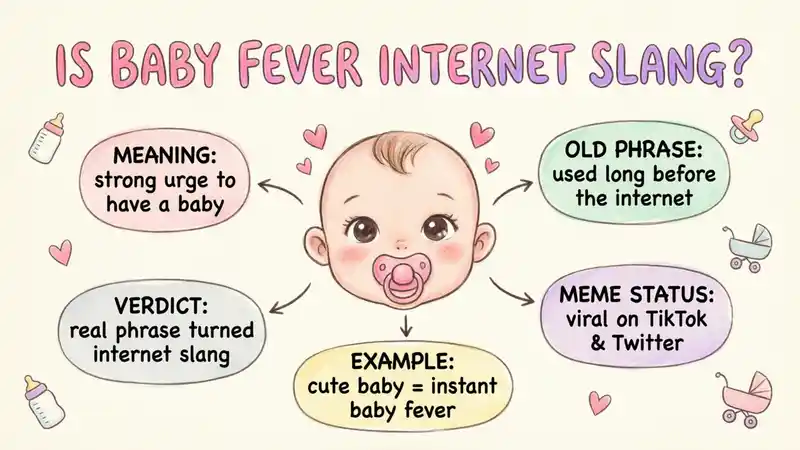
Not exactly.
The phrase existed long before social media. However, platforms like TikTok, Instagram, and Reddit have made it much more popular.
Today, many people think of it as internet slang because they see it online so often.
Different Meanings of Baby Fever
Meaning 1: A Genuine Desire to Have Children
This is the most common meaning.
Someone may truly want to become a parent and use the phrase to describe those feelings.
Example:
“I never thought about having kids before, but lately I’ve been getting baby fever.”
Here, the speaker is talking about a real desire for children.
Meaning 2: A Temporary Emotional Reaction
Sometimes baby fever lasts only a few minutes.
For example, someone may:
- Hold a newborn baby.
- Watch a cute baby video.
- Attend a baby shower.
- Visit friends with a newborn.
Example:
“I had baby fever after seeing my cousin’s baby, but it disappeared after the baby cried for an hour.”
This meaning is often humorous.
Meaning 3: A Funny Social Media Expression
On TikTok, Instagram, Facebook, and X, people often use baby fever as a joke.
Example captions include:
- “One baby video and now I have baby fever.”
- “TikTok is giving everyone baby fever.”
- “Someone stop showing me baby videos.”
These posts are usually playful and should not always be taken seriously.
Where Is Baby Fever Commonly Used?
Everyday Conversations
Friends and family often use the phrase when talking about babies or future family plans.
Example:
“You’ve been smiling at every baby today. I think you’ve got baby fever.”
Text Messages
Baby fever is common in casual texting because it is short and easy to understand.
Example:
Emma: “Did you see Jake’s new baby?”
Lily: “Yes! She’s so cute. I think I have baby fever.”
TikTok
TikTok is one of the biggest reasons the phrase remains popular today.
You’ll often see it in:
- Baby videos
- Pregnancy announcements
- Parenting content
- Family vlogs
- Adoption stories
Many creators use the phrase jokingly after showing adorable babies.
Instagram users often write captions like:
- “Baby fever unlocked.”
- “This little smile gave me baby fever.”
- “Why are babies so adorable?”
The phrase usually expresses happiness rather than a serious life decision.
Unlike TikTok, Reddit discussions are often more detailed.
People ask questions such as:
- Is baby fever real?
- Why do I suddenly want children?
- Has anyone else experienced baby fever?
These discussions often include personal stories and thoughtful advice from other users.
Family members frequently comment on baby photos with messages like:
- “That baby is giving everyone baby fever.”
- “She’s the cutest little girl.”
The phrase is generally used in a warm and friendly way.
Is Baby Fever Rude, Offensive, or Harmless?
Is It Offensive?
No.
Baby fever is generally considered a harmless slang expression. It does not contain rude language or insults.
Most English speakers understand it as a casual way of describing someone’s excitement about babies.
Can It Be Sensitive?
Yes.
Although the phrase is harmless, conversations about children and parenthood can be personal.
Some people:
- Do not want children.
- May be experiencing fertility challenges.
- May have experienced pregnancy loss.
- Prefer to keep family plans private.
Because of this, avoid assuming someone has baby fever simply because they enjoy spending time with children.
Is It Appropriate at Work?
Usually, no.
The phrase is best used in casual conversations with friends or family.
In professional settings, it is better to avoid discussing someone’s personal family plans unless they bring up the topic themselves.
Origin and History
Where Did the Phrase “Baby Fever” Come From?
The exact origin of baby fever is uncertain, so it should not be linked to one specific person or generation. Linguists generally agree that the phrase has been part of informal English for many years, long before social media existed.
The word “fever” is often used in English to describe strong excitement or desire instead of illness. That is why people also say:
- Spring fever
- Football fever
- Travel fever
- Wedding fever
In the same way, baby fever means feeling emotionally excited about the idea of having a baby.
How Did It Become Popular Online?
Although the phrase is older than the internet, social media made it much more visible.
Today, it appears regularly on:
- TikTok
- X (formerly Twitter)
- YouTube Shorts
Cute baby videos, pregnancy announcements, and family content have helped keep the phrase popular.
Unlike many internet slang words, baby fever has remained common because it describes a feeling that many people recognize.
Is Baby Fever Still Popular?
Yes.
The phrase is still widely used in 2026. It is neither outdated nor considered “cringe.” Instead, it remains a normal part of casual English, especially online.
People of different ages use it, although it is most common among young adults and couples discussing family life.
Real-Life Examples
Friendly Conversation
Ava: “Your nephew is adorable.”
Sophia: “I know! He’s giving me baby fever.”
Text Message
Jake: “Did you watch Emma’s baby video?”
Chris: “Yes. Now I totally have baby fever.”
TikTok Caption
“Five minutes on Baby TikTok and now I have baby fever.”
Instagram Caption
“This little smile is giving me baby fever.”
Reddit Post
“I never wanted children before, but after spending time with my niece, I think I’m getting baby fever. Has anyone else experienced this?”
Family Gathering
Grandmother: “You look happy holding the baby.”
Granddaughter: “Don’t say that! Everyone will think I have baby fever.”
Workplace Example
Coworker: “Congratulations on your new baby.”
Another coworker: “Your family photos are beautiful.”
This response is usually more professional than saying:
“You’re giving everyone baby fever.”
Why Do People Use Baby Fever?
It Describes Feelings Quickly
Instead of explaining many emotions, people simply say:
“I have baby fever.”
Most English speakers immediately understand what they mean.
It Creates Fun Conversations
Friends often joke with one another after seeing babies.
Example:
“You’ve held three babies today. I think you’ve got baby fever.”
The phrase is lighthearted and often makes people laugh.
It Fits Social Media
Short phrases work well as captions.
Examples include:
- “Baby fever activated.”
- “TikTok did this to me.”
- “Someone hide the baby videos.”
These captions are easy to understand and widely recognized.
It Expresses Excitement About the Future
Sometimes people use the phrase because they are thinking about:
- Marriage
- Starting a family
- Becoming parents
- Their future life
In these situations, the phrase reflects genuine emotions instead of humor.
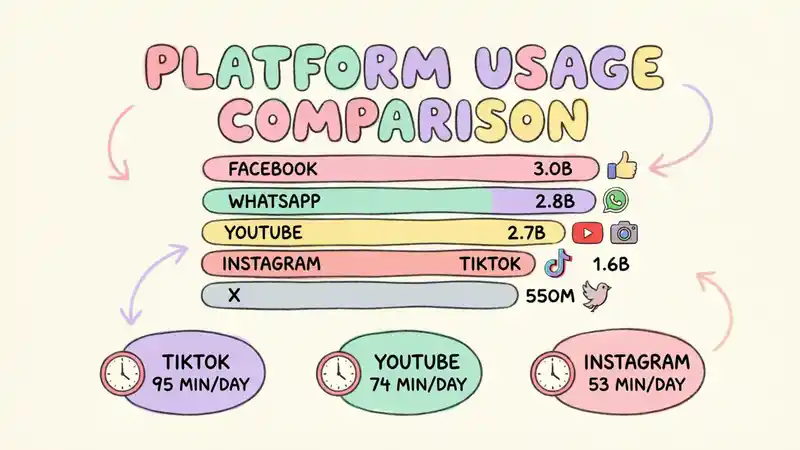
Platform Usage Comparison
TikTok
TikTok users mostly use baby fever in a playful way.
Common content includes:
- Cute babies
- Family vlogs
- Pregnancy reveals
- Parenting moments
Tone: Funny and emotional.
Instagram users often write the phrase in captions under baby photos.
Tone: Warm, happy, and family-focused.
Example:
“Baby fever is real after today.”
Reddit discussions are usually more serious.
People ask questions, share personal experiences, and discuss family planning.
Tone: Honest and thoughtful.
Family members often comment:
“You’re giving everyone baby fever.”
Tone: Friendly and supportive.
Text Messages
In texting, the phrase is short and casual.
Example:
Friend: “Look at this baby.”
Reply: “I officially have baby fever.”
Similar Slang and Related Terms
Baby Fever vs Baby inexplicable
These phrases have similar meanings but are not exactly the same.
| Baby Fever | Baby inexplicable |
| Sounds natural | Sounds stronger |
| Emotional feeling | Almost an obsession |
| Very common | Less common |
Example:
“I have baby fever.”
“I’ve gone baby inexplicable“
The second sentence sounds more dramatic.
Baby Fever vs Nesting
Many people confuse these expressions.
| Baby Fever | Nesting |
| Wanting a baby | Preparing for a baby |
| Emotional | Practical |
| Can happen anytime | Usually happens during pregnancy |
Related Expressions
Other phrases with similar meanings include:
- Ready for kids
- Wants children
- Thinking about starting a family
- Excited about parenthood
- Family goals
These are not slang, but they express similar ideas.
Can Men Have Baby Fever?
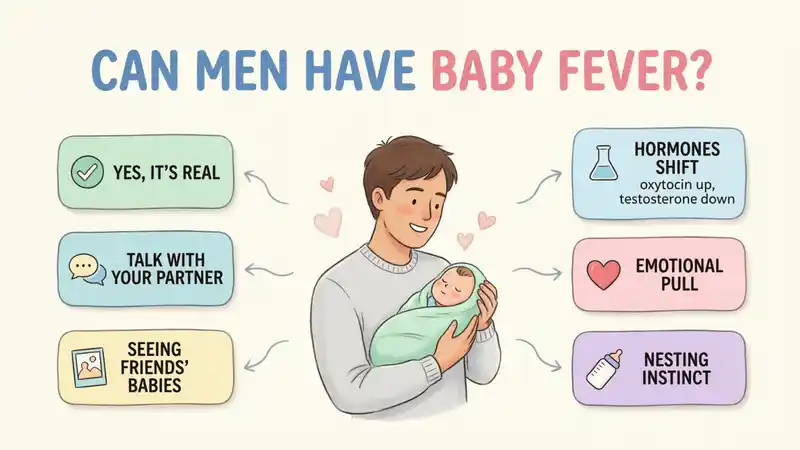
Yes.
Although people often associate the phrase with women, men also use it.
For example:
“My best friend became a dad, and now I’ve got baby fever too.”
The expression is not limited to one gender.
Can Teenagers Use the Phrase?
Yes.
Teenagers sometimes use baby fever after watching cute baby videos or seeing newborn photos online.
In most cases, they are joking rather than seriously planning to become parents.
The meaning depends on the situation and the speaker’s intent.
Common Misunderstandings
Misunderstanding 1: Baby Fever Is a Medical Illness
No.
Despite the word fever, the phrase does not describe sickness.
It is simply an emotional expression.
Misunderstanding 2: Everyone Experiences It
Not true.
Some people feel baby fever, while others never do.
Both experiences are perfectly normal.
Misunderstanding 3: It Means Someone Wants a Baby Right Now
Not always.
Sometimes people say they have baby fever simply because they watched an adorable baby video.
The feeling may disappear quickly.
Misunderstanding 4: Only Women Use It
False.
Misunderstanding 5: It Started on TikTok
No.
The expression existed long before TikTok or Instagram.
Social media simply helped it become more popula
- When Should You Avoid Using Baby Fever?
- Polite Alternatives
- Is Baby Fever Good or Bad?
- 10 Numbered FAQs
- Conclusion
- Meta Title
- Meta Description
- URL Slug
- Image SEO
- EEAT Byline & Reviewer
- Publishing-ready finish.
Frequently Asked Questions
1. What is baby fever slang?
Baby fever is an informal phrase for having a strong desire to have, hold, care for, or spend time with a baby. It is usually used casually.
2. What does baby fever mean in texting?
In texting, baby fever usually means that someone saw or talked about a cute baby and suddenly felt a strong interest in babies or becoming a parent.
3. Is baby fever a medical condition?
No. Baby fever is not a medical condition or diagnosis. It is simply a casual expression used to describe feelings about babies.
4. Is baby fever rude?
No, the phrase itself is generally harmless. However, using it to pressure another person about having children can make the conversation uncomfortable.
5. Can you have baby fever without wanting children?
Yes. Someone may say they have baby fever because they love babies or enjoyed spending time with one. It does not always mean they want to become a parent.
6. Is baby fever considered internet slang?
Baby fever is better described as an informal expression than strictly internet slang. People use it both online and in everyday conversations.
Conclusion
Baby fever is a casual expression that describes a strong emotional interest in babies. It can mean wanting to spend time with a baby, feeling excited around babies, or sometimes wanting to become a parent.
The meaning depends on context. On TikTok, Instagram, Snapchat, or in a text message, someone may use the phrase playfully after seeing a cute baby. In a serious conversation, it may describe a genuine interest in parenthood.
Baby fever is not a medical condition, and it does not automatically mean someone plans to have a child. It is simply a way to describe a strong feeling.
The safest way to use the phrase is to describe your own feelings rather than making assumptions about another person’s plans. When talking about family, pregnancy, or parenthood, always respect personal boundaries.
Read more about!
- UK Slang Words Roadman: Meaning, Popular Terms & Examples
- Bitchin Slang: Meaning, Origin, Examples & How to Use It
- BTK Meaning Slang: Is It Common in Text Messages?
- Birdie Slang Meaning: Everything You Need to Know
Daniel Brooks is an English vocabulary educator who creates simple, practical guides on slang, word meanings, and everyday English. His goal is to help students, writers, and English learners expand their vocabulary and communicate with confidence.