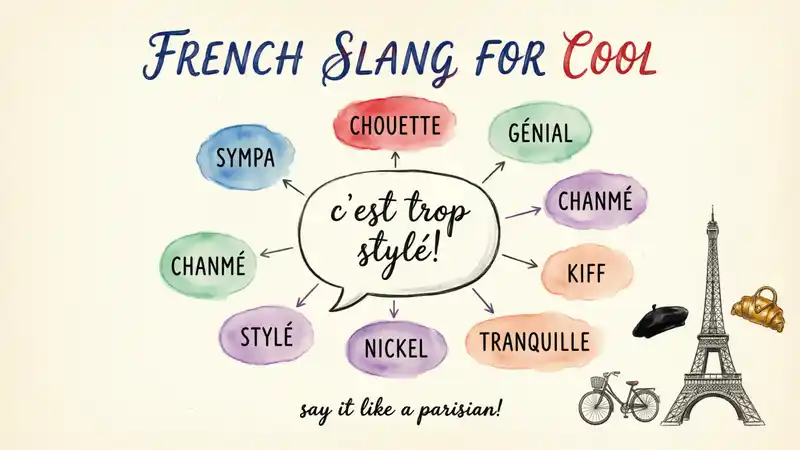
French slang for cool is useful when you want to say that something is great, stylish, fun, impressive, or enjoyable in a natural French way.
While the standard French word “cool” is also commonly used, French speakers have many other informal expressions that can change the tone of a sentence.
Words such as “chouette,” “sympa,” “stylé,” “génial,” and “top” are common choices, while more informal expressions such as “ouf” can add a stronger, playful tone.
The best word depends on what you mean by “cool.” You might be describing a person’s personality, a stylish outfit, a fun event, or something surprising.
If you are learning French, knowing these differences can help your French sound more natural and help you understand informal conversations.
Quick Answer
French slang for cool includes informal expressions such as “sympa,” “chouette,” “stylé,” “top,” “génial,” and “ouf.” The right choice depends on if “cool” means nice, stylish, impressive, fun, or amazing.
What Does French Slang for Cool Mean in Text?
French slang for cool refers to informal French words and expressions used to describe something as nice, enjoyable, impressive, stylish, or exciting.
The important point is that there is no single French slang word that perfectly matches every use of the English word “cool.”
For example:
- “C’est sympa” = That’s nice / cool.
- “C’est chouette” = That’s nice / great.
- “C’est stylé” = That’s stylish / cool.
- “C’est génial” = That’s great / awesome.
- “C’est top” = That’s great / excellent.
- “C’est ouf” = That’s shocking/ amazing.
The meaning changes slightly with the situation.
Cool Meaning Nice or Pleasant
When “cool” means friendly, pleasant, or nice, “sympa” is one of the most useful choices.
Example:
“Ton frère est sympa.”
This means:
“Your brother is nice.”
Cool Meaning Stylish
When you are talking about clothes, appearance, design, or style, “stylé” is often a better choice.
Example:
“Ton nouveau sac est stylé.”
This means:
“Your new bag is cool/stylish.”
Cool Meaning Great or Awesome
If “cool” means excellent or exciting, “génial” or “top” can work naturally.
Example:
“Le concert était génial.”
This means:
“The concert was awesome.”
French Slang for Cool: Full Definition
The phrase “French slang for cool” is not the name of one specific French expression. It describes a group of informal words that can communicate different shades of the English word “cool.”
Here are some useful options:
| French expression | Basic English meaning | Typical use |
| Cool | Cool | General informal use |
| Sympa | Nice, cool | People, plans, experiences |
| Chouette | Nice, great, cool | General positive reactions |
| Stylé | Stylish, cool | Clothes, looks, objects |
| Génial | Great, awesome | Events, ideas, experiences |
| Top | Great, excellent | General informal praise |
| Ouf | shocking, amazing | Strong informal reaction |
| Nickel | Perfect, all good | Situations and results |
| Canon | Gorgeous, very attractive | Mainly appearance |
| De ouf | Really amazing / ridiculously | Strong emphasis |
Is French Slang for Cool Rude or Offensive?
Most common French expressions for “cool” are neutral or positive. They are generally suitable for informal conversations, but some are more casual than others.
“Sympa,” “chouette,” “génial,” and “top” are usually friendly and easy to understand.
“Stylé” is also positive, especially when talking about someone’s style or an object.
Expressions containing “ouf” are more strongly associated with informal speech. They can sound playful or very casual, so they are better suited to relaxed conversations than formal writing.
Neutral and Friendly Expressions
These are generally easy choices:
- Sympa
- Chouette
- Génial
- Top
- Cool
Very Informal Expressions
These have a stronger slang feeling:
- Ouf
- De ouf
- Nickel
The exact tone can depend on the speaker, age group, region, and situation.
Where Is French Slang for Cool Commonly Used?
French informal vocabulary is most natural in everyday conversations between friends, classmates, family members, and people who already have a relaxed relationship.
Everyday Conversation
You may hear expressions such as “sympa,” “cool,” or “génial” when people talk about plans, activities, people, or experiences.
Example:
“On va au cinéma ce soir.”
“Cool !”
This simply means:
“We’re going to the cinema tonight.”
“Cool!”
Texting and Online Messages
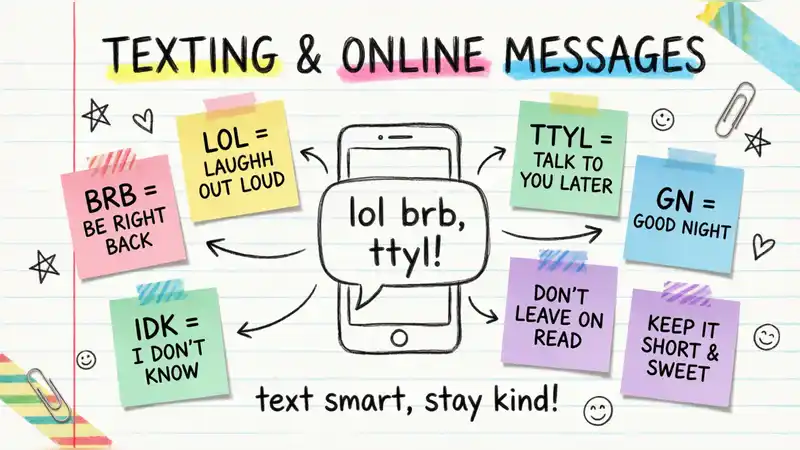
Informal French expressions can also appear in text messages and online conversations. Short words such as “cool,” “top,” and “ouf” can make a message feel relaxed.
Example:
“J’ai eu une bonne note !”
“Top !”
Social Media
French speakers may use informal expressions in captions, comments, and casual posts. “Stylé” can work especially well when commenting on clothing, photography, design, or someone’s look.
Gaming and Online Communities
In gaming conversations, words meaning “cool,” “great,” or “amazing” may be used as quick reactions.
For example:
“Ton nouveau personnage est stylé.”
This means:
“Your new character is cool/stylish.”
The exact slang used can vary between online communities, so context matters.
Popular French Slang Words for Cool
1. Sympa
“Sympa” is one of the most useful informal French words for “nice” or “cool.”
It comes from “sympathique” and is very common in everyday French.
You can use it for people, plans, places, experiences, and ideas.
Example:
“Elle est vraiment sympa.”
Meaning:
“She’s really nice.”
Another example:
“C’est un endroit sympa.”
Meaning:
“It’s a nice place.”
2. Chouette
“Chouette” can mean nice, great, pleasant, or cool.
It is friendly and informal without necessarily sounding like heavy slang.
Example:
“C’est chouette ici !”
Meaning:
“It’s nice here!”
It can also be used as an enthusiastic reaction.
3. Stylé
“Stylé” means stylish or cool, especially when something has an attractive or impressive style.
It is related to “style.”
Example:
“Ton manteau est stylé.”
Meaning:
“Your coat is cool/stylish.”
You can use it for clothing, accessories, rooms, designs, and sometimes people.
4. Génial
“Génial” means great, fantastic, or awesome.
It is not extreme slang, but it is a very natural informal way to express strong approval.
Example:
“Le film était génial.”
Meaning:
“The movie was awesome.”
5. Top
“Top” is used in French informal speech much like “great,” “excellent,” or “cool.”
Example:
“On se retrouve à 18 h.”
“Top !”
Meaning:
“See you at 6.”
“Great!”
6. Ouf
“Ouf” is a very informal French expression. It is the verlan form of “fou,” meaning “shocking.”
Depending on context, “ouf” can describe something as shocking, unbelievable, intense, or amazing.
Example:
“C’était ouf !”
Meaning:
“That was shocking!”
It is much more informal than “génial.”
7. De Ouf
“De ouf” is another informal expression derived from “ouf.”
It is often used to intensify a statement.
Example:
“C’était bien de ouf.”
In very informal speech, this can mean something like:
“It was really amazing.”
Because “de ouf” is strongly casual, it is not a good choice for formal French.
8. Nickel
“Nickel” can mean perfect, excellent, or all good.
Example:
“Tout est nickel.”
Meaning:
“Everything is perfect.”
It can describe a situation, result, plan, or object.
9. Canon
“Canon” can mean very attractive or gorgeous when describing a person’s appearance.
Example:
“Elle est canon.”
Meaning:
“She’s gorgeous.”
It is more specific than “cool,” so it should not be used as a general translation in every situation.
10. Carrément
“Carrément” does not directly mean “cool,” but it can strengthen agreement or approval.
Example:
“C’était génial.”
“Carrément !”
Meaning:
“That was awesome.”
“Absolutely!”
It is useful when you want to strongly agree with someone.
Real-Life Examples of French Slang for Cool
Friendly Example
“Ton nouveau vélo est stylé.”
Meaning:
“Your new bike is cool.”
Here, “stylé” focuses on the bike’s appearance or style.
Casual Example
“Tu viens avec nous ce soir ?”
“Cool !”
Meaning:
“Are you coming with us tonight?”
“Cool!”
Here, “cool” shows positive excitement.
Strong Reaction
“Tu as vu le nouveau film ?”
“Oui, il est ouf !”
Meaning:
“Did you see the new movie?”
“Yes, it’s amazing/shocking!”
“Ouf” gives the reaction a stronger informal feel.
Complimenting a Friend
“Ton idée est géniale.”
Meaning:
“Your idea is awesome.”
“Géniale” agrees with “idée,” which is feminine in French.
Talking About a Place
“Ce café est vraiment sympa.”
Meaning:
“This café is really nice.”
“Sympa” works naturally for a pleasant place.
Gaming Context
“Ton personnage est stylé.”
Meaning:
“Your character looks cool.”
The word “stylé” focuses on appearance and design.
Social Media Context
“Cette photo est ouf !”
Meaning:
“This photo is amazing!”
Here, “ouf” creates an enthusiastic, informal reaction.
Agreeing With Someone
“On devrait essayer ce restaurant.”
“Carrément !”
Meaning:
“We should try this restaurant.”
“Absolutely!”
French Slang for Cool in Different Situations
Choosing the right word becomes easier when you first decide what “cool” means.
If Someone Is Nice
Use:
“sympa”
Example:
“Il est super sympa.”
“He’s really nice.”
If Something Looks Stylish
Use:
“stylé”
Example:
“Cette veste est stylée.”
“This jacket is cool/stylish.”
If Something Is Excellent
Use:
“génial” or “top”
Example:
“Le spectacle était génial.”
“The show was awesome.”
If Something Is shockingor Amazing
Use:
“ouf”
Example:
“C’est ouf !”
“That’s shocking/amazing!”
If Everything Is Perfect
Use:
“nickel”
Example:
“Tout est nickel.”
“Everything is perfect.”
Comparison of French Words for Cool
| French word | English idea | Best context | Formality |
| Cool | Cool | General situations | Informal |
| Sympa | Nice/cool | People and experiences | Informal |
| Chouette | Nice/great | General reactions | Informal |
| Stylé | Stylish/cool | Appearance and design | Informal |
| Génial | Awesome/great | Events and ideas | Informal/neutral |
| Top | Great/excellent | Plans and results | Informal |
| Ouf | shocking/amazing | Strong reactions | Very informal |
| Nickel | Perfect/all good | Results and situations | Informal |
| Canon | Gorgeous | Appearance | Informal |
| Carrément | Absolutely | Strong agreement | Informal |
French Slang for Cool vs. Standard French
It is helpful to understand the difference between informal vocabulary and standard French.
The English word “cool” itself is widely understood in French. You do not always need to replace it with a French slang word.
For example:
“C’est cool.”
This simply means:
“That’s cool.”
However, replacing “cool” with another expression can add a more specific meaning.
“C’est sympa” focuses on something being nice or pleasant.
“ stylé” focuses on style.
génial” shows strong approval.
“C’est ouf” gives the statement a more youthful and slang-heavy feel.
So, the best translation depends on the intended meaning rather than the English word alone.
Origin and Background of French Slang for Cool
The Influence of Verlan
One important feature of modern French slang is “verlan,” a style of word formation that plays with syllables, often reversing their order.
“Ouf” is a well-known example because it comes from “fou.”
Verlan has been particularly influential in informal French and youth language, although not every informal French word is verlan.
Everyday French
Words such as “sympa” and “chouette” are not necessarily slang in the strongest sense. They are informal or conversational expressions that are widely understood.
This distinction matters because calling every informal synonym “slang” can make French vocabulary seem more complicated than it really is.
Popular Culture
Music, television, films, social groups, and online communication all contribute to the spread of informal vocabulary.
Some expressions become widely known, while others remain connected to particular communities or periods.
When Should You Avoid French Slang for Cool?
Formal School Writing
If you are writing a formal French essay, use vocabulary that matches the expected style. Informal expressions such as “ouf” may not be appropriate.
Professional Communication

A message to a teacher, official, or professional contact may require more neutral language.
Instead of:
“C’est ouf !”
You might choose:
“C’est vraiment impressionnant.”
The second sentence is more neutral and suitable for formal situations.
When Speaking to Someone You Do Not Know
If you are unsure about the person’s preferred level of formality, start with standard or widely understood French.
When You Are Unsure of the Meaning
Do not use slang simply because it appears in a translation list. A word can have a different tone from the English word you are trying to translate.
Polite Alternatives to French Slang
If you want a more neutral way to express “cool,” several options are available.
Instead of Ouf
Use:
“impressionnant” = impressive
“excellent” = excellent
“remarquable” = remarkable
Instead of Very Casual Expressions
Use:
“C’est très bien.”
“That’s very good.”
Or:
“C’est vraiment intéressant.”
“That’s really interesting.”
For a Professional Setting
You can say:
“C’est une excellente idée.”
“That’s an excellent idea.”
This is clearer and more appropriate for formal communication than highly casual slang.
Why Do French Speakers Use Slang for Cool?
To Sound Natural
Informal vocabulary can make everyday conversation feel less formal and more relaxed.
To Express Emotion
“Ouf” communicates a stronger reaction than a simple neutral adjective.
To Show Personality
A person may choose different words depending on if they want to sound playful, relaxed, enthusiastic, or stylish.
To Build Social Connection
Shared informal expressions can help friends communicate in a relaxed way.
To Add Meaning
Different words allow speakers to distinguish between something being nice, stylish, excellent, or surprising.
Impact of French Slang on Communication
Slang can make conversations more expressive, but it can also cause confusion for learners.
For example, an English learner may translate “cool” directly into “cool” every time. A French speaker might instead choose “sympa,” “stylé,” “génial,” or “ouf,” depending on the situation.
This is why learning context is more useful than memorizing one translation.
It is also important to remember that slang changes. Expressions that are popular in one age group or region may sound old-fashioned or unusual to another group.
Is French Slang for Cool Safe for Social Media?
Generally, common expressions such as “sympa,” “stylé,” “génial,” and “top” are harmless in ordinary social-media conversations.
More informal expressions such as “ouf” can also be used casually, especially when reacting enthusiastically to something.
However, slang should still match the audience and situation.
Social Media Caption
“Cette vue est ouf !”
This creates an enthusiastic, informal tone.
Comment
“Stylé !”
This is a short way to compliment someone’s style.
Friendly Message
“Top, à demain !”
This means:
“Great, see you tomorrow!”
The key is to understand that online writing often removes vocal tone, so sarcasm or unusual slang can sometimes be misunderstood.
Common Mistakes When Translating Cool Into French
Using One Word for Every Situation
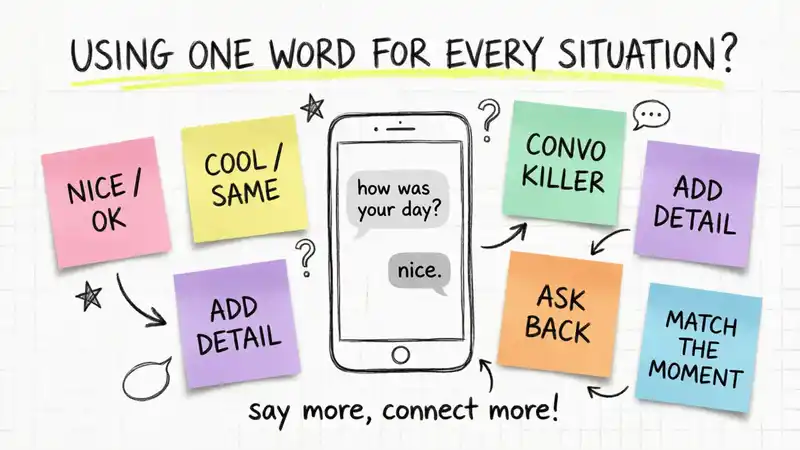
There is no perfect French translation for every meaning of “cool.”
Use “sympa” for “nice,” “stylé” for “stylish,” and “génial” for “awesome” when appropriate.
Treating Every Informal Word as Slang
Some words are simply common conversational French rather than strong slang.
“Sympa” is a good example.
Using Ouf in Formal French
“Ouf” is strongly informal. It is better suited to casual speech and messages than formal writing.
Ignoring Gender Agreement
Some French adjectives change form depending on the noun.
For example:
“un film génial”
but:
“une idée géniale”
Similarly:
“un sac stylé”
and:
“une veste stylée”
Learning these small grammar details helps your French sound more natural.
FAQs About French Slang for Cool
1. What is the French slang for cool?
Common informal French choices include “sympa,” “chouette,” “stylé,” “génial,” “top,” and “ouf.” The best choice depends on the meaning of “cool” in the sentence.
2. What does “sympa” mean in French slang?
“Sympa” means nice, friendly, pleasant, or cool. It is an informal form related to “sympathique” and is very common in everyday French.
3. What does “stylé” mean in French?
“Stylé” means stylish, fashionable, or cool-looking. It is especially useful for clothes, appearance, objects, and design.
4. What does “ouf” mean in French slang?
“Ouf” is an informal verlan form of “fou,” meaning shocking. Depending on context, it can describe something as shocking, unbelievable, intense, or amazing.
5. Is “cool” itself used in French?
Yes. French speakers commonly use “cool” as an informal adjective, particularly in everyday conversation.
6. What is a polite French word for cool?
“Génial,” “excellent,” or “très bien” can work when you want a more neutral expression. “Sympa” is also friendly and widely understood.
Conclusion
French slang for cool is not limited to one expression. The best word depends on what you want to say. “Sympa” works well for something nice or pleasant, “stylé” focuses on style, “génial” expresses strong approval, “top” means great, and “ouf” gives a more intense and informal reaction.
The English word “cool” itself is also commonly used in French, so you do not always need to replace it. The important skill is understanding the difference between being nice, stylish, impressive, exciting, or amazing.
For casual conversations, learning several expressions gives you more flexibility and helps you understand how French is actually used. For formal situations, however, neutral vocabulary is usually the safer choice.
Read more about!
- What Does Shark Mean in Slang? Meaning and Uses
- Stomach in Spanish Slang: Meanings, Words, and Everyday Use
- What Does Preppy Mean in Slang? Meaning, Origin & How People Use It
- Mofongo Slang Explained: Meaning, Origin, and Usage

Hi, I’m Nathan Collins. I create easy-to-understand English language content focused on internet slang, texting abbreviations, modern expressions, vocabulary, and word meanings. My goal is to help students, writers, professionals, and English learners communicate with confidence through clear explanations, practical examples, and reliable language guides.