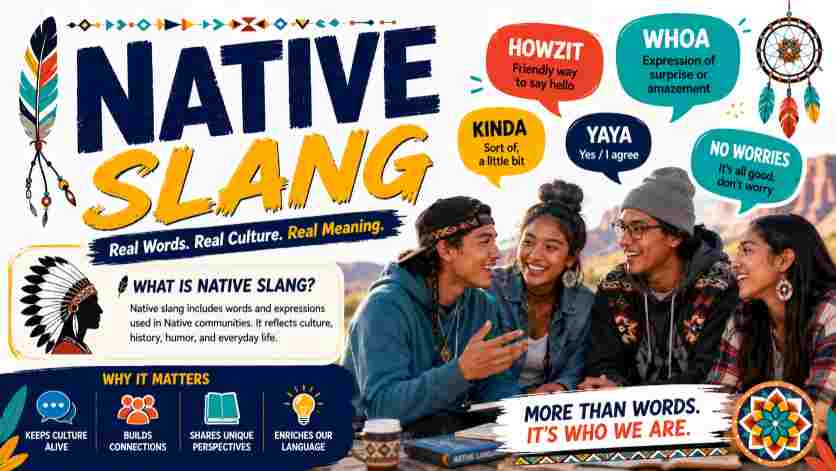
Native slang refers to informal words and expressions commonly used by people who are native to a particular country, region, or community.
These words are part of everyday conversations and often reflect local culture, traditions, and identity. Unlike formal language, native slang changes over time and can vary from one place to another.
Many people search for native slang to understand local conversations, communicate naturally with native speakers, or prepare for travel.
In this guide, you’ll learn what native slang means, where it is used, if it is appropriate in different situations, and how it differs from standard English. You’ll also find practical examples to help you understand and use native slang correctly.
Quick Answer
What is native slang?
It helps make everyday conversations sound more natural and friendly.
Quick definition
Native slang is casual language that locals use in daily life with friends, family, classmates, and people in their community.
Why do people search for native slang
- Understand local conversations
- Learn regional expressions
- Travel with confidence
- Enjoy movies, TV shows, and music
- Speak more naturally with native speakers
What Does Native Slang Mean?
Definit
These words are widely used by native speakers but may not appear in formal dictionaries or school textbooks.
Everyday meaning
These expressions are common in everyday conversations and often carry meanings that differ from standard English.
Examples:
- “Mate” means friend in many parts of the United Kingdom and Australia.
- “Cool” means great or excellent in American English.
- “Arvo” means afternoon in Australian English.
Why it is unique
Every culture develops its own slang over time. Native slang reflects local history, traditions, humor, and daily experiences, making each community’s language unique.
Is There a Full Form?
Does native slang have a full form?
No. it does not have a full form. It simply describes informal language used by native speakers.
Difference between slang and abbreviations
| Slang | Abbreviation |
| Informal words or phrases | Shortened form of a word or phrase |
| Mostly used in speech | Common in writing and texting |
| Changes over time | Usually has a fixed meaning |
| Example: Cool | Example: LOL |
Different Meanings of Native Slang
Native slang as local language
The most common meaning of native slang is the informal language used by people who belong to a particular country or region.
Native slang in travel
Travelers often learn native slang before visiting another country so they can better understand local conversations and culture.
Where Is Native Slang Commonly Used?
Daily conversations
family members, neighbors, and classmates.
Schools and colleges
Students often use slang when talking with friends, although teachers usually expect standard English during lessons and assignments.
Social media
On platforms such as TikTok, Instagram, Facebook, Reddit, Snapchat, and X because people communicate informally online.
Text messages
People often use slang in text messages to make conversations shorter, friendlier, and more natural.
Movies and TV shows
Many films and television programs include native slang to make characters sound authentic.
Music and podcasts
Artists, musicians, and podcast hosts regularly use because it reflects how people naturally speak.
Is Native Slang Rude, Offensive, or Harmless?
Mostly harmless
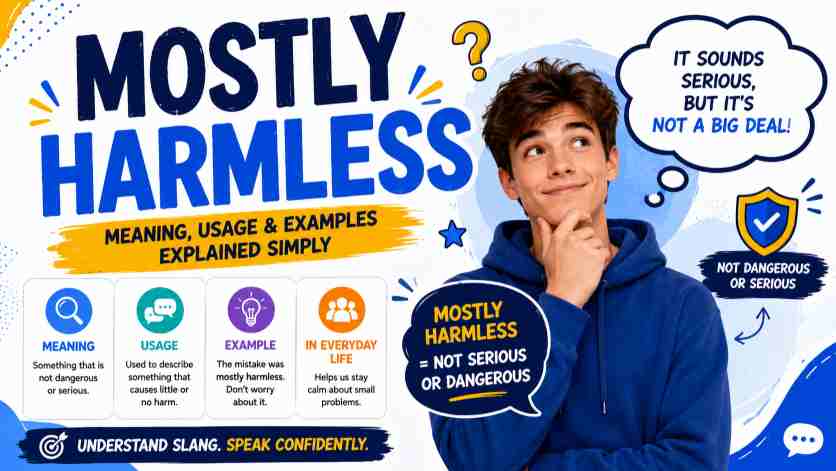
It is simply a natural part of everyday communication.
Some expressions may be offensive
Certain slang words can be considered rude depending on the culture, the situation, or the tone in which they are spoken.
Context matters
The same slang word can have different meanings in different countries. Always pay attention to the context before using unfamiliar expressions.
Is it appropriate at work?
In professional settings, standard English is usually the better choice.
Real-Life Examples
Friendly conversation
Alex: “Hey, what’s up?”
Sam: “Not much. Just hanging out with my mates.”
Text message example
Friend 1: “Are you free this afternoon?”
Friend 2: “Yep! See you later.”
School example
Student 1: “That science project was cool.”
Student 2: “Yeah, we finished it early.”
Workplace example
Employee: “The meeting went really well.”
Manager: “Great job. Let’s discuss the next project.”
In most workplaces, standard English is preferred over local slang.
Travel example
Tourist: “Can you teach me a local slang word?”
Local: “Sure! Learning a few expressions will help you understand everyday conversations.”
Social media example
“That concert was amazing! Can’t wait to go again.”
Origin and History
How did native slang begin?
These words often reflected local culture, humor, traditions, and daily life.
Cultural influences
Every region develops its own slang through history, migration, local customs, and contact with other languages.
Modern development
Today, native slang continues to evolve through movies, television, music, gaming, and social media. New expressions appear regularly while older ones may become less common.
Similar Slang or Related Terms
Slang
Slang is informal language used by a particular group of people.
Dialect
A dialect includes differences in pronunciation, grammar, and vocabulary used in a specific region.
Colloquial language
Colloquial language refers to everyday speech that sounds natural but is less formal than standard language.
Idioms
Idioms are expressions whose meanings cannot always be understood from the individual words.
Comparison Table
| Term | Meaning |
| Native slang | Informal expressions used by local speakers |
| Slang | Casual language used by a group of people |
| Dialect | Regional form of a language |
| Idiom | Phrase with a figurative meaning |
| Standard English | Formal and widely accepted English |
When Should You Avoid Using Native Slang?
In professional workplaces
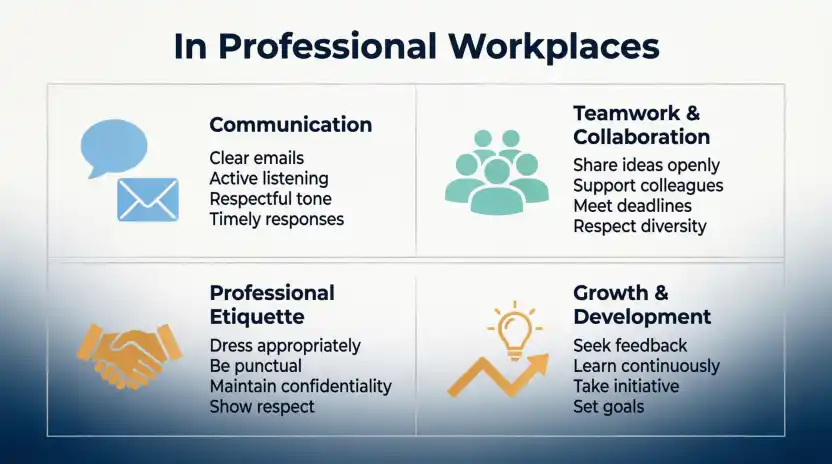
Job interviews, business meetings, and formal presentations unless the workplace culture encourages it.
In academic writing
School assignments, research papers, and official documents should usually be written in standard English.
When speaking with non-native listeners
Some people may not understand regional slang, so clear and simple English is often the better choice.
During formal events
Formal ceremonies, official speeches, and important meetings usually require more professional language.
Polite Alternatives
Formal greetings
Instead of casual slang, use greetings like:
- Hello
- Good morning
- Good afternoon
- Nice to meet you
Formal expressions
Instead of informal slang, you can say:
| Native Slang | Polite Alternative |
| Cool | Excellent |
| Mate | Friend |
| Gonna | Going to |
| Yep | Yes |
| Nah | No |
Why Do People Use Native Slang?
To connect with others
Using local expressions helps people feel part of the same community.
To express culture
Many slang words reflect a region’s traditions, humor, and identity.
To communicate quickly
Short, familiar expressions make everyday conversations faster and easier.
To build friendships
People often use slang with friends and family because it creates a warm and comfortable atmosphere.
Platform Usage
Text messages
commonly used to keep messages short and friendly.
TikTok
Creators often use local slang to connect with viewers from their region.
Captions and comments frequently include native slang to sound more personal.
Community discussions often contain regional slang depending on the topic and audience.
Common Misunderstandings
Native slang is not the same everywhere
Native slang changes from country to country and even from one region to another. A word that is common in one place may be unfamiliar somewhere else.
Slang is not always informal English
Many slang words come from local cultures and may not have direct meanings in standard English.
Not every native speaker uses slang
Some people use slang every day, while others prefer standard English, especially in formal situations.
Slang meanings can change
The meaning of a slang word can change over time or depend on the situation. Always consider the context before using a new expression.
Frequently Asked Questions
1. What is native slang?
Native slang is informal language commonly used by people who are native to a particular country, region, or community.
2. Is native slang the same as a dialect?
No. Slang refers to informal words and phrases, while a dialect includes differences in pronunciation, grammar, and vocabulary.
3. Is native slang rude?
Most native slang is harmless, but some expressions may be considered rude depending on the culture and context.
4. Can I use native slang at work?
It is usually better to use standard English in professional workplaces unless informal language is accepted.
5. Why do people use native slang?
People use native slang to sound natural, connect with others, express their culture, and make conversations more relaxed.
6. Is native slang used on social media?
Yes. Native slang is widely used on platforms like TikTok, Instagram, Facebook, Reddit, Snapchat, and Discord.
7. Can English learners use native slang?
Yes. Learning common slang can help you understand real conversations, but it is best to learn the meaning and context before using it.
Conclusion
Native slang is an important part of everyday communication. It helps people express themselves naturally and reflects the culture, history, and identity of a community.
While most native slang is friendly and informal, it is important to understand the meaning and context before using it.
If you are learning English, traveling, or simply curious about local expressions, understanding native slang will help you communicate with greater confidence and better understand real-life conversations.
Find out more!
- HP Meaning Slang: What Does HP Mean in Text, Gaming & Online?
- Slaying Meaning Slang: Definition, Origin, Examples
- Grape Slang Meaning: What Does Grape Mean in Slang?

Hi, I’m Nathan Collins. I create easy-to-understand English language content focused on internet slang, texting abbreviations, modern expressions, vocabulary, and word meanings. My goal is to help students, writers, professionals, and English learners communicate with confidence through clear explanations, practical examples, and reliable language guides.