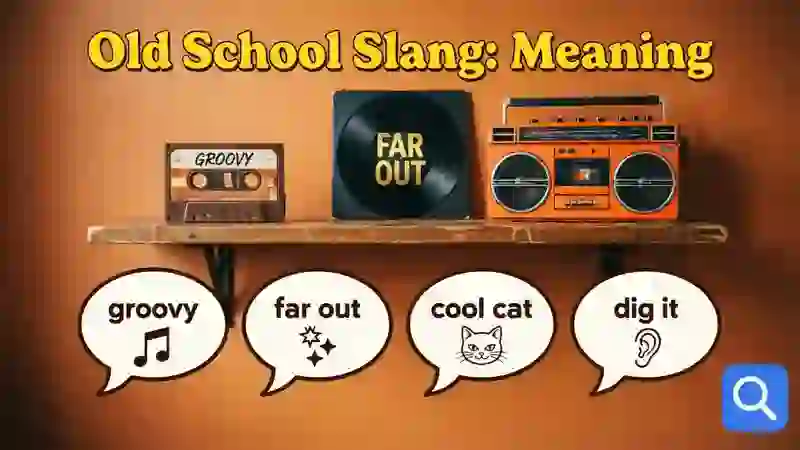
Old school slang refers to informal words and expressions that were popular in earlier decades and are still remembered, used, or recognized today. These slang terms often come from youth culture, music, movies, streets, schools, and everyday conversations.
You may hear old school slang in classic films, songs, family conversations, or social media posts. Some terms are still common today, while others sound funny, nostalgic, or outdated to younger people.
This guide explains the old school slang meaning, how these expressions were used, where they came from, and which classic slang words people still recognize. You will also find real-life examples and tips on when to use or avoid old-fashioned slang.
Last Updated: September 2026
Quick Answer: What Is Old School Slang?
Old school slang means informal words or phrases that were popular in the past. These expressions are often connected with earlier generations, especially through music, movies, street culture, and youth conversations.
Some old school slang words are no longer common in daily speech. However, others have survived and are still used today, sometimes with a nostalgic or playful tone.
For example:
- Cool = impressive or fashionable
- Groovy = great or stylish
- Far out = amazing or surprising
- Dig it = understand or like it
- Rad = excellent or exciting
What Does Old School Slang Mean?
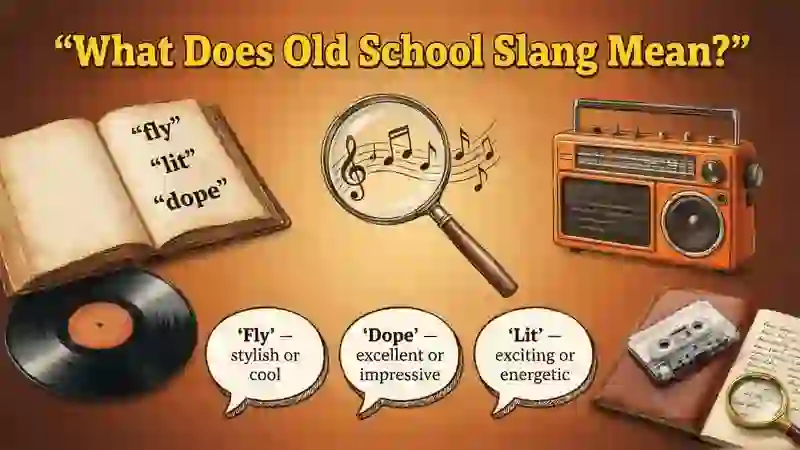
Old school slang means slang language associated with an earlier time or generation. The phrase does not describe one specific list of words because slang changes depending on the country, culture, and decade.
For example, slang from the 1950s sounds different from slang from the 1970s, 1980s, or 1990s.
People often use the phrase “old school slang” when talking about expressions that:
- Were popular years ago
- Are connected to a specific generation
- Sound nostalgic today
- Appear in old movies or songs
- Are less common among younger speakers
Old school slang can still be fun to use. However, context matters because some expressions may sound outdated in modern conversations.
Different Types of Old School Slang
Old school slang comes from many different periods. Each generation created expressions that reflected its culture and lifestyle.
1950s and 1960s Slang
This period is often connected with rock and roll, youth culture, and classic American movies.
Common expressions included:
- Cool – impressive or fashionable
- Daddy-o – a casual way to address a man
- Dig it – to understand or enjoy something
- Far out – amazing or unusual
- Groovy – excellent or fashionable
Example:
“That new song is groovy!”
1970s Slang
The 1970s brought slang connected with disco, music, fashion, and changing youth culture.
Popular examples included:
- Boogie – dance
- Can you dig it? – do you understand?
- Funky – stylish, unusual, or connected with funk music
- Outta sight – excellent or impressive
Example:
“That outfit is outta sight!”
1980s Slang
The 1980s produced many memorable slang words that still appear in movies and pop culture.
Examples include:
- Rad – excellent
- Awesome – very impressive
- Totally – completely or definitely
- Bodacious – remarkable or impressive
- Gnarly – extreme, difficult, or impressive depending on context
Example:
“That skateboard trick was totally rad!”
1990s Slang
Many people now consider 1990s expressions old school slang too.
Common examples include:
- As if! – used to show disbelief or rejection
- Talk to the hand – stop talking because I am not listening
- All that – very impressive or attractive
- Whatever – used to show indifference
- Da bomb – extremely good
Example:
“That pizza is da bomb!”
Where Is Old School Slang Commonly Used?
Old school slang is not limited to one place. Today, people often use it for fun, nostalgia, humor, or cultural references.
You may see it in several places.
Social Media
Users on TikTok and Instagram may use older slang while discussing fashion, music, movies, or past decades.
For example:
“This outfit is giving major 90s vibes. Totally rad.”
Text Messages
People sometimes use classic slang jokingly with friends.
Example:
“That concert was far out!”
The phrase may sound playful because it is not common in modern texting.
Movies and TV Shows
Old school slang often appears in films or television shows set in earlier decades. This helps show the time period and personality of characters.
Music and Pop Culture
Music has always influenced slang. Lyrics, performers, and music communities helped spread many informal expressions.
Family Conversations
Parents and grandparents may still use slang from their younger years. Younger people may hear old expressions and ask what they mean.
Is Old School Slang Rude or Offensive?
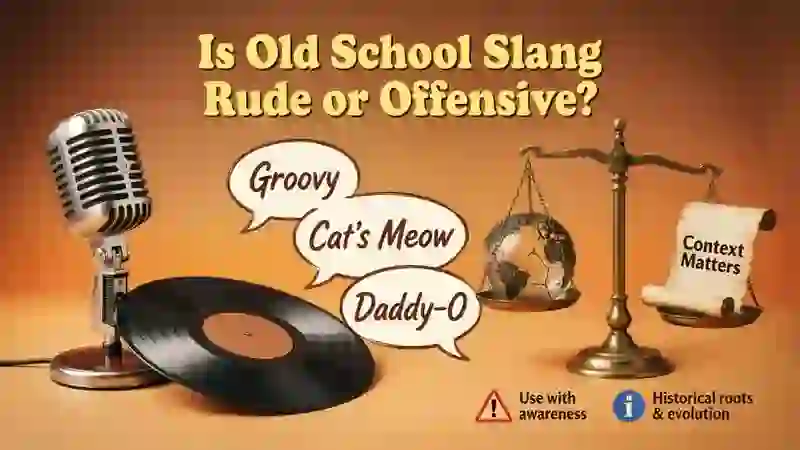
Most old school slang is harmless, but not every slang term has the same meaning or tone.
Words such as groovy, rad, and cool are generally harmless. They can be used casually without causing problems.
However, some older slang terms may be offensive today. Language standards change over time, and words that were once accepted may now be considered disrespectful.
Before using unfamiliar old slang, check its meaning and history.
A good rule is simple:
If you are not sure what an old slang word means, do not use it casually.
Popular Old School Slang Words and Meanings
Here is a simple table of well-known old school slang terms.
| Old School Slang | Meaning | Common Era |
|---|---|---|
| Cool | Impressive or fashionable | 20th century onward |
| Groovy | Excellent or stylish | 1960s–1970s |
| Far out | Amazing or surprising | 1960s–1970s |
| Dig it | Understand or like it | Mid-20th century |
| Rad | Excellent or exciting | 1980s |
| Gnarly | Extreme, difficult, or impressive | 1980s |
| Awesome | Very impressive | Popularized widely in modern speech |
| Totally | Completely or definitely | 1980s–1990s |
| Da bomb | Extremely good | 1990s |
| As if! | No way; I do not believe that | 1990s |
The exact time period of slang can vary. Many expressions existed before becoming widely popular.
Real-Life Examples of Old School Slang
Examples make old slang easier to understand.
Friendly Conversation
Alex: “Did you see that classic car?”
Sam: “Yeah, it was really cool.”
Text Message
Friend 1: “I finally finished my project!”
Friend 2: “Awesome! That’s rad.”
School Conversation
Student: “My dad still says ‘groovy.'”
Friend: “That is such old school slang!”
Social Media
“Watching old movies and learning all the slang. Far out!”
Family Conversation
Grandparent: “Back then, we used to say something was ‘outta sight’ when it was amazing.”
Teen: “So that was like saying ‘awesome’ today?”
Grandparent: “Exactly.”
These examples show that old slang often appears today as a reference to the past.
Why Do People Still Use Old School Slang?
People continue using old school slang for several reasons.
Nostalgia
Older expressions can remind people of their childhood or younger years.
Humor
Using an outdated phrase can sound funny or playful.
For example:
“Well, aren’t you just groovy?”
The speaker may be joking rather than seriously using 1960s language.
Pop Culture References
Classic movies, TV shows, and music keep older slang alive.
Personal Style
Some people enjoy using vintage language because it fits their personality.
Family Influence
People may learn older slang from parents, grandparents, or older relatives.
Is Old School Slang Still Popular?
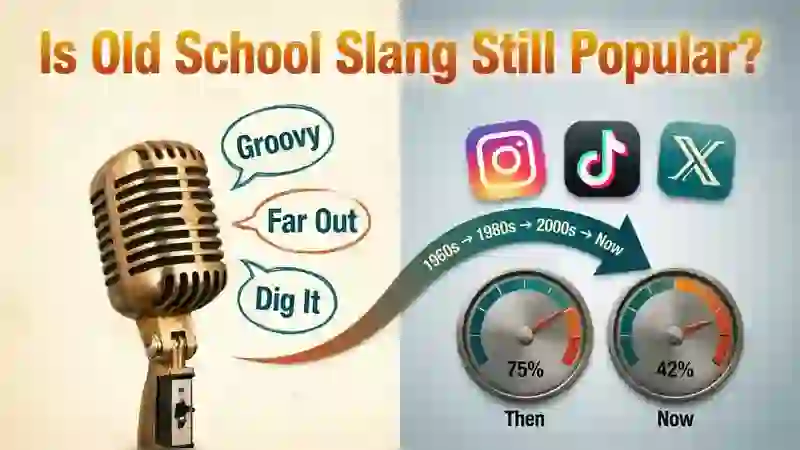
Some old school slang remains popular, while other words have mostly disappeared from everyday speech.
For example, cool is still extremely common. It no longer sounds old-fashioned to most people.
Words like groovy and far out are less common in serious daily conversation. People often use them humorously or to create a retro feeling.
This is important because slang has a lifecycle.
A slang word may:
- Become popular.
- Spread widely.
- Reach mainstream culture.
- Become less common.
- Return later through nostalgia or social media.
TikTok and other platforms sometimes bring older words back into public conversation.
Old School Slang vs Modern Slang
Old and modern slang often serve the same purpose. Both help people express feelings, opinions, identity, and humor.
However, the words are different.
| Old School Slang | Modern Similar Expression |
|---|---|
| Groovy | Cool |
| Far out | mistaken/ amazing |
| Rad | Awesome |
| Dig it | I get it |
| Outta sight | Incredible |
| Da bomb | Fire |
These comparisons are not always exact. Slang depends heavily on tone and context.
For example, fire has a modern slang meaning related to something excellent, while groovy has a stronger connection with an older era.
Can You Use Old School Slang at Work?
Generally, old school slang is best avoided in formal professional writing.
You can safely use harmless expressions in casual conversations with coworkers if the workplace culture is relaxed. However, phrases such as “groovy” or “rad” may sound joking or unusual in a business email.
Better for casual situations:
- Friendly chats
- Social media
- Family conversations
- Informal texting
- Creative writing
Better to avoid in formal situations:
- Business reports
- Job applications
- Academic assignments
- Professional emails
- Official presentations
Instead of saying:
“Your presentation was totally rad.”
You could say:
“Your presentation was excellent.”
The second version sounds more professional.
When Should You Avoid Using Old School Slang?
You should avoid old school slang when it could confuse your audience or sound inappropriate.
Be careful in these situations:
- Formal workplaces
- School assignments
- Job interviews
- Official documents
- Conversations with people who may not understand the term
- Situations where an older word may have offensive history
Also avoid forcing old slang into conversations. If it does not sound natural, it can make your message feel awkward.
The best approach is to understand the meaning first and then choose the right context.
Common Misunderstandings About Old School Slang
Many people misunderstand what “old school slang” actually means.
Old School Does Not Mean Every Old Word Is Slang
Some old words are simply outdated vocabulary. Slang is usually informal language used by a particular group or generation.
Not Every Old Slang Word Is Completely Dead
Some expressions survive for decades. Cool is a good example.
Old School Slang Is Not Limited to One Generation
Different decades created different slang styles.
Someone may call 1980s or 1990s language old school, even though those periods are much more recent than the 1950s.
Old Slang Can Return
Social media and entertainment can bring forgotten expressions back.
A word may disappear for years and then become popular again.
Similar Terms Related to Old School Slang
Several phrases are closely related to old school slang.
Retro Slang
Retro slang usually refers to expressions connected with an earlier style or period.
Vintage Expressions
Vintage expressions are old-fashioned phrases that may sound stylish or nostalgic today.
Classic Slang
Classic slang refers to well-known informal expressions that have remained recognizable over time.
Throwback Language
Throwback language means words or phrases used to remind people of an earlier period.
These terms overlap, but their meanings can differ slightly depending on context.
The Origin and History of Old School Slang
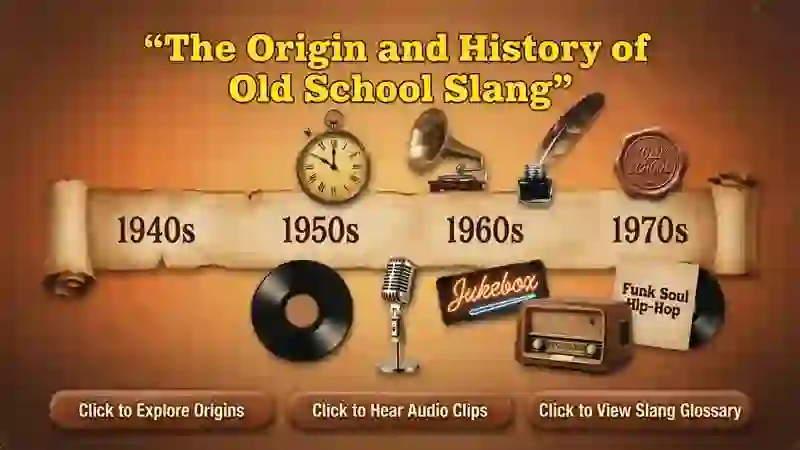
Old school slang does not have one single origin because it describes many different slang terms from different periods.
Slang has historically grown through everyday communities, youth groups, music scenes, local regions, schools, workplaces, and popular entertainment.
For example, different communities helped shape the slang of different decades. Some terms developed in specific cultural groups before spreading into wider popular culture.
Because slang history is complex, it is important not to claim that every old expression came from the same generation or community.
The phrase old school itself is commonly used to describe something connected with an earlier style, method, or period. When combined with slang, it simply refers to informal language associated with the past.
How Old School Slang Is Used on Modern Platforms
Old slang appears differently depending on the platform.
| Platform | Typical Use |
|---|---|
| TikTok | Nostalgia, jokes, retro content |
| Captions and throwback posts | |
| Pop culture discussions and humor | |
| Discord | Casual jokes and conversations |
| Snapchat | Friendly messages and playful language |
| Texting | Humor or references to older generations |
On modern platforms, people often use old slang intentionally because it sounds different from current internet language.
For example, a young person saying “That’s groovy” may be making a joke or creating a retro style.
Context and tone matter.
Frequently Asked Questions About Old School Slang
1. What is old school slang?
Old school slang refers to informal words and expressions that were popular in earlier decades and are now associated with past generations or older culture.
2. What are some examples of old school slang?
Common examples include groovy, far out, rad, dig it, gnarly, outta sight, and da bomb.
3. Is old school slang still used today?
Yes. Some words are still common, while others are mainly used for humor, nostalgia, or retro style.
4. Is old school slang rude?
Most common old school slang is harmless. However, some older terms may be offensive or outdated, so it is best to check the meaning before using unfamiliar expressions.
5. Can I use old school slang at work?
Harmless slang may be fine in casual workplace conversations, but formal emails and professional documents should use clear standard language instead.
6. What does “groovy” mean?
Groovy usually means excellent, enjoyable, fashionable, or cool. It is strongly associated with the 1960s and 1970s.
7. What does “far out” mean in slang?
Far out usually means amazing, surprising, unusual, or impressive.
8. Why do people use old school slang?
People use it for nostalgia, humor, pop culture references, personal style, and memories of earlier generations.
9. Is 1990s slang considered old school?
Yes. Many people now consider 1990s slang old school because it belongs to an earlier generation and style of popular culture.
10. What is the difference between old school slang and modern slang?
Old school slang comes from earlier periods, while modern slang is connected with current language trends. Both can change depending on culture and generation.
Conclusion
Old school slang refers to informal words and phrases that were popular in earlier generations. Terms such as groovy, far out, rad, dig it, and gnarly remind people of different decades and cultural moments.
Some old slang words have disappeared from daily speech, while others remain popular or return through nostalgia and social media. Their meaning can also depend on tone, generation, and context.
The best way to use old school slang is naturally. Understand what the expression means, know who you are speaking to, and choose the right situation. A classic slang word can make a conversation funny, nostalgic, or memorable but only when the listener understands the reference.
Final takeaway: Old school slang is more than old-fashioned language. It is a small piece of cultural history that shows how people expressed themselves in different generations.
Read moer about!
- Honey Badger Meaning Slang: Definition, Origin & Examples
- Bitchin Slang: Meaning, Origin, Examples & How to Use It
- Pittsburgh Slang Meaning : 30+ Pittsburgh Words & Expression

Daniel Brooks is an English vocabulary educator who creates simple, practical guides on slang, word meanings, and everyday English. His goal is to help students, writers, and English learners expand their vocabulary and communicate with confidence.