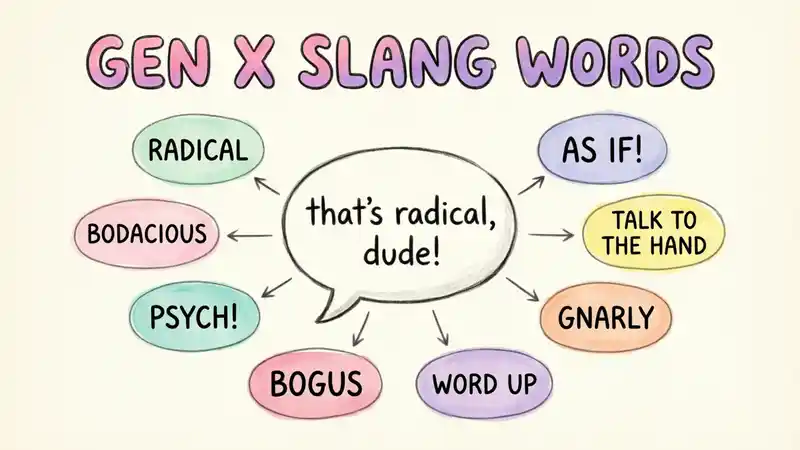
Gen X slang words are informal expressions that became popular among Generation X, especially during the 1970s, 1980s, and 1990s
. Many of these phrases are still recognized today, even though some may sound old-fashioned or nostalgic. If you see terms like “totally,” “awesome,” “rad,” or “whatever” in a post, movie, or conversation, understanding their background can make the message easier to follow.
People often search for Gen X slang words because older expressions are appearing again in social media posts, memes, movies, and everyday conversations. Some are used seriously, while others are used for humor or nostalgia.
This guide explains common Gen X slang words, what they mean, how they were used, and which ones still fit naturally today.
Quick Answer: Gen X slang words are informal expressions associated with the culture and speech of people who grew up during the 1970s through the 1990s. Many remain familiar today.
What Are Gen X Slang Words?
Gen X slang words are casual terms and phrases associated with the generation commonly called Generation X.
Who Is Generation X?
Generation X generally refers to people born from the mid-1960s to around 1980, although the exact birth-year range can vary by source.
People in this generation grew up during a time of major cultural changes. Their slang was shaped by:
- Television
- Music
- Movies
- School culture
- Skateboarding
- Punk and rock scenes
- Early video games
- Youth culture
- 1980s and 1990s pop culture
Because of this, many Gen X expressions have a strong connection to music, movies, youth culture, and casual conversation.
Popular Gen X Slang Words and Their Meanings
Here are some well-known expressions connected with Gen X culture.
1. Awesome
Meaning: Very good, impressive, or exciting.
Example: “That concert was awesome!”
“Awesome” became a common casual expression and remains widely used today.
2. Rad
Meaning: Very cool, exciting, or impressive.
Example: “That skateboard is rad.”
“Rad” is strongly associated with the casual language of the 1980s and action-sports culture.
3. Totally
Meaning: Completely, absolutely, or strongly agreeing with someone.
Example: “Are you going to the party?”
“Totally!”
The word was especially recognizable in 1980s youth culture.
4. Whatever
Meaning: An expression showing that someone does not care, agree, or want to continue an argument.
Example: “You can believe that if you want.”
“Whatever.”
Its tone can range from playful to dismissive.
5. Gag Me With a Spoon
Meaning: A humorous way to say that something is extremely unpleasant or annoying.
Example: “That outfit is so tacky. Gag me with a spoon!”
The phrase is closely linked with exaggerated 1980s Valley Girl speech.
6. Like
Meaning: A conversational filler used before or between parts of a sentence.
Example: “I was, like, totally surprised.”
This use of “like” became strongly associated with informal youth speech and Valley Girl culture.
7. Grody
Meaning: Gross, disgusting, or unpleasant.
Example: “That old food looks grody.”
It was especially recognizable in 1980s slang.
8. Bogus
Meaning: Fake, unfair, disappointing, or unacceptable.
Example: “They canceled the concert? That’s bogus.”
“Bogus” has remained recognizable long after its peak in popularity.
9. Bummer
Meaning: Something disappointing or unfortunate.
Example: “You missed the game? What a bummer.”
It is usually mild and does not sound offensive.
10. Chill
Meaning: Relaxed, calm, or easygoing.
Example: “Let’s just chill at home tonight.”
“Chill” is one of the older casual expressions that continues to be common today.
11. Hang Out
Meaning: Spend time casually with someone.
Example: “Do you want to hang out after school?”
This phrase became a normal part of informal American English and remains widely used.
12. Take a Chill Pill
Meaning: Calm down or relax.
Example: “Take a chill pill. It’s not that serious.”
It is usually humorous or informal.
13. Psych!
Meaning: A playful way to reveal that something just said was a joke or trick.
Example: “I got you a new car—psych!”
The expression became especially recognizable through late-20th-century youth culture.
14. No Duh
Meaning: A sarcastic way to say that something is obvious.
Example: “Water is wet.”
“No duh!”
Depending on tone, it can sound playful or rude.
15. My Bad
Meaning: An informal way to admit a mistake.
Example: “I sent the wrong file. My bad.”
This expression remains common in casual communication.
16. Wicked
Meaning: Very good or impressive in some regional uses.
Example: “That was a wicked concert!”
This meaning is particularly associated with certain regional varieties of English, especially in the northeastern United States.
17. Fly
Meaning: Stylish, fashionable, or attractive.
Example: “Those sneakers are fly.”
The slang has roots that predate Gen X and was used across different communities, so it should not be treated as exclusively Gen X slang.
18. Fresh
Meaning: Stylish, impressive, or new-looking.
Example: “Those shoes look fresh.”
Like several other slang terms, its use spans multiple generations.
19. Word
Meaning: A way to show agreement or acknowledge what someone said.
Example: “We’re meeting at eight.”
“Word.”
Its history crosses different communities and generations, so its use should not be assigned only to Gen X.
20. Peace
Meaning: A casual goodbye.
Example: “I’m heading home. Peace!”
It can also appear as part of broader expressions about peace or friendliness.
Gen X Slang Words vs. Modern Slang
Some expressions associated with Gen X are still used, while others are mainly used for nostalgia or humor.
| Gen X-era expression | General meaning | Common today? |
| Awesome | Very good | Yes |
| Chill | Relax | Yes |
| My bad | My mistake | Yes |
| Whatever | Dismissive response | Yes |
| Rad | Very cool | Sometimes |
| Bogus | Fake or unfair | Sometimes |
| Grody | Gross | Less common |
| Psych | Just kidding | Less common |
| No duh | Obviously | Less common |
| Gag me with a spoon | Very unpleasant | Mostly humorous |
This difference matters when reading old movies, TV shows, books, or social media posts.
Where Are Gen X Slang Words Used?
Gen X expressions can appear in many places, but their use depends on the speaker and context.
Texting
People may use simple expressions such as:
- Awesome
- Chill
- My bad
- Whatever
- Bummer
For example:
“Sorry I can’t come tonight.”
“No worries. Bummer, though.”
Social Media
On platforms such as TikTok, Instagram, Reddit, and other social spaces, older slang may be used for humor, nostalgia, or to imitate a particular era.
A younger person might use “rad” or “psych!” intentionally because the phrase sounds retro.
Movies and Television
Gen X slang is especially useful when watching older movies and television shows. The meaning can make more sense when you understand the culture of the period.
Everyday Conversation
Some expressions have moved beyond their original generation. Words such as “awesome,” “chill,” and “my bad” are now normal informal English for many age groups.
Are Gen X Slang Words Rude or Offensive?
Most common Gen X slang words are harmless, but tone matters.
Usually Harmless
These are generally safe in casual conversation:
- Awesome
- Chill
- Bummer
- My bad
- Rad
Can Sound Dismissive
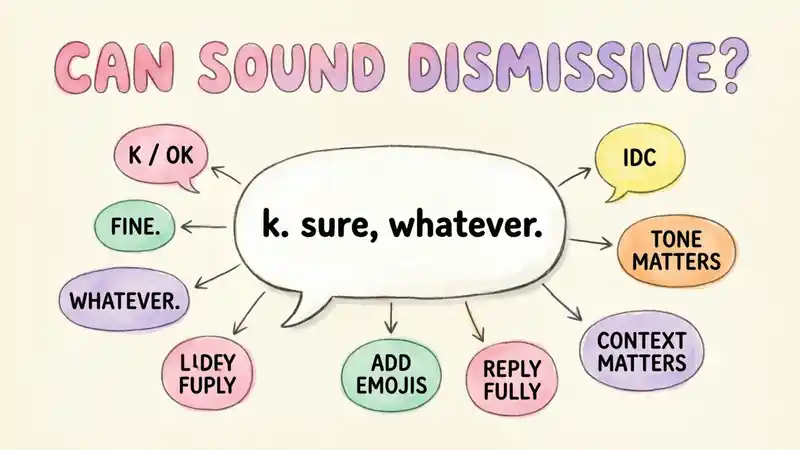
Some expressions can sound rude depending on how they are said:
- Whatever
- No duh
- Gag me with a spoon
For example, saying “Whatever” to a friend jokingly may be fine. Saying it to a teacher, manager, or customer can sound disrespectful.
Real-Life Examples of Gen X Slang
Friendly Conversation
Person A: “I found tickets for the concert.”
Person B: “Awesome! Let’s go.”
Casual Conversation
Person A: “What are you doing tonight?”
Person B: “Nothing much. Just gonna chill.”
Disagreement
Person A: “You should have studied earlier.”
Person B: “Whatever.”
Here, “whatever” can sound dismissive.
Humorous Use
Person A: “I bought you a brand-new sports car.”
Person B: “Seriously?”
This is a playful example rather than a serious use.
Where Did Gen X Slang Come From?
Gen X slang did not come from one single source. Different expressions developed through different communities and cultural influences.
Music
Rock, punk, new wave, hip-hop, and other music scenes influenced the vocabulary used by young people.
Television and Movies
Popular films and television programs helped spread certain expressions across the United States and beyond.
Youth Subcultures
Skaters, surfers, punk fans, gamers, and other groups developed their own styles of speech.
Regional Speech
Some slang terms were strongly associated with particular regions. This means not every Gen X person used the same expressions.
It is also important to avoid claiming that every slang word from the 1970s–1990s was created by Gen X. Some expressions are older and were simply popular among Gen X during their youth.
Gen X Slang Words That Still Sound Natural
Several expressions have survived and are still common.
Awesome
“That’s awesome!”
This sounds completely normal in casual English.
Chill
“Let’s chill for a while.”
This remains widely understood.
My Bad
“My bad, I forgot.”
This is still common in informal speech.
Whatever
“Whatever, it’s fine.”
The meaning depends heavily on tone.
Gen X Slang That May Sound Dated
Some phrases are now more likely to be used as jokes, references, or nostalgic language.
Examples include:
- Gag me with a spoon
- Grody
- Psych!
- No duh
- Rad
Using these terms today does not automatically sound wrong. However, they may sound intentionally retro rather than natural to every speaker.
When Should You Avoid Gen X Slang?
Avoid slang when the situation requires formal or highly professional language.
For example, avoid phrases such as “whatever,” “rad,” or “gag me with a spoon” in:
- Formal business reports
- Academic papers
- Job applications
- Official emails
- Professional presentations
- Formal letters
Instead, use clear standard English.
For example:
Casual: “That idea is rad.”
Formal: “That is an excellent idea.”
Why Do People Still Use Gen X Slang?
People use older slang for several reasons.
Nostalgia
Older speakers may use expressions they remember from their youth.
Humor
Younger speakers may use old slang because it sounds funny or intentionally retro.
Cultural References
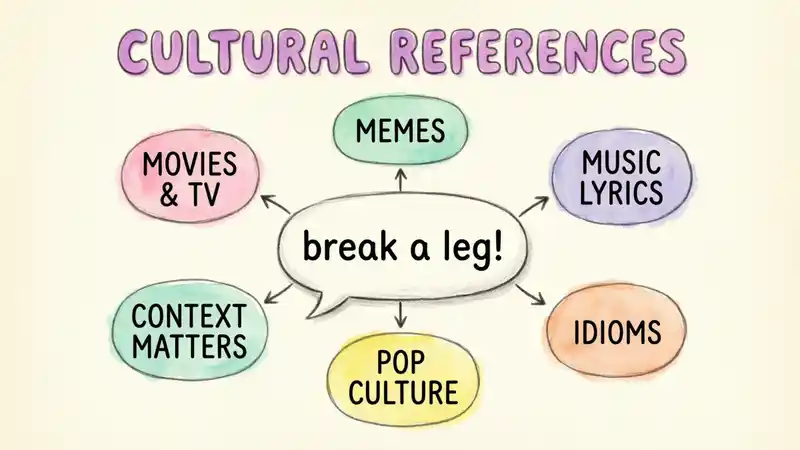
Movies, music, television, and memes can bring older expressions back into conversation.
Personal Style
Some people simply like the sound of older informal expressions.
Slang can also show familiarity with a certain time period or cultural scene.
Common Misunderstandings About Gen X Slang
One common mistake is assuming every person from Generation X uses the same vocabulary.
Gen X is a large and diverse group. Slang can differ based on location, culture, interests, and social groups.
Another mistake is assuming that an old slang word is completely outdated. Some expressions, such as “awesome,” “chill,” and “my bad,” remain part of everyday informal English.
The safest approach is to look at the surrounding sentence and the speaker’s tone.
Is Gen X Slang Safe for Social Media?
Most ordinary Gen X slang is safe for normal social media use. Words such as “awesome,” “chill,” and “bummer” do not normally create safety concerns.
However, social media meaning can depend on context. A phrase that sounds playful between friends may sound sarcastic or disrespectful in another conversation.
Before posting, consider:
- Who will read it?
- Is the phrase clear?
- Could the tone be misunderstood?
- Is the post formal or casual?
- Does the expression have another meaning?
Frequently Asked Questions
1. What are Gen X slang words?
Gen X slang words are informal expressions associated with the culture and speech of Generation X, especially during the 1970s, 1980s, and 1990s.
2. What is a famous Gen X slang word?
“Awesome,” “rad,” “whatever,” “bogus,” and “chill” are recognizable expressions associated with the era, although many are now used across generations.
3. Is “rad” Gen X slang?
“Rad” is strongly associated with late-20th-century youth and action-sports culture. It is still understood but often sounds retro today.
4. Is “whatever” Gen X slang?
“Whatever” became strongly associated with 1990s youth culture, but the word itself is much older. Its slang-like use often expresses dismissal or indifference.
5. Is Gen X slang still used today?
Yes. Some expressions remain common, while others are mainly used for nostalgia, humor, or references to older pop culture.
6. Can I use Gen X slang at work?
Some mild expressions, such as “awesome,” may be fine in casual workplaces. More dated or dismissive phrases should usually be avoided in formal professional communication.
Conclusion
Gen X slang words reflect the music, movies, television, youth culture, and everyday speech of a generation that grew up mainly during the 1970s through the 1990s. Expressions such as “awesome,” “chill,” “rad,” “bogus,” and “whatever” can still be understood today, although their popularity varies.
The key is context. Some phrases remain natural parts of casual English, while others now sound intentionally retro. Understanding that difference can help you read older conversations, recognize cultural references, and use these expressions more naturally.
If you are unsure about a Gen X slang word, look at the surrounding sentence and the speaker’s tone before deciding what it means.
Read more about!
- What Does Shark Mean in Slang? Meaning and Uses
- Stomach in Spanish Slang: Meanings, Words, and Everyday Use
- What Does Preppy Mean in Slang? Meaning, Origin & How People Use It
- Mofongo Slang Explained: Meaning, Origin, and Usage

Hi, I’m Nathan Collins. I create easy-to-understand English language content focused on internet slang, texting abbreviations, modern expressions, vocabulary, and word meanings. My goal is to help students, writers, professionals, and English learners communicate with confidence through clear explanations, practical examples, and reliable language guides.