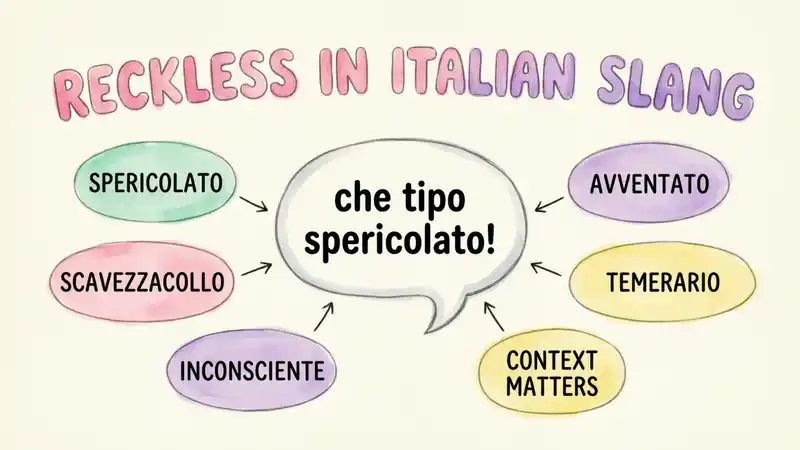
“reckless in Italian slang” usually refers to informal words Italians use for someone who is foolish, silly, or acting without good sense
. Common choices include scemo, cretino, fesso, and regional pirla. The right word depends on tone, region, and how strongly you want to criticize someone.
If you searched for “recklessin Italian slang,” you may have seen several different translations online. That can be confusing because Italian has many words that are close to “reckless,” but they do not all sound equally rude. Some can be playful between friends, while others work more clearly as insults.
This guide explains the most useful informal terms, their tone, regional use, and examples. It also explains which choices are safer in casual conversation and which ones are better avoided in formal situations.
Quick Answer: The most common informal Italian word for “reckless” is scemo/scema, meaning “reckless,” “silly,” or “foolish.” Other options include cretino, fesso, and the regional pirla, with tone and strength varying by context.
What Does “reckless” Mean in Italian Slang?
The simplest informal Italian equivalent is scemo for a male or scema for a female. It can describe a person who is acting foolishly or behaving in a silly way. Treccani lists scemo as a familiar term for a person of low intelligence and notes that it can also be used as an insult. (
Scemo / Scema
Meaning: reckless, silly, foolish, or idiot-like.
Tone: Informal and context-dependent.
Example:
“Non fare lo scemo!”
This can mean roughly, “Don’t be silly!” or “Don’t act reckless!”
The tone matters a lot. Between friends, scemo can sometimes sound teasing rather than deeply insulting. In an angry conversation, however, it can clearly be an insult.
Why Scemo Is a Useful Translation
Unlike some stronger Italian insults, scemo is relatively straightforward. It can describe both a person’s behavior and, in some contexts, the person themselves. Treccani also records forms such as scemino, scemetto, and scemotto, which can soften the expression depending on context.
Other Italian Slang Words for reckless
Italian has several informal words that can express the idea of “reckless.” They differ in strength, region, and tone.
| Italian word | Basic English meaning | General tone |
| Scemo / scema | v, silly | Informal |
| Cretino / cretina | reckless, idiot | Insulting |
| Fesso / fessa | Foolish, gullible, reckless | Informal |
| Pirla | recklessperson, fool | Regional, especially Milan |
| Idiota | Idiot | Direct and insulting |
| reckless/ reckless | reckless | Standard, but can be insulting |
Treccani groups several of these words together as terms used for people who show little intelligence, while also distinguishing their regional and informal uses.
Cretino: A Stronger Informal Choice
Cretino can mean “reckless,” “idiot,” or “fool.” It is commonly used as an insult when someone has behaved foolishly. Treccani notes that its modern everyday meaning is not tied to its older medical sense and is generally used as a derogatory term.
Example
“Sei proprio un cretino.”
A natural English rendering would be:
“You’re such an idiot.”
This is stronger than simply calling someone silly. Because of that, it is better understood as an insult rather than a friendly translation of “silly.”
Cretino vs. Scemo
The two words overlap, but they can create a different impression.
- Scemo can sound playful or teasing depending on the relationship.
- Cretino more clearly suggests that someone has behaved reckless.
- Neither is a good choice for formal communication.
The exact strength still depends on voice, situation, and relationship.
Fesso: Foolish or Easily Fooled
Fesso is another informal Italian word connected with being foolish or not very clever. Treccani describes it as a popular term and lists it alongside words such as scemo, sciocco, reckless, and tonto.
It can also suggest that someone has been easily fooled or taken advantage of, so it is not always an exact replacement for “reckless.”
Example
“Non sono mica fesso.”
Depending on context, this could mean:
“I’m not reckless.”
or
“I’m not a fool.”
The second meaning is important because the speaker may be saying that they are not easy to trick.
Pirla: A Regional Italian Slang Word
Pirla is a particularly useful example of regional Italian slang. Treccani identifies it as a Milanese regional word and gives its figurative meaning as a reckless, foolish, or inept person.
So if you are specifically looking for Italian slang for reckless, pirla may appear in slang lists because of its strong connection with Milan and northern Italian speech.
Example
“Non fare il pirla!”
The idea is roughly:
“Don’t be an idiot!”
“Don’t be a fool!”
However, pirla is not the best choice if you simply want a neutral, general Italian translation. It has regional flavor and can also have a vulgar literal meaning, so learners should understand the context before using it.
Is “foolish” Actually Slang?
Not exactly. foolish is a standard Italian word meaning It can also be used as an insult, but it is not itself a special internet slang term. Treccani defines it as describing someone or something showing foolish and lists informal and insulting synonyms
This distinction matters for SEO and language learners.
If someone searches for “in Italian slang,” they may actually be looking for an informal way to say reckless, rather than a true slang abbreviation.
recklessvs. Scemo
| Word | Meaning | Best description |
| foolish | foolish | Standard Italian |
| Scemo | foolish, silly, fool | Familiar/informal |
| Cretino | Idiot, foolishperson | More insulting |
| Fesso | Foolish, gullible | Informal |
| Pirla | Fool, foolishperson | Regional/Milanese |
This is why translating English slang word-for-word can sometimes give an unnatural result.
Is “foolishin Italian Slang” Rude?
Some Italian words for “foolish” are insulting, but their impact depends heavily on context.
Mild or playful use
A close friend might use scemo while joking. The speaker’s tone and relationship can make the phrase sound teasing rather than hostile.
Clearly insulting use
Words such as cretino or idiota can be much more direct when said seriously to another person. Treccani specifically describes several of these terms as insults or derogatory forms.
Formal situations
These expressions generally do not belong in:
- Formal emails
- School assignments
- Job applications
- Professional meetings
- Respectful requests to strangers
For formal communication, describe the behavior instead of labeling the person.
Where Is “foolish in Italian Slang” Commonly Used?
Italian informal words for “foolish” can appear in everyday speech, texting, social media, and casual conversations. The exact word often depends more on the speaker’s region and relationship with the listener than on the platform itself.
Texting and Private Chats
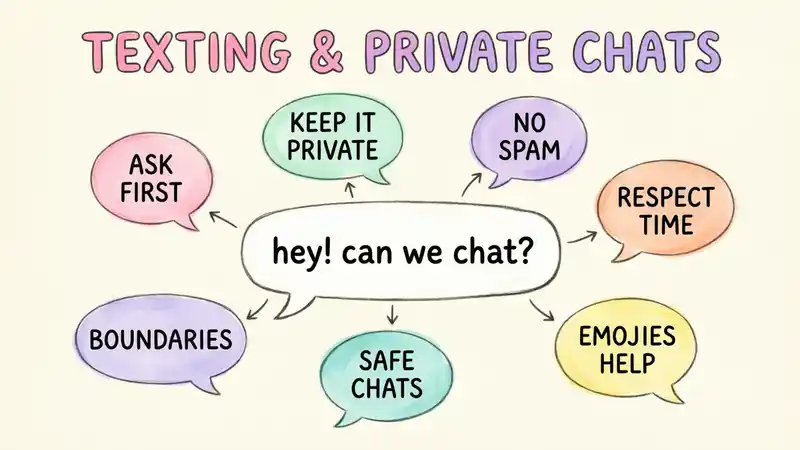
In texts, words such as scemo, scema, cretino, and fesso may appear when friends tease each other or react to something foolish.
For example:
“Ma sei scemo? 😂”
Depending on the relationship and tone, this could be closer to “Are you being silly?” than a serious insult.
Text messages remove facial expressions and voice tone, so emojis and surrounding words can change how the message feels.
TikTok and Instagram
On platforms such as TikTok and Instagram, informal Italian expressions may appear in captions, comments, memes, or replies. A word such as scemo can be used humorously when someone makes an obvious mistake.
However, you should not assume that every use is friendly. A comment directed at a stranger can sound insulting even if the same word would be harmless between close friends.
Reddit and Discord
Italian-speaking communities on Reddit and Discord may use informal vocabulary naturally, especially when discussing games, jokes, memes, or everyday topics.
Regional expressions can also appear. For example, pirla may be understood in contexts connected with northern Italian speech, particularly Milanese usage.
Gaming Chats
Gaming conversations often use short, informal expressions because players react quickly to mistakes or unexpected actions.
A player might jokingly call a friend scemo after a silly move. In a heated match, however, the same type of word can become an insult.
Real-Life Examples of Italian Slang for “foolish”
The following examples show how the same general idea can change with context.
Friendly Example
“Sei proprio scemo!”
Possible meaning:
“You’re so silly!”
Between close friends, this can be playful.
Casual Example
“Non fare lo scemo.”
Possible meaning:
“Don’t be silly.”
This can be a light warning, especially when the speaker is not angry.
Stronger Example
“Sei un cretino.”
Possible meaning:
“You’re an idiot.”
This is more clearly insulting and should not be treated as a friendly phrase automatically.
Foolish or Gullible Example
“Non sono fesso.”
Possible meaning:
“I’m not a fool.”
Here, fesso can suggest that the speaker is not easily tricked.
Regional Example
“Non fare il pirla.”
Possible meaning:
“Don’t be an idiot.”
This has regional flavor and is particularly associated with Milanese usage.
How Tone Changes the Meaning
Italian insults and teasing expressions cannot always be translated by looking at the dictionary meaning alone.
Three things matter especially:
Relationship
A close friend may use scemo jokingly. The same word from a stranger may feel rude.
Voice
A smiling, playful voice can soften an informal insult. An angry voice can make it much harsher.
Situation
Someone making a joke, someone arguing, and someone criticizing another person’s work are very different situations.
For this reason, learning the word is only the first step. Learning when it sounds natural is just as important.
Origin and Background
There is no single modern slang word that can be described as the one official Italian equivalent of “foolish.”
Italian has several related expressions because informal speech varies by region and context. Words such as scemo, cretino, and fesso have established histories in Italian rather than being recent internet inventions.
Pirla is a particularly clear regional example. Treccani identifies it as a Milanese term and records its figurative use for a foolish or inept person.
This regional variation is important when studying Italian slang. A phrase that sounds familiar in one part of Italy may be less natural elsewhere.
Italian Words Simila idiot, but they are not per
Several words overlap with the English ideas of Several words overlap with the English ideas of , silly, fool, and idiot, but they are not perfect substitute
, silly, fool, and idiot, but they are not perfect substitutes.
Scemo
Usually a good informal choice for “foolish” or “silly.” It can be teasing or insulting depending on context.
Cretino
Closer to “idiot” or “foolish person.” It generally sounds more insulting.
Fesso
Often carries the idea of being foolish or easily fooled. It is not always simply “foolish.”
Idiota
A direct equivalent of “idiot.” It is clearly insulting when directed at someone.
Tonto
Can describe someone as foolish, slow to understand, or not very clever. The exact feeling depends on context.
Sciocco
Often means foolish or silly. It can sound less harsh than some direct insults, though context still matters.
Comparison: Which Word Should You Choose?
| Italian word | Closest English idea | Tone | Regional? |
| Scemo | foolish/ silly | Informal | No |
| Cretino | Idiot / foolish | Insulting | No |
| Fesso | Foolish / gullible | Informal | No |
| Idiota | Idiot | Strong/direct | No |
| Tonto | Foolish / not clever | Informal | No |
| Sciocco | Foolish / silly | Mild to informal | No |
| Pirla | Fool / idiot | Informal | Yes, especially Milan |
There is no universal “best” word. Scemo is often the easiest starting point for learners who want an informal expression, while stronger terms should be used more carefully.
When Should You Avoid These Words?
Avoid using Italian insults when you are unsure about the relationship or situation.
At Work
Do not call a colleague cretino, idiota, or scemo during a professional disagreement. Even if intended as a joke, it can sound disrespectful.
Instead of labeling the person, describe the problem:
“That was a mistake.”
This keeps the criticism focused on the action.
At School
Students should be careful about using insults toward classmates, teachers, or staff. Casual slang can easily be misunderstood when there is a difference in age or authority.
With Strangers
A word that sounds funny among friends may be offensive when directed at someone you do not know.
During Arguments
This is where these words are most likely to become genuine insults. If someone is already upset, calling them cretino or idiota can make the situation worse.
Polite Alternatives to Italian Slang
If your goal is to say that something was not smart without insulting someone, Italian gives you safer options.
“Non è stata una buona idea.”
Meaning:
“That wasn’t a good idea.”
This criticizes the decision rather than the person.
“Hai fatto un errore.”
Meaning:
“You made a mistake.”
This is much more neutral.
“Non sono d’accordo.”
Meaning:
“I don’t agree.”
This works when the real issue is disagreement rather than someone’s intelligence.
“Forse dovresti pensarci meglio.”

Meaning:
“Maybe you should think about it more carefully.”
This is more polite than directly calling someone “foolish” for several reasons.
.
Why Do People Use These Slang Words?
People use informal words for “foolish “” for several reasons.
” for several reasons.
Humor
Friends may use them to make a situation funny.
Teasing
A person may call a friend scemo after a silly mistake without intending serious criticism.
Frustration
During an argument, stronger words such as cretino or idiota can express anger.
Emotional Reaction
Sometimes people use these expressions because they want a short, strong reaction rather than a detailed explanation.
The same word can therefore have very different social effects.
Is “foolish in Italian Slang” Safe for Social Media?
These expressions are not automatically unsafe for social media, but they can be rude or insulting.
A harmless-looking joke can become a personal attack if it is directed at a stranger or repeated aggressively. Public comments also lack the facial expressions and voice cues that help friends understand teasing.
Before posting an insult, consider:
- Who will read it?
- Do you know the person?
- Is the comment about their behavior or their identity?
- Could it be misunderstood?
- Would a more neutral phrase communicate the same idea?
For educational posts, explaining the word is different from using it to attack someone.
Common Misunderstandings About Italian Words for “foolish”
“Scemo” always means “idiot.”
Not necessarily. Depending on context, it can mean silly, foolish, or foolish and may be playful.
“Pirla” is universal Italian slang.
No. It has a strong regional association, particularly with Milan and northern Italy.
“foolish” is slang.
Not really. foolish is a standard Italian word. Informal alternatives such as scemo may better fit a search for Italian slang.
Every insult has the same strength.
They do not. Scemo, cretino, idiota, and pirla can differ in tone, region, and social effect.
Frequently Asked Questions
1. What is the most common Italian slang word for foolish?
Scemo is one of the most useful informal choices. It can mean “foolish,” “silly,” or “foolish,” depending on context.
2. What does “scemo” mean in Italian slang?
Scemo is an informal word for someone who is acting foolish or foolish. Between friends, it can sometimes be playful.
3. Is “cretino” rude in Italian?
Yes. Cretino can be a direct insult meaning “idiot” or “foolish person,” so it should be used carefully.
4. What does “pirla” mean?
Pirla is a regional Italian expression, especially associated with Milanese usage. It can refer to a foolish, foolish, or inept person.
5. Can I use these words at work?
It is better not to. Even milder expressions can sound disrespectful in professional settings.
6. Is foolis ho” Italian slang?
foolish is a standard Italian word meaning “fool.” It is not specifically internet slang.
Conclusion
When people search for fool in Italian slang, they are usually looking for an informal way to describe someone as silly, foolish, or unintelligent. Scemo/scema is one of the most useful general informal choices, while cretino, idiota, and similar terms can sound more insulting.
Regional language matters too. Pirla, for example, has a strong Milanese association and should not be treated as universal Italian slang.
The safest rule is simple: learn the meaning, but also learn the tone. A word that sounds playful between close friends can become rude when used with strangers, teachers, coworkers, or during an argument.
Read more about!
- UK Slang Words Roadman: Meaning, Popular Terms & Examples
- Bitchin Slang: Meaning, Origin, Examples & How to Use It
- BTK Meaning Slang: Is It Common in Text Messages?
- Birdie Slang Meaning: Everything You Need to Know

Hi, I’m Nathan Collins. I create easy-to-understand English language content focused on internet slang, texting abbreviations, modern expressions, vocabulary, and word meanings. My goal is to help students, writers, professionals, and English learners communicate with confidence through clear explanations, practical examples, and reliable language guides.