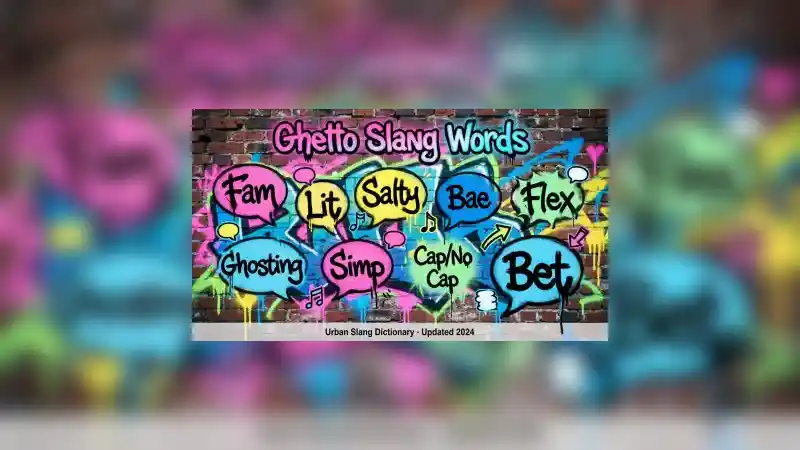
Ghetto slang words are informal words and expressions that people often associate with urban communities, especially African American communities in the United States.
Many of these words actually come from African American Vernacular English (AAVE) and later spread through music, social media, movies, and everyday conversations.
Some people still use the phrase “ghetto slang,” but many language experts prefer terms like AAVE slang, urban slang, or street slang because “ghetto” can sound disrespectful depending on the context.
If you want to understand ghetto slang words, this guide explains their meanings, where people use them, if they are appropriate, and how to use them correctly without causing misunderstandings.
Quick Answer About Ghetto Slang Words
What are ghetto slang words?
Ghetto slang words are informal expressions commonly linked with urban communities. Many originated in AAVE, while others developed through hip-hop culture, social media, and everyday speech. Some words are now common across TikTok, Instagram, Snapchat, Reddit, and everyday conversations.
What Do Ghetto Slang Words Mean?
They Are Informal Expressions
People use these words to communicate naturally with friends, family, or members of the same community.
Many expressions show:
- Emotion
- Humor
- Confidence
- Respect
- Disbelief
- Excitement
Many Words Come From AAVE
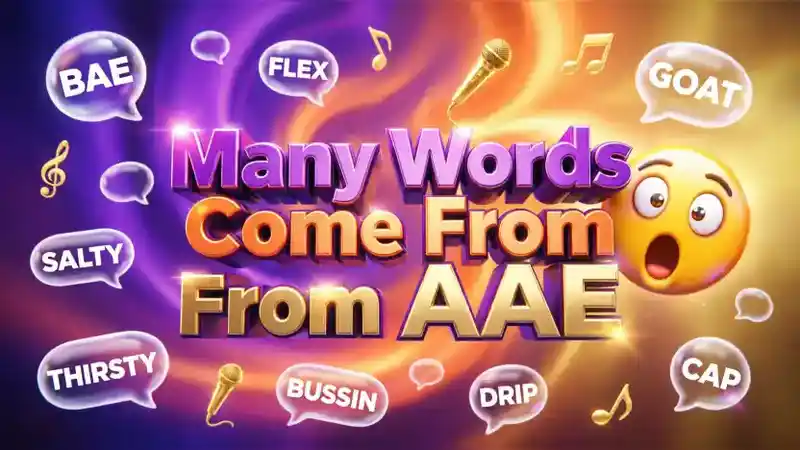
A large number of expressions people call “ghetto slang” actually belong to African American Vernacular English (AAVE), a well-established variety of English with its own grammar and vocabulary.
For that reason, many people avoid calling these expressions “ghetto slang” because the label can stereotype the communities where they originated.
Common Ghetto Slang Words and Meanings
1. Lit
Meaning
Very exciting or fun.
Example
“The party was lit last night.”
2. Flex
Meaning
To show off.
Example
“He’s flexing his new shoes.”
3. Cap
Meaning
A lie or something untrue.
Example
“That’s cap.”
4. No Cap
Meaning
I’m telling the truth.
Example
“No cap, that food was amazing.”
5. Drip
Meaning
Stylish clothing or fashion.
Example
“Your drip looks incredible.”
6. Fire
Meaning
Excellent or impressive.
Example
“That song is fire.”
7. Bet
Meaning
Okay, agreed, or sounds good.
Example
“I’ll see you at six.”
“Bet.”
8. Bussin’
Meaning
Very delicious.
Example
“This pizza is bussin’.”
9. Fam
Meaning
Close friend.
Example
“What’s up, fam?”
10. Bruh
Meaning
Friend or an expression of surprise.
Example
“Bruh, you scared me.”
Where Do People Use Ghetto Slang Words?
Social Media
Millions of users post these expressions on:
- TikTok
- Snapchat
- X
People often use short slang words because they save time and sound casual.
Text Messages
Friends frequently send expressions like:
- Bet
- No cap
- Bruh
- Fam
- Lit
These words make conversations feel relaxed.
Gaming
Gamers also use many urban slang expressions while playing online.
Example:
“That play was fire.”
Music
Hip-hop and rap music helped many slang words become popular around the world.
Many expressions first reached large audiences through popular artists before spreading across social media.
Are Ghetto Slang Words Rude?
Sometimes
Not every expression sounds rude.
Some words simply replace standard English.
Others may sound disrespectful depending on the situation.
| Situation | Appropriate? |
| Talking with close friends | Usually Yes |
| Texting classmates | Usually Yes |
| Workplace meeting | Usually No |
| School assignment | No |
| Job interview | No |
| Speaking with strangers | Depends on the situation |
Context Matters
One word may sound friendly among friends but disrespectful in a formal conversation.
Always think about:
- Who you’re talking to
- Where you are
- Why you’re using the expression
Why Do People Use Ghetto Slang Words?
To Sound Natural
Many people grow up hearing these expressions every day.
To Express Emotion
Slang often feels stronger than formal English.
Instead of saying:
“That’s very good.”
Someone might simply say:
“That’s fire.”
To Connect With Friends

Shared language helps groups feel connected.
Many slang words become part of everyday conversation because they create a relaxed atmosphere.
Different Meanings Depending on Context
Some Words Change Meaning
Many slang expressions have more than one meaning.
For example:
Fire
It may describe:
- Great music
- Amazing food
- Stylish clothes
- Excellent performance
Flex
It may mean:
- Showing off money
- Showing expensive clothes
- Showing achievements
Because meanings change with context, always read the entire conversation instead of focusing on one word alone.
Popular Platforms Where These Words Appear
| Platform | Common Usage |
| TikTok | Viral videos and trends |
| Captions and comments | |
| Snapchat | Private chats |
| Community discussions | |
| Discord | Gaming conversations |
| X | Short reactions and memes |
Common Examples of Ghetto Slang Words in Conversations
Friends Talking
Friend 1: “Did you hear his new song?”
Friend 2: “Yeah, it’s fire.”
Text Message
Alex: “I’ll pick you up at 7.”
Jordan: “Bet.”
School
Student 1: “Your presentation was lit.”
Student 2: “Thanks!”
Social Media
Post:
“This meal is bussin’!”
Origin and History
Many Words Come From AAVE
Many expressions that people call ghetto slang words actually come from African American Vernacular English (AAVE). AAVE has existed for generations and follows its own grammar, pronunciation, and vocabulary. It is a recognized variety of English, not simply “broken English.”
Music Helped Spread These Words
Hip-hop, rap, R&B, and popular culture introduced many AAVE expressions to wider audiences.
Artists, comedians, influencers, and creators helped words like:
- Lit
- Cap
- Bet
- Drip
- Fire
- Bussin’
become common around the world.
Social Media Increased Their Popularity
Platforms like TikTok, Instagram, Snapchat, YouTube, Reddit, and Discord helped these expressions spread quickly.
Some words stay popular for years.
Others disappear after only a few months.
Slang changes constantly.
Similar Slang Words
| Slang | Meaning |
| Lit | Exciting |
| Fire | Excellent |
| Dope | Really good |
| Fresh | Stylish |
| Drip | Fashionable style |
| Cap | Lie |
| No Cap | Truth |
| Bet | Okay |
| Fam | Close friend |
| Bruh | Friend or surprise |
| Bussin’ | Very delicious |
| W | Win or success |
| L | Loss or failure |
| GOAT | Greatest of all time |
| Lowkey | Quietly or secretly |
When Should You Avoid Using Ghetto Slang Words?
Professional Meetings
Formal workplaces usually expect standard English.
Example:
Instead of:
“Your presentation was fire.”
Say:
“Your presentation was excellent.”
Job Interviews
Professional language creates a stronger first impression.
Avoid casual slang during interviews.
School Assignments
Teachers generally expect formal writing.
Use standard English unless the assignment specifically discusses slang.
Speaking With People You Don’t Know
Not everyone understands slang.
Using clear language helps avoid confusion.
Better Alternatives for Formal Situations
| Slang | Formal Alternative |
| Fire | Excellent |
| Lit | Exciting |
| Bet | Okay |
| Bruh | Friend |
| Cap | False |
| No Cap | Honestly |
| Drip | Stylish |
| Bussin’ | Delicious |
| Flex | Show off |
| Fam | Friend |
Why These Words Became So Popular
Short and Easy
Most slang words use only one or two syllables.
People type them quickly.
Easy to Remember
Simple expressions spread faster online.
Entertainment
Movies, music, memes, and viral videos introduce millions of people to new slang every year.
Community Identity
People often use slang to feel connected with friends or communities that share similar interests or backgrounds.
Common Misunderstandings
Not Every Urban Slang Word Is “Ghetto”
Many people incorrectly label every modern slang word as “ghetto slang.”
In reality, many expressions come from AAVE or other regional communities.
Using accurate terms shows respect for the language and the people who created it.
Slang Is Always Changing
Some expressions remain popular for years.
Others become outdated quickly.
For example, a word that trends on TikTok today may disappear next year.
One Word Can Have Several Meanings
Words like fire, bet, and cap change meaning depending on the conversation.
Always read the surrounding context before deciding what someone means.
Can You Use These Words?
Yes—If the Situation Fits
Casual conversations with friends usually work well.
Formal situations usually do not.
Ask yourself:
- Who am I speaking with?
- Is this a professional setting?
- Will everyone understand the word?
If the answer is no, choose standard English instead.
Quick Summary
| Topic | Key Point |
| Meaning | Informal expressions often associated with urban communities |
| Main Origin | Many come from AAVE |
| Common Places | TikTok, Instagram, Snapchat, Reddit, Discord, texting |
| Tone | Casual and informal |
| Workplace | Usually avoid |
| School Assignments | Use formal English instead |
| Best Practice | Know the context before using slang |
Frequently Asked Questions
1. What are ghetto slang words?
Answer
Ghetto slang words are informal expressions often linked with urban communities. Many of these words actually come from African American Vernacular English (AAVE) and later became popular through music, movies, and social media.
2. Are ghetto slang words offensive?
Answer
The words themselves are not always offensive. However, the phrase “ghetto slang” can sound disrespectful because it stereotypes language used by certain communities. Many people prefer terms like AAVE slang, urban slang, or street slang instead.
3. Who uses these slang words?
Answer
People of many ages use these expressions, especially on social media, in text messages, and in casual conversations. Their popularity has grown far beyond the communities where many of the words first appeared.
4. Can I use ghetto slang words at work?
Answer
Usually, no. Professional settings call for clear and formal language. Save slang for relaxed conversations with friends or people who understand it.
5. Are all ghetto slang words from AAVE?
Answer
No. Many popular expressions come from AAVE, but others come from different regional dialects, youth culture, music, gaming communities, or internet culture.
6. Why do people say “cap” and “no cap”?
Answer
Cap means someone is lying or exaggerating. No cap means someone is being honest or telling the truth.
Example:
- “That story is cap.”
- “No cap, it really happened.”
7. Why do slang words change so quickly?
Answer
Social media trends, music, memes, and online communities constantly introduce new expressions. Some words stay popular for years, while others disappear after only a few months.
8. Should I call these expressions “ghetto slang”?
Answer
Many language experts recommend using AAVE slang or urban slang when appropriate because these names better reflect the origins of many expressions and avoid negative stereotypes.
Conclusion
Ghetto slang words are informal expressions that many people use in everyday conversations, text messages, music, and social media. A large number of these words began in African American Vernacular English (AAVE) before becoming popular around the world.
Understanding where these expressions come from helps you use them respectfully and correctly. Context always matters. Words that sound natural with friends may not fit in school, at work, or during professional conversations.
If you are unsure if to use a slang word, choose clear standard English. You will avoid confusion and communicate more effectively with everyone.
Read more about!
- UK Slang Words Roadman: Meaning, Popular Terms & Examples
- Bitchin Slang: Meaning, Origin, Examples & How to Use It
- BTK Meaning Slang: Is It Common in Text Messages?
- Grape Slang Meaning: What Does Grape Mean in Slang?
- Birdie Slang Meaning: Everything You Need to Know
Hi, I’m Ryan Mitchell. I write simple guides about slang, internet language, and everyday English to make modern expressions easy to understand. My goal is to help learners use real-life English with confidence.