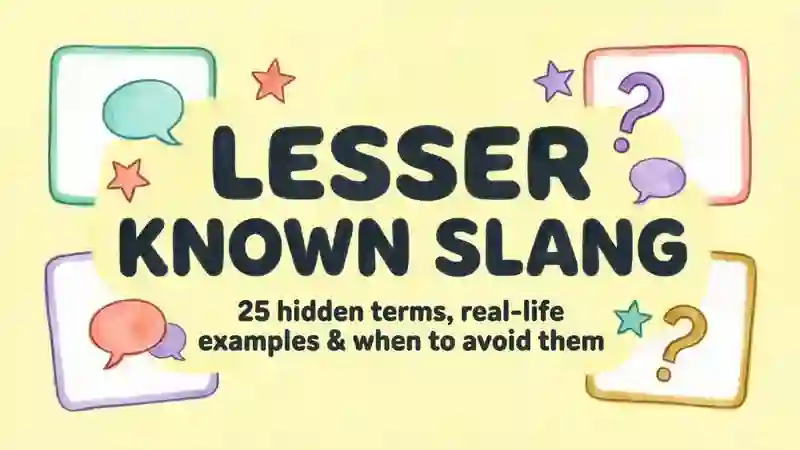
Lesser known slang refers to informal words and expressions that are not as widely recognized as common slang like “LOL,” “cool,” or “OMG.” These terms may come from regional communities, older generations, online culture, gaming, social media, or specific friend groups.
People often search for lesser known slang after seeing an unfamiliar word in a text message, TikTok comment, Reddit post, Discord chat, or casual conversation. Some slang terms sound completely normal but have a hidden meaning that only certain groups understand.
Learning lesser known slang can help you understand conversations, jokes, memes, and online communities more easily. However, slang changes quickly, and the meaning of a word can depend on where and how it is used.
Quick Answer:
Lesser known slang means uncommon or less widely recognized informal words and phrases. These expressions may be popular within specific regions, age groups, online communities, or social groups but unfamiliar to the general public.
What Does Lesser Known Slang Mean?
Simple Definition of Lesser Known Slang
Lesser known slang is informal language that is not commonly understood by everyone.
Unlike popular expressions such as “bruh,” “rizz,” or “slay,” lesser known slang may only be familiar to people in a certain community or region.
These words can come from:
- Local dialects
- Internet communities
- Gaming culture
- Older generations
- Music communities
- Social media trends
- Schools and friend groups
- Regional English
The phrase does not refer to one specific slang word. Instead, it describes a category of unusual, hidden, uncommon, or overlooked slang expressions.
Why Do People Search for Lesser Known Slang?
People usually search for lesser known slang because they want to understand something unfamiliar.
For example, someone might see a strange word in a conversation and wonder:
- What does this slang mean?
- Is this an old slang term?
- Is this Gen Z slang?
- Is it used online?
- Is it rude?
- Can I use it in normal conversation?
Understanding these expressions can make online and offline conversations easier to follow.
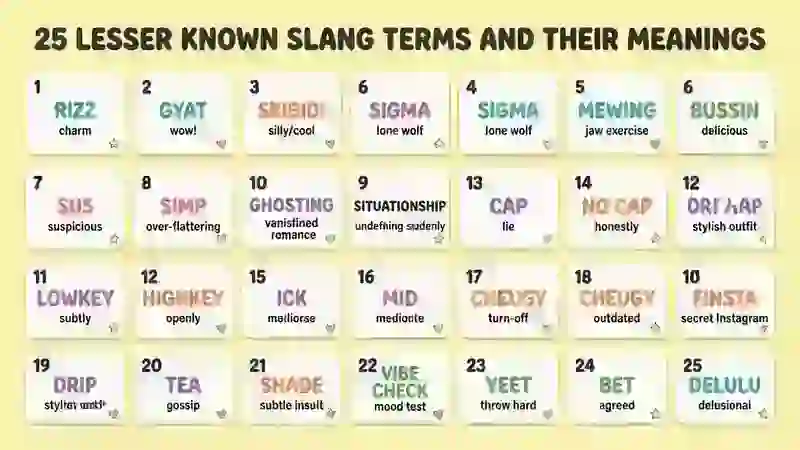
25 Lesser Known Slang Terms and Their Meanings
1. Deadass
Meaning: Seriously, honestly, or genuinely.
This slang is often used to show that someone is telling the truth.
Example:
“I’m deadass tired today.”
This means the person is genuinely very tired.
Tone: Casual and informal.
2. Pressed
Meaning: Very bothered, upset, or emotionally affected by something.
Someone who is “pressed” is reacting strongly to an issue.
Example:
“Why are you so pressed about a small joke?”
Tone: Can sound teasing or argumentative.
3. Bet
Meaning: Okay, agreed, or understood.
This word does not always relate to gambling. In modern slang, it often means agreement.
Example:
“Meet me at 7.”
“Bet.”
Tone: Casual and friendly.
4. Brick
Meaning: Extremely cold weather.
This slang is commonly heard in some regional varieties of American English.
Example:
“Don’t forget your jacket. It’s brick outside.”
Tone: Casual.
5. Cheugy
Meaning: Something considered outdated, unfashionable, or trying too hard to follow an older trend.
The term became widely discussed online but is itself less commonly used in everyday conversation today.
Example:
“That trend feels kind of cheugy now.”
Tone: Playful but can be judgmental.
6. Cooked
Meaning: In trouble, exhausted, defeated, or unlikely to succeed.
The meaning depends heavily on context.
Example:
“I didn’t study for the test. I’m cooked.”
This means the person expects a bad result.
Tone: Casual and humorous.
7. Tweaking
Meaning: Acting strangely, overreacting, or behaving in an unusual way.
The exact meaning can change depending on context.
Example:
“You’re tweaking over nothing.”
Tone: Often teasing or critical.
8. Glazing
Meaning: Giving someone excessive praise or admiration.
The term is often used when people believe someone is praising another person too much.
Example:
“You don’t have to keep glazing the celebrity.”
Tone: Humorous or critical.
9. Yap
Meaning: To talk too much or talk continuously.
The word can be playful when used between friends.
Example:
“Bro has been yapping for twenty minutes.”
Tone: Usually joking.
10. Cracked
Meaning: Extremely skilled or talented at something.
This term is especially common in gaming communities.
Example:
“That player is cracked at the game.”
Tone: Positive and informal.
11. Send It
Meaning: Go for it without overthinking.
People use this expression when encouraging someone to take action.
Example:
“You’re already here, so just send it.”
Tone: Energetic and casual.
12. Peak
Meaning: Unfortunate, disappointing, or difficult.
This slang is especially associated with British English.
Example:
“Missing the concert was peak.”
Tone: Casual.
13. Long
Meaning: Annoying, inconvenient, or too much effort.
This is another expression commonly associated with British slang.
Example:
“Doing all that paperwork is long.”
Tone: Informal.
14. Bait
Meaning: Obvious, predictable, or easy to notice.
In some online contexts, “bait” can also describe content designed to get a reaction.
Example:
“That question was obvious rage bait.”
Tone: Informal and internet-focused.
15. Chirp
Meaning: To tease, joke about, or make fun of someone.
The meaning can vary by region.
Example:
“My friends were chirping me about losing the game.”
Tone: Usually playful.
16. Gas
Meaning: Something excellent, enjoyable, or high quality.
The exact use can vary by region and community.
Example:
“This new song is gas.”
Tone: Positive and casual.
17. Mint
Meaning: Excellent, great, or perfect.
This term is especially common in British English.
Example:
“Your new bike is mint.”
Tone: Friendly and positive.
18. Jarring
Meaning: Annoying, irritating, or unpleasant.
The slang meaning is particularly common in British conversations.
Example:
“That loud noise is so jarring.”
Tone: Casual and negative.
19. Clapped
Meaning: Bad-looking, damaged, exhausted, or defeated, depending on context.
This is a highly context-dependent slang word.
Example:
“My old phone is completely clapped.”
This means the phone is badly worn or damaged.
Tone: Informal.
20. Waffle
Meaning: To talk for too long without getting to the point.
This slang is common in British English.
Example:
“Stop waffling and tell me what happened.”
Tone: Playful or impatient.
21. Bird
Meaning: A person, especially a woman, in some British slang contexts.
This term can sound dated or offensive depending on the situation.
Example:
“That expression is old British slang and may sound dated today.”
Tone: Context-dependent.
22. Chuffed
Meaning: Very pleased or happy.
This is a well-known British expression but may be unfamiliar to people outside the UK.
Example:
“She was chuffed with her results.”
Tone: Positive and friendly.
23. Skint
Meaning: Having little or no money.
This slang is commonly used in British English.
Example:
“I can’t go out this weekend. I’m skint.”
Tone: Casual.
24. Gassed
Meaning: Extremely excited, proud, or overly confident.
The meaning depends on the sentence.
Example:
“He was gassed after winning the competition.”
Tone: Usually positive or playful.
25. Chat
Meaning: A funny way of addressing a group of people, especially an online audience.
This use became popular through livestreaming and online communities.
Example:
“Chat, are you seeing this?”
The speaker is talking directly to their audience.
Tone: Internet-based and casual.
Where Is Lesser Known Slang Commonly Used?
Social Media Platforms
Many uncommon slang words become popular through social media.
You may see them on:
- TikTok
- Snapchat
- X
- YouTube
- Facebook groups
A slang word may become viral on one platform while remaining unknown to most people offline.
Discord and Gaming Communities
Gaming communities often create their own slang.
Words like “cracked,” “cooked,” and “bait” can have specific meanings depending on the game or community.
Discord servers also help slang spread between different groups.
Text Messages and Group Chats
Friends often create or borrow slang from the internet.
A word can become popular inside one friend group even if people outside that group have never heard it.
Regional Conversations
Some lesser known slang is strongly connected to a location.
British, American, Australian, Canadian, Caribbean, and other regional varieties of English all have unique informal expressions.
A word that sounds completely normal in one country may confuse someone in another.
Is Lesser Known Slang Rude, Offensive, or Neutral?
Most Slang Is Context-Dependent
Not all lesser known slang is offensive.
Some terms are:
- Friendly
- Funny
- Positive
- Neutral
- Teasing
- Regional
However, other expressions can be insulting depending on how they are used.
For example, calling a person “pressed” may sound playful between friends but rude during an argument.
Always Consider the Audience
Before using unfamiliar slang, think about:
- Who you are speaking to
- Where you are speaking
- if the person understands the term
if the word could sound insulting
- if the setting is formal or informal
Understanding slang is useful. Using every slang word you learn is not always necessary.
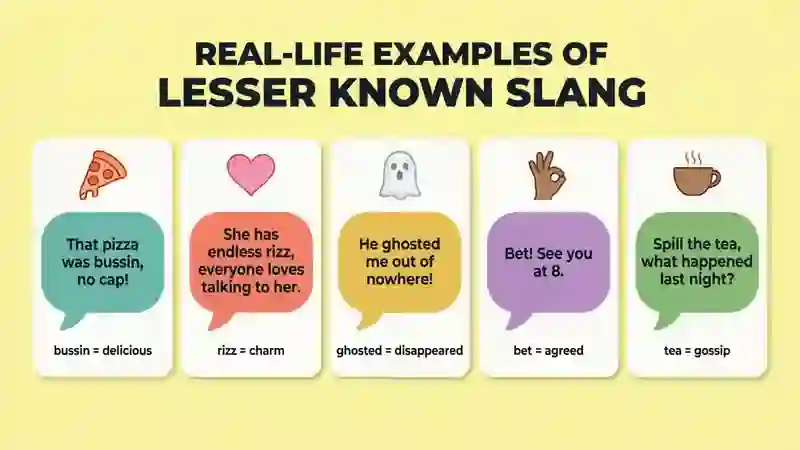
Real-Life Examples of Lesser Known Slang
Friendly Example
Friend 1: “How was your new restaurant?”
Friend 2: “Honestly, the food was gas.”
Here, “gas” means excellent or very good.
Casual Texting Example
Person A: “I forgot about the homework.”
Person B: “You’re cooked.”
The second person means that the first person may be in trouble.
Argumentative Example
Person A: “Why are you so pressed?”
Person B: “I’m not pressed. I just disagree.”
Here, “pressed” means upset or overly bothered.
Gaming Example
Player 1: “How did they win that match?”
Player 2: “That player is cracked.”
“Cracked” means highly skilled.
Social Media Example
“Chat, this video is getting weird.”
The creator is speaking to an online audience.
Lesser Known Slang vs Common Slang
| Type | Example | Recognition Level | Typical Usage |
| Common slang | LOL | Very widely known | Texting and social media |
| Viral slang | Rizz | Widely recognized online | TikTok and casual conversation |
| Lesser known slang | Chuffed | Regionally recognized | British English |
| Gaming slang | Cracked | Common in gaming communities | Gaming and Discord |
| Regional slang | Brick | Limited by location | Casual conversation |
The difference is not always permanent.
A lesser known slang term can become popular very quickly.
At the same time, popular slang can become outdated and disappear from everyday use.
Why Do People Use Lesser Known Slang?
To Feel Connected to a Group
Slang can create a sense of belonging.
People often use expressions shared by:
- Friends
- Gamers
- Online communities
- Regional communities
- Age groups
- Social media users
Understanding the same slang can make people feel connected.
To Express Ideas Quickly
Slang can communicate an idea in very few words.
For example:
“I’m cooked.”
This quickly communicates that someone feels defeated, exhausted, or in trouble.
The exact meaning becomes clear through context.
To Be Funny or Creative
Many slang terms are humorous.
Internet users often change the meaning of old words or create completely new expressions.
That creativity is one reason slang continues to change.
The Origin and Background of Lesser Known Slang
Slang Does Not Come From One Place
Lesser known slang can develop in many different ways.
It may come from:
- Regional dialects
- Cultural communities
- Music scenes
- Sports
- Gaming
- Schools
- Internet forums
- Social media platforms
Not every slang word has a clear or simple origin story.
Some expressions develop naturally over many years.
Others suddenly become popular because of a viral video or meme.
Old Slang Can Become New Again
One interesting thing about slang is that older expressions can return.
A word that was popular decades ago may suddenly become popular again because younger users discover it online.
This means slang has a cycle.
Some words disappear, return, change meaning, or become popular with an entirely new generation.
Common Misunderstandings About Lesser Known Slang
Thinking Every Slang Word Is New
Many people assume unfamiliar slang must be modern.
That is not always true.
Some lesser known slang words are decades old or even older.
They may simply be new to a particular audience.
Assuming One Meaning Fits Every Context
Slang can change meaning between regions and communities.
For example, a word used positively in one place may have a different meaning somewhere else.
Always look at the complete sentence.
Copying Slang Without Understanding It
This is one of the biggest mistakes.
A person may hear a popular creator use a word and repeat it without understanding its tone or meaning.
Before using unfamiliar slang, it is better to know:
- What it means
- Where it came from
- Who commonly uses it
- if it is offensive
- if it fits the conversation
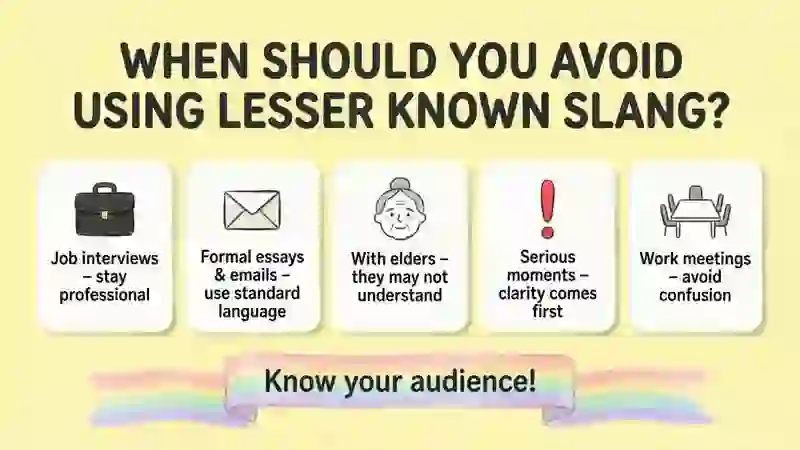
When Should You Avoid Using Lesser Known Slang?
In Professional Communication
Avoid unfamiliar slang in:
- Job applications
- Work emails
- Business meetings
- Professional reports
- Formal presentations
The other person may not understand the term.
Clear language is usually better in professional situations.
When Talking to Someone Who May Not Understand It
Slang can create unnecessary confusion.
If you know the listener is unfamiliar with the expression, simple language may work better.
During Serious Conversations
Informal slang can sometimes make serious topics sound less important.
Use clear and respectful words when discussing important issues.
Is Lesser Known Slang Safe to Use on Social Media?
Usually, Yes & But Context Matters
Most harmless slang is safe to use on social media.
However, you should avoid using slang to:
- Bully someone
- Harass another person
- Spread harmful rumors
- Insult strangers
- Exclude people intentionally
The word itself is only one part of communication. Tone and intention also matter.
Social Media Changes Slang Quickly
A term can mean one thing today and develop a new meaning later.
Before using an unfamiliar expression publicly, check how people currently use it.
This is especially important with rapidly changing internet slang.
How Lesser Known Slang Affects Communication
It Can Build Connection
Shared slang can make conversations feel more natural and friendly.
People often use informal expressions to show that they understand a community or culture.
It Can Create Confusion
The same slang that connects one group can confuse another.
Parents, teachers, coworkers, and people from different countries may not understand the expression.
It Can Change the Tone of a Message
Compare these two sentences:
“You are very talented at this game.”
“You’re cracked.”
The first sounds formal and direct.
The second sounds casual and community-based.
Slang can quickly change the personality and tone of communication.
Frequently Asked Questions About Lesser Known Slang
1. What does lesser known slang mean?
Lesser known slang refers to informal words and expressions that are not widely understood by the general public. They may be popular only in certain regions, communities, age groups, or online spaces.
2. Where can I find lesser known slang?
You can find uncommon slang in regional conversations, social media, gaming communities, Discord servers, Reddit discussions, music culture, and older generations.
3. Is lesser known slang the same as Gen Z slang?
No. Some lesser known slang is used by Gen Z, but many uncommon slang words are much older or come from regional dialects and specific communities.
4. Can lesser known slang become popular?
Yes. A slang term can quickly become widely known through TikTok, memes, gaming, music, or viral social media content.
5. Is it safe to use unfamiliar slang?
It is best to understand the meaning and tone before using unfamiliar slang. Some terms may be harmless, while others can sound rude or offensive in certain contexts.
6. Why does slang have different meanings?
Slang changes depending on region, culture, generation, community, and context. The same word may have different meanings in different places.
7. Can I use lesser known slang at work?
Usually, it is better to avoid unfamiliar slang in professional communication. Clear and standard language reduces confusion.
8. What is the difference between slang and informal language?
Slang is a type of informal language often connected to specific groups, cultures, or communities. Informal language is broader and includes everyday casual speech.
Conclusion
Lesser known slang includes the hidden, unusual, regional, and uncommon expressions that many people do not immediately understand. These words can come from gaming, social media, regional communities, older generations, and everyday conversations.
The best way to understand slang is to look at the context. A word may have one meaning in a TikTok comment and another meaning in a regional conversation.
Learning lesser known slang can help you understand internet culture and casual communication more clearly. Still, there is no need to use every slang term you learn. Knowing when a word is appropriate is just as important as knowing what it means.
As slang continues to change, new expressions will appear while older ones disappear or return. The key is to stay curious, understand the context, and communicate in a way that is clear and respectful.
Read more about!
- What Does Shark Mean in Slang? Meaning and Uses
- What Does Preppy Mean in Slang? Meaning, Origin & How People Use It
- Slang for Coke: Common Terms and Their Meanings

Hi, I’m Nathan Collins. I create easy-to-understand English language content focused on internet slang, texting abbreviations, modern expressions, vocabulary, and word meanings. My goal is to help students, writers, professionals, and English learners communicate with confidence through clear explanations, practical examples, and reliable language guides.