The phrase slang words from the 60s refers to informal words and expressions that became popular during the 1960s. These terms were commonly used by teenagers, musicians, hippies, surfers, and young adults.
Some 1960s slang is still used today, while other expressions sound old-fashioned or nostalgic.
Many people search for slang words from the 60s because they hear them in classic movies, TV shows, old songs, books, or conversations about the 1960s
. Learning these words helps you better understand the culture, music, fashion, and everyday language of that decade.
In this guide, you’ll discover the meanings of famous 1960s slang words, where they came from, how people used them, and if they are still popular today.
Quick Answer: Slang Words From the 60s
What are slang words from the 60s?
Slang words from the 60s are informal expressions that became popular during the 1960s. They were widely used in everyday conversations, especially among young people. Many reflected the era’s music, surfing culture, peace movement, and changing lifestyles.
What Are Slang Words From the 60s?
Definition
1960s slang was casual language used instead of formal English. These words helped people express excitement, approval, surprise, friendship, or disagreement in a fun and creative way.
Unlike dictionary words, slang often changes with each generation. Some expressions disappear over time, while others become part of everyday English.
Who Used 1960s Slang?
Several groups helped spread these expressions, including:
- Teenagers
- College students
- Hippies
- Rock musicians
- Surfing communities
- TV personalities
- Radio hosts
- Friends chatting at school or parties
Why People Still Search for It
People still enjoy learning slang words from the 60s because they appear in:
- Classic Hollywood movies
- Beatles and Rolling Stones songs
- Old television shows
- History books
- Retro fashion blogs
- Social media discussions about vintage culture
Why Were 1960s Slang Words So Popular?
Youth Culture Changed Language
The 1960s was a decade of major cultural change. Young people wanted language that felt fresh, exciting, and different from older generations.
Music Had a Big Influence
Rock bands and pop singers introduced many expressions that quickly spread across schools, concerts, and radio stations.
Television Reached Millions
Popular TV programs made certain slang words familiar across the United States and beyond.
Friends Shared New Expressions
Before the internet, people learned slang through conversations, music, magazines, and television instead of social media.
Common Slang Words From the 60s
Quick Reference Table
| Slang Word | Meaning | Still Used Today? |
| Groovy | Excellent or cool | Sometimes |
| Far Out | Amazing | Rarely |
| Dig | Understand or enjoy | Yes, occasionally |
| Hip | Fashionable or aware | Yes |
| Square | Old-fashioned person | Rarely |
| Bummer | Disappointing situation | Yes |
| Cool Cat | Stylish person | Occasionally |
| Bread | Money | Rarely |
| Threads | Clothes | Occasionally |
| Pad | Home or apartment | Sometimes |
Popular Slang Words From the 60s
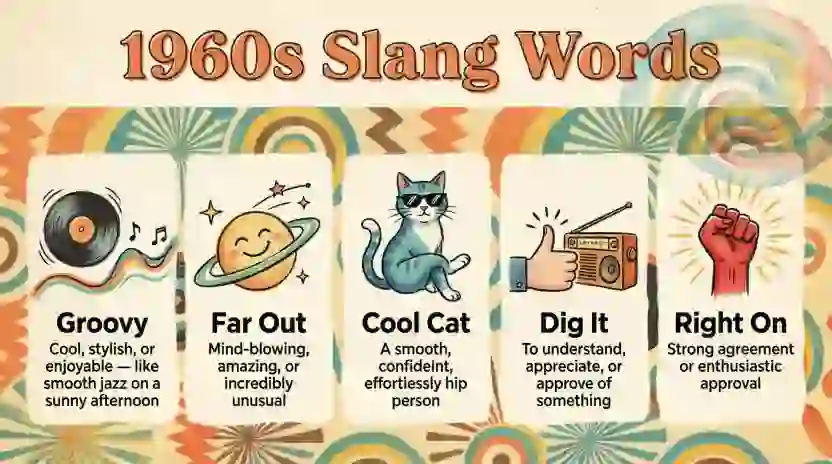
Groovy
Meaning
Groovy means something is excellent, exciting, fashionable, or enjoyable.
Tone
- Positive
- Friendly
- Casual
Example Sentences
- “That new guitar sounds groovy.”
- “Your outfit looks groovy today.”
Is It Still Used?
Yes, but mostly in a humorous or nostalgic way.
Far Out
Meaning
Far out means amazing, surprising, or impressive.
Tone
- Positive
- Excited
Example Sentences
- “That concert was far out!”
- “Your artwork is far out.”
Is It Still Used?
Rarely. Today it mainly appears when people imitate 1960s speech.
Dig
Meaning
To dig someone or something means to understand, appreciate, or really like it.
Examples
- “I dig your new style.”
- “Do you dig this music?”
Modern Use
This expression is still heard occasionally in casual conversation.
Hip
Meaning
Hip describes someone who is fashionable, modern, knowledgeable, or aware of current trends.
Examples
- “She’s very hip.”
- “He’s hip to the latest music.”
Popularity Today
Although less common than before, people still understand the word.
Square
Meaning
A square is someone who is very traditional, serious, or not interested in modern trends.
Examples
- “Don’t be such a square.”
- “He never wanted to join the party because he was too square.”
Should You Use It Today?
You can, but it usually sounds playful or old-fashioned.
Bummer
Meaning
A bummer is something disappointing, unlucky, or unpleasant.
Examples
- “Missing the concert was a real bummer.”
- “That’s a bummer.”
Current Popularity
Unlike many other 1960s slang words, bummer is still commonly used today.
Cool Cat
Meaning
A cool cat is a relaxed, stylish, confident, or fashionable person.
Examples
- “He’s one cool cat.”
- “Everyone thought she was a cool cat.”
Current Usage
Mostly used jokingly or when talking about retro culture.
Bread
Meaning
Bread is a slang word for money.
Examples
- “I need more bread before vacation.”
- “He earned enough bread to buy a car.”
Modern Popularity
Today, words like cash, bucks, or money are much more common
Where Were Slang Words From the 60s Commonly Used?
In Everyday Conversations
Friends often used 1960s slang while talking at school, parties, concerts, and coffee shops. These words helped conversations sound relaxed and fun.
Examples
- “That’s groovy!”
- “What a bummer!”
- “I dig that idea.”
In Music
Rock, folk, and surf music helped spread many famous slang words. Fans often copied the language used by their favorite singers and bands.
In Television and Movies
Many TV shows and films from the 1960s featured popular slang, making these expressions familiar across the country.
Among Hippies
The hippie movement popularized words connected to peace, love, freedom, and self-expression.
Are Slang Words From the 60s Still Used Today?
Some Words Are Still Common
Several 1960s slang words are still easy to hear today.
| Word | Modern Status |
| Cool | Very common |
| Bummer | Common |
| Dig | Occasionally used |
| Hip | Sometimes used |
| Groovy | Mostly nostalgic |
Some Words Sound Old-Fashioned
Many expressions are now mainly used for fun or to create a retro feeling.
Examples include:
- Far out
- Cool cat
- Square
- Bread (for money)
- Threads
More Classic Slang Words From the 60s
Threads
Meaning
Threads means clothes or outfits.
Examples
- “Nice threads!”
- “She bought new threads for the concert.”
Still Used?
Occasionally, but not as often as words like clothes or outfit.
Pad
Meaning
Pad means someone’s home, apartment, or living space.
Examples
- “Come over to my pad.”
- “Their pad is close to the beach.”
Modern Usage
Some people still use it casually, although it sounds slightly retro.
Right On
Meaning
Right on means “I agree,” “Exactly,” or “That’s great.”
Examples
- “Right on! That’s a fantastic idea.”
- “You finished already? Right on!”
Popularity Today
Still heard occasionally, especially among older speakers or in nostalgic conversations.
Foxy
Meaning
Foxy describes someone who looks very attractive or stylish.
Examples
- “She looks foxy.”
- “That’s a foxy jacket.”
Should You Use It Today?
It is understood, but many people consider it an older expression.
Boss
Meaning
Boss means excellent, impressive, or very good.
Examples
- “That skateboard is boss.”
- “Your new haircut looks boss.”
Modern Usage
This meaning appears occasionally, although younger generations use it less often.
Hang Loose
Meaning
Hang loose means relax, stay calm, or don’t worry.
Examples
- “Hang loose. Everything will be okay.”
- “Just hang loose and enjoy the weekend.”
Popularity
Still recognized today because of surfing culture.
Split
Meaning
Split means to leave or go away.
Examples
- “Let’s split before traffic starts.”
- “We’re going to split after dinner.”
Current Usage
Some English speakers still use this expression.
Outta Sight
Meaning
Outta sight means amazing, fantastic, or extremely impressive.
Examples
- “That performance was outta sight!”
- “Your new bike is outta sight.”
Modern Popularity
Mostly used when talking about the 1960s.
Origin and History of Slang Words From the 60s
A Decade of Change
The 1960s brought major changes in music, fashion, civil rights, youth culture, and entertainment. As society changed, language changed too.
Music Inspired New Expressions
Popular musicians helped introduce fresh slang that quickly spread among fans.
Surfing Culture
California surfers created and popularized many relaxed expressions that became known across America.
The Hippie Movement
The peace movement introduced words that reflected friendship, positivity, freedom, and new ways of thinking.
Television Helped Spread Slang
Without social media, television and radio became the fastest ways for new slang to reach millions of people.
Similar Slang Words and Modern Alternatives
Comparison Table
| 1960s Slang | Modern Alternative |
| Groovy | Awesome |
| Far Out | Incredible |
| Dig | Like |
| Cool Cat | Trendsetter |
| Threads | Outfit |
| Bread | Cash |
| Pad | Home |
| Square | Boring Person |
| Right On | Exactly |
| Boss | Great |
Why Did People Love 1960s Slang?
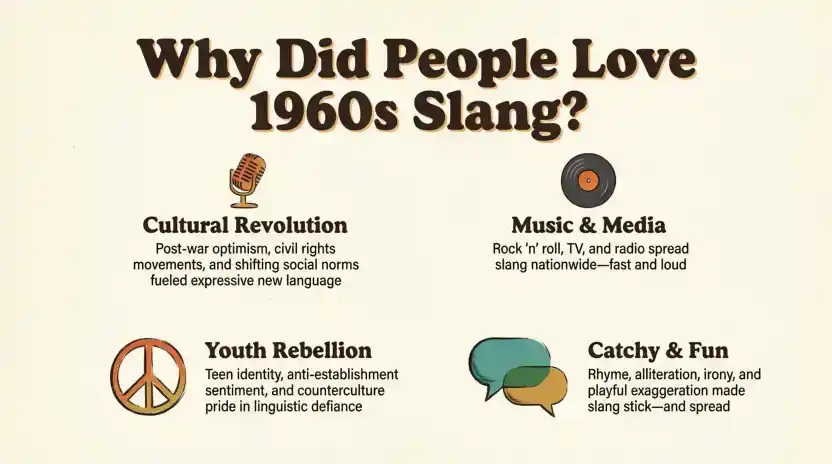
It Sounded Fun
The words were creative and easy to remember.
It Created Identity
Young people enjoyed using language that felt different from older generations.
It Matched the Culture
Music, fashion, surfing, and social movements all influenced everyday speech.
It Was Easy to Share
Friends quickly copied new words from songs, television, magazines, and conversatio
When Should You Avoid Using Slang Words From the 60s?
In Professional Settings
Although most slang words from the 60s are harmless, they may sound outdated or too casual in professional situations.
Avoid using them in:
- Job interviews
- Business meetings
- Professional emails
- Academic papers
- Official presentations
When Talking to People Who May Not Understand
Many younger people may recognize words like cool or bummer, but expressions such as far out, boss, or cool cat may confuse them because they are no longer common.
When Clear Communication Matters
If you are writing instructions, reports, or formal messages, standard English is usually the better choice.
Common Misunderstandings About Slang Words From the 60s
All 1960s Slang Is Still Popular
This is not true. Only a few words, such as cool and bummer, remain common today.
Every Slang Word Started in the 1960s
Some expressions became famous during the 1960s but actually existed before that decade.
Everyone Used the Same Slang
Different regions, schools, music scenes, and social groups often had their own favorite expressions.
1960s Slang Was Only Used by Hippies
No. While hippies popularized many famous terms, teenagers, musicians, surfers, college students, and many other groups also used 1960s slang.
Fun Facts About 1960s Slang
Music Helped Spread New Words
Popular bands and singers introduced many expressions that quickly became part of everyday conversations.
Some Words Never Disappeared
Words like cool are still used around the world today.
Movies Keep the Slang Alive
Classic films and television shows continue introducing younger generations to 1960s expressions.
Vintage Culture Revived Old Slang
Retro fashion, classic cars, vinyl records, and nostalgic social media posts have helped many old slang words remain recognizable.
Frequently Asked Questions
1. What are slang words from the 60s?
Slang words from the 60s are informal expressions that became popular during the 1960s. Many reflected youth culture, music, surfing, and the hippie movement.
2. What was the most popular 1960s slang word?
Groovy is one of the best-known slang words from the 1960s. Other popular choices include far out, dig, bummer, hip, and cool.
3. Is 1960s slang still used today?
Some words are. Expressions like cool, bummer, and dig are still heard today, while others are mainly used for fun or nostalgia.
4. Why did people use so much slang in the 1960s?
Young people wanted language that reflected changing music, fashion, culture, and lifestyles. Slang helped them express themselves in creative and memorable ways.
5. Was 1960s slang only used in America?
Most famous 1960s slang became popular in the United States, but movies, television, music, and travel helped many expressions spread to other English-speaking countries.
6. Are slang words from the 60s offensive?
Most are completely harmless. They were mainly used to describe people, clothing, music, excitement, or everyday situations in a fun and casual way.
7. Can I use 1960s slang today?
Yes, but it works best in casual conversations, creative writing, retro-themed events, or discussions about history and popular culture.
8. What are some famous examples of slang words from the 60s?
Popular examples include:
- Groovy
- Far Out
- Dig
- Hip
- Bummer
- Pad
- Threads
- Right On
- Cool Cat
- Boss
Conclusion
Final Thoughts
Slang words from the 60s capture the spirit of one of history’s most influential decades. They reflect the music, fashion, youth culture, and social changes that shaped everyday conversations during the 1960s.
While some expressions like cool and bummer remain common, others such as groovy, far out, and cool cat are now mostly used in nostalgic or retro settings. Learning these classic slang words makes it easier to understand old movies, songs, books, and conversations about the era.
If you’re a student, writer, teacher, or simply curious about language history, understanding slang words from the 60s gives you a fun look at how English continues to evolve across generations.
Find out more!
- Emote Meaning Slang: What It Means and How People Use It
- British Insults Slang: Meanings, Examples & When to Use Them
- Pants Slang: Meaning, Uses; British vs American English
- Birdie Slang Meaning: Everything You Need to Know

Hi, I’m Olivia Harper. I create clear and easy-to-understand English language content, including word meanings, slang explanations, idioms, synonyms, and everyday vocabulary. My goal is to help students, writers, professionals, and English learners improve their communication skills with simple explanations, practical examples, and reliable language guides.