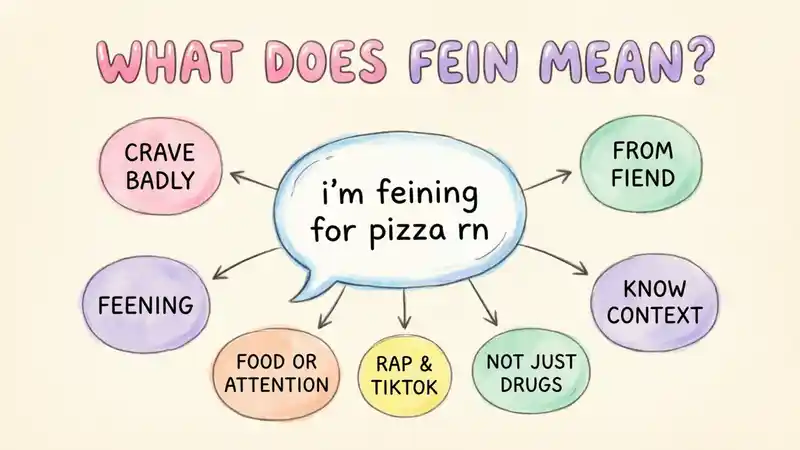
“What does fein mean slang?” usually comes from seeing the word “fein” in a text, comment, meme, or social media post
. The spelling can be confusing because people may use “fein” as a slang spelling of “fiend,” while some users may also be referring to the word “fein” in a specific cultural or online context.
In slang, “fein” can describe someone who strongly wants or craves something. It is often used in a playful or exaggerated way, especially when someone cannot get enough of a particular thing. The exact meaning depends on the sentence and the people using it.
This guide explains what “fein” can mean in text, how it is used, where you may see it online, and when it is better to choose a clearer word.
Quick Answer: What Does Fein Mean Slang?
Simple Definition
In informal slang, “fein” is often used as a spelling of “fiend,” meaning someone who strongly craves, wants, or is obsessed with something. The tone can be playful, teasing, or critical depending on context.
Example
“Bro is a coffee fein.”
Here, the speaker means that the person really loves or craves coffee.
What Does Fein Mean in Text?
The Common Slang Meaning
When people use “fein” casually online, they may mean a person who really wants something or keeps asking for it. It is usually connected with strong desire or craving.
For example:
“She’s a chocolate fein.”
This suggests that she really likes chocolate or wants it often.
The word can be used jokingly among friends. It does not always describe a serious problem or addiction. Context matters.
Why the Spelling Can Be Confusing

“Fein” is not always a standard English slang spelling. In many informal uses, people may be writing “fiend” in a nonstandard way.
That means you should look at the whole sentence before deciding what the writer means.
For example:
- “He’s a snack fein” → likely means he really craves snacks.
- “She’s a music fein” → likely means she loves music intensely.
- “He keeps asking for more” → the word may describe someone who strongly wants something.
Fein Meaning Slang: Different Uses
1. Someone Who Craves Something
The most useful slang interpretation is a person who strongly wants or craves something.
This can refer to ordinary things such as:
- Food
- Coffee
- Music
- Games
- Shopping
- Entertainment
- A favorite hobby
For example:
“I’m a pizza fein.”
The speaker is joking that they really love pizza.
2. Someone Who Wants More
“Fein” may also describe someone who keeps wanting more of something.
The idea is not simply liking something. It can suggest that the person wants it repeatedly.
For example:
“You finished the whole bag? You’re a snack fein.”
This sounds teasing rather than formal.
3. A Playful Description
Online, slang often exaggerates feelings for humor. Calling someone a “fein” may simply be a funny way to say they are extremely into something.
The meaning can therefore be much lighter than the word might sound at first.
Is Fein Rude or Offensive?
Usually Informal
“Fein” can be informal and teasing.if it sounds rude depends on the context, relationship, and subject.
Among friends, it may sound harmless:
“You’re such a movie fein.”
But saying it to someone you do not know could sound judgmental, especially if the topic is sensitive.
When It Can Sound Negative
The word can take on a negative tone when it is used to accuse someone of being overly dependent on something.
For example:
“He acts like a fein whenever he wants more.”
Here, the speaker is not simply saying that the person likes something. They are criticizing the person’s behavior.
A Simple Rule
If you are unsure about the tone, use a neutral word such as:
- Fan
- Lover
- Enthusiast
- Someone who really likes something
These choices are easier to understand and less likely to offend.
Where Is Fein Used?
Texting
In casual texting, people may use slang spellings to make messages sound relaxed or humorous.
For example:
“You’re a coffee fein 😂”
The informal spelling fits the playful tone.
TikTok and Instagram
On social media, slang can spread through captions, comments, memes, and short videos. A word like “fein” may appear as part of a joke or exaggerated description.
However, not every social-media use has one fixed meaning. Users often change spellings or create personal variations.
Discord and Gaming
In gaming communities, informal language is common. Someone might jokingly call another player a “fein” for constantly wanting a particular item, game, reward, or feature.
The meaning still depends on the surrounding conversation.
Snapchat and Private Chats
Friends may use unusual spellings simply because they are typing quickly or trying to sound funny. In these spaces, “fein” may be understood from context rather than from a formal definition.
Fein vs. Fiend
Why Are They Connected?
One important point is that “fein” may be intended as a nonstandard spelling of “fiend.”
“Fiend” has a long history in English and has several meanings. In informal use, “fiend” can describe someone who has a strong liking or craving for something.
For example:
“He is a chocolate fiend.”
This means he really enjoys chocolate.
Comparison Table
| Term | Common Meaning | Tone | Example |
| Fein | Informal/nonstandard slang spelling in some contexts | Casual | “She’s a coffee fein.” |
| Fiend | Someone strongly interested in or craving something | Informal | “He’s a coffee fiend.” |
| Fan | Someone who likes something | Neutral | “She’s a coffee fan.” |
| Enthusiast | Someone strongly interested in something | More formal | “He’s a coffee enthusiast.” |
The safest interpretation of “fein” should come from the sentence where you found it.
Is Fein the Same as Fiend?
Short Answer
Not always. “Fein” and “fiend” may be connected when “fein” is being used as an informal spelling of “fiend,” but “fein” does not have one universal slang meaning.
Why Context Matters
Online language changes quickly. People may intentionally misspell words, shorten them, or use them as inside jokes.
Because of this, it is better to examine:
- The complete sentence
- The topic being discussed
- The relationship between the speakers
- The platform where it appears
- The tone of the conversation
A single word may not provide enough information by itself.
Real-Life Examples of Fein Slang
Friendly Example
“You’re such a music fein. You always have headphones on.”
This is playful. The speaker is saying the person really loves music.
Casual Text Example
“I’m a snack fein after school.”
The speaker is joking about wanting food.
Social Media Example
“My brother is a gaming fein 😂”
The phrase describes someone who spends a lot of time playing games or really enjoys gaming.
Teasing Example
“Another coffee? You’re a fein!”
This can be friendly teasing between people who know each other.
More Negative Example
“He acts like a fein whenever he wants something.”
Here, the word has a more critical tone.
What Does Fein Stand For?
Is It an Acronym?
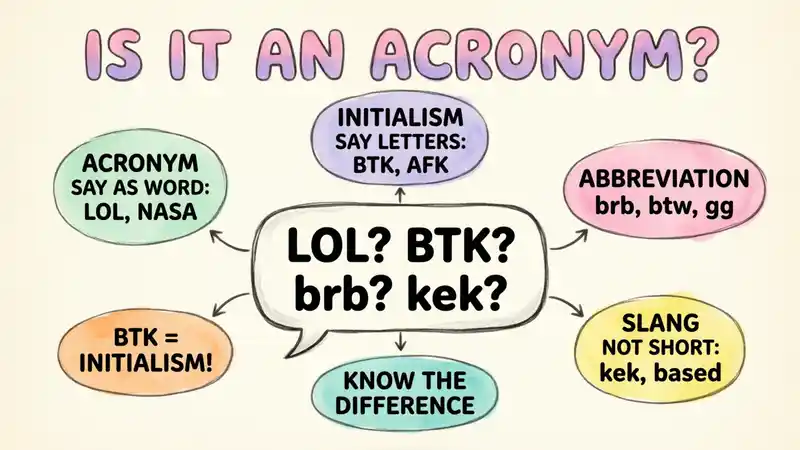
No. In the slang use discussed here, “fein” is generally not an acronym or abbreviation with a standard full form.
If someone asks “what does fein stand for?”, the answer depends on the context. When it is being used as a spelling variant of “fiend,” it carries the idea of someone who strongly wants, likes, or craves something.
Why People Think It Has a Full Form
Many internet slang terms are abbreviations, such as “LOL” or “BRB.” That can lead people to assume every unfamiliar online word has a hidden full form.
“Fein” does not normally work that way.
Why Do People Use Fein?
To Sound Casual
Slang can make a message feel more relaxed. Friends may prefer an informal expression instead of a formal description.
To Be Funny
Calling someone a “fein” can exaggerate how much they like something.
For example:
“He is a pizza fein.”
The speaker may simply be making a joke about the person’s love of pizza.
To Match Online Language
People often copy words and spellings they see in comments, memes, chats, and online communities. As a result, unusual spellings can spread even when they are not standard English.
When Should You Avoid Using Fein?
In Formal Writing
Avoid “fein” in:
- School essays
- Academic assignments
- Job applications
- Business emails
- Formal reports
- Professional presentations
Use clearer words instead.
With Teachers or Adults
If the person may not know the slang, the message could be misunderstood. A standard word is usually better.
In Sensitive Situations
Be careful when describing someone’s behavior around serious or personal topics. A slang label can sound judgmental even if you intended it as a joke.
Polite Alternatives to Fein
Neutral Alternatives
Depending on the sentence, you can use:
- Fan
- Lover
- Enthusiast
- Big fan
- Someone who really enjoys it
- Someone who strongly wants it
Example
Instead of:
“He’s a coffee fein.”
You could write:
“He’s a big coffee fan.”
This is clearer and more appropriate in most situations.
Origin and Background of Fein
Where Did Fein Come From?
“Fein” is generally understood online as an informal spelling connected to “fiend.” The older word “fiend” has long been used for a person who has an unusually strong liking for something.
The slang spelling “fein” should not be treated as having one confirmed internet origin. Its exact starting point is difficult to pin down, so it is better to describe its development as informal online usage rather than claim a specific creator or date.
Why Is the Spelling Different?
Online slang often changes the spelling of familiar words. A different spelling can make a word feel more casual, humorous, or connected to a particular online community.
“Fein” is one example of this kind of informal spelling. Its meaning is usually understood from the context rather than from the spelling alone.
How Is Fein Used in Different Contexts?
In Everyday Conversation
In casual speech, the idea behind “fein” is usually someone who strongly wants or enjoys something.
For example:
“He’s a fein for burgers.”
The speaker is emphasizing how much the person likes burgers.
In Social Media Posts
On platforms such as TikTok and Instagram, the word may appear in captions, comments, memes, or jokes.
A post might say:
“She’s a fein for iced coffee.”
The phrase is likely meant playfully rather than as a serious description of the person’s behavior.
In Gaming Communities
Gaming chats often use exaggerated slang to describe strong interest.
For example:
“He’s a fein for that skin.”
This suggests that the player really wants or is highly interested in getting that item.
In Group Chats
Friends may use “fein” as a humorous way to describe someone’s strong preference.
The word can work well when everyone in the conversation understands the slang. With people unfamiliar with it, the meaning may not be immediately clear.
Common Misunderstandings About Fein
Fein Does Not Have One Fixed Meaning
There is no single meaning that works for every sentence.
Depending on context, “fein” may suggest:
- Strong desire
- Strong interest
- Craving
- Being very eager for something
- Playful exaggeration
The surrounding words usually tell you which sense is intended.
Fein Is Not Usually an Acronym
A common mistake is to assume that “fein” stands for several words.
In this slang context, it is generally not an acronym. It is better understood as an informal spelling associated with “fiend.”
Fein Does Not Always Mean Addiction
Another important distinction is that casual slang should not automatically be interpreted as a clinical or serious statement.
If someone says:
“I’m a fein for cookies.”
they may simply mean:
“I really love cookies.”
The phrase can be exaggerated for humor.
Fein Compared With Other Words
Fein vs. Fiend
“Fiend” is the established English word, while “fein” is an informal slang spelling seen in casual contexts.
The two can be closely related in meaning, but “fein” has a more online and informal feel.
Fein vs. Fan
A “fan” is someone who likes or supports something.
A “fein” can suggest a stronger desire or craving.
| Word | Main idea | Tone |
| Fein | Strong desire or interest | Very casual |
| Fiend | Person strongly devoted to something | Casual or standard |
| Fan | Person who likes or supports something | Neutral |
| Craving | Strong desire for something | Neutral |
| Obsessed | Extremely interested in something | Casual, sometimes negative |
Fein vs. Obsessed
“Obsessed” can imply that someone’s interest is excessive. “Fein” may be used more playfully.
For example:
“She’s obsessed with that show.”
sounds stronger and potentially more serious than:
“She’s a fein for that show.”
Is Fein Appropriate at School or Work?
In School
“Fein” is fine to discuss when a lesson is about slang, language, or online communication. However, it is usually not the best choice for a formal school essay.
Instead, use words such as:
- Eager
- Enthusiastic
- Strongly interested
- Very fond of
- Craving
In the Workplace
“Fein” is generally too informal for professional communication.
For example, instead of writing:
“I’m a fein for coffee.”
in a work email, you could say:
“I really enjoy coffee.”
Clear standard English is usually the safer choice in professional settings.
Why Context Matters With Fein
The Same Word Can Sound Different
The tone of “fein” depends heavily on the subject and relationship between speakers.
Consider:
“You’re a fein for pizza.”
This can sound friendly.
But:
“He’s a fein for attention.”
can sound critical.
The word itself does not always determine if the statement is positive or negative. The surrounding sentence provides the emotional meaning.
Look at the Words Around It
When you see “fein” online, check:
- What does the person supposedly want?
- Is the sentence a joke?
- Is the speaker describing themselves or someone else?
- Is the conversation friendly or argumentative?
- Is the word being used literally or as exaggeration?
These clues can help you understand the intended meaning.
Is Fein Safe to Use on Social Media?
General Social Media Use
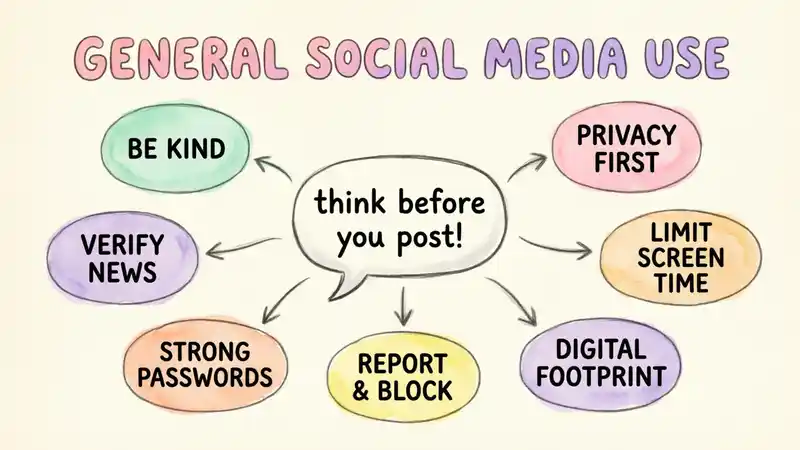
“Fein” is generally harmless when it is used as casual slang to describe strong interest or desire.
However, slang can be misunderstood when people from different age groups or language backgrounds are communicating.
If your audience may not know the term, standard wording is clearer.
Be Careful With Personal Comments
Avoid using slang to label someone in a way that could embarrass or insult them.
For example, joking with a close friend is different from publicly describing a stranger.
A simple rule is:
Use slang carefully when describing other people.
Real-Life Examples With Different Tones
Friendly
“You’re such a fein for ice cream.”
This sounds like light teasing between friends.
Casual
“I’m a fein for spicy food.”
The speaker is saying they really enjoy or crave spicy food.
Playful
“He’s a fein for that new phone.”
This suggests he really wants the phone.
Critical
“He’s acting like a fein over the latest release.”
Here, the speaker may be criticizing how strongly the person wants it.
Online
“Everyone in the comments is a fein for this update.”
This means many people appear very eager for the update.
When Should You Use a Different Word?
Use “Craving” for Food
If you mean that you strongly want to eat something, “craving” is clearer.
“I’m craving pizza.”
Use “Eager” for Formal Writing
If you mean someone is excited or ready for something, “eager” works well.
“She is eager to start the project.”
Use “Enthusiastic” for Strong Interest
When describing positive interest, “enthusiastic” is more formal.
“He is enthusiastic about the new game.”
Use “Fan” for General Support
If someone simply likes something, “fan” may be more accurate.
“She’s a big fan of the series.”
Frequently Asked Questions About Fein
1. What does fein mean in slang?
“Fein” is an informal slang spelling generally associated with “fiend.” It can describe someone who strongly wants, craves, or is very interested in something.
2. Is fein a real word?
“Fein” is commonly seen as an informal slang spelling, but it is not the standard spelling for the slang meaning discussed here. “Fiend” is the established English word.
3. What does fein mean in texting?
In texting, “fein” can mean that someone really wants or enjoys something. The exact meaning depends on the sentence and context.
4. Is fein rude?
Not necessarily. It can be playful and harmless, but it may sound negative when someone uses it to criticize another person’s behavior.
5. Is fein appropriate at work?
Usually, no. It is informal slang, so standard words such as “eager,” “enthusiastic,” or “really interested” are better for professional communication.
6. Does fein mean addicted?
Not necessarily. In casual slang, “fein” may simply exaggerate how strongly someone wants or enjoys something. It should not automatically be interpreted as a serious statement about addiction.
Conclusion
“Fein” is an informal slang spelling generally connected with “fiend.” In casual online communication, it can describe someone who strongly wants, craves, or is very interested in something.
Its tone depends on context. Among friends, it may be playful, while in another situation it can sound critical. The word is most suitable for casual conversations, social media, texting, and online communities rather than formal school or workplace writing.
If you see “fein” in a message or post, look at the surrounding words before deciding what it means. When clear communication matters, words such as “craving,” “eager,” “enthusiastic,” or “really interested” are safer and easier to understand.
Rrad more about!
- Bitchin Slang: Meaning, Origin, Examples & How to Use It
- BTK Meaning Slang: Is It Common in Text Messages?
- Grape Slang Meaning: What Does Grape Mean in Slang?
- Birdie Slang Meaning: Everything You Need to Know

Hi, I’m Ryan Mitchell. I write simple guides about slang, internet language, and everyday English to make modern expressions easy to understand. My goal is to help learners use real-life English with confidence.