What does DND mean in slang? In texting and internet slang, DND most commonly stands for “Do Not Disturb.” People use it to let others know they are busy, sleeping, studying, gaming, working, or simply do not want notifications or messages for a while.
The phrase what does DND mean in slang is popular on TikTok, Snapchat, Instagram, Discord, WhatsApp, iMessage, and other messaging apps.
Sometimes, however, DND can also refer to Dungeons & Dragons, depending on the conversation. Understanding the context helps you know which meaning is intended.
In this guide, you’ll learn every common meaning of DND, where it’s used, real-life examples, its origin, and when you should or shouldn’t use it.
Quick Answer: What Does DND Mean in Slang?
DND usually means “Do Not Disturb.” In slang and texting, people use it to tell others they are unavailable and do not want to be interrupted. On phones, messaging apps, and social media, it often means someone has turned on Do Not Disturb mode or is busy.
What Does DND Mean in Slang?
The most common meaning of DND is Do Not Disturb.
People use it when they:
- Are sleeping
- Are working
- Are studying
- Are in a meeting
- Are gaming
- Want quiet time
- Do not want phone notifications
Instead of writing a long message, they simply type “DND.”
Simple Definition
| Term | Meaning | Tone |
| DND | Do Not Disturb | Casual, Informal |
| DND Mode | Phone setting that silences notifications | Neutral |
| DND in chat | I’m busy or unavailable | Friendly |
Full Form of DND
The most common full form is:
DND = Do Not Disturb
This is the meaning used in:
- Text messages
- Snapchat
- Discord
- Messenger
- TikTok
- iPhone
- Android
- Workplace chat apps
Different Meanings of DND
Although Do Not Disturb is the most popular meaning, DND can have other meanings depending on the conversation.
1. Do Not Disturb (Most Common)
This is the slang meaning most people use online.
Example:
“Sorry, I had my phone on DND all night.”
2. Dungeons & Dragons

In gaming communities, DND often refers to the tabletop role-playing game Dungeons & Dragons.
Example:
“We’re playing DND this weekend.”
In this case, it has nothing to do with phone notifications.
3. Do Not Disturb Mode
People also use DND to describe their phone setting.
Example:
“Put your phone on DND before the meeting.”
Where Is DND Commonly Used?
You’ll often see DND in:
- Text messages
- Snapchat chats
- Instagram DMs
- WhatsApp conversations
- Discord servers
- Facebook Messenger
- Telegram
- TikTok comments
- Gaming chats
It is also common in workplaces when someone wants uninterrupted time.
Is DND Rude, Offensive, or Harmless?
DND is generally harmless.
It is not rude or offensive.
However, context matters.
For example:
- Saying “I’m on DND” politely explains why someone isn’t replying.
- Ignoring urgent messages without explanation may seem rude, but the abbreviation itself is perfectly acceptable.
Who Uses DND?
People of all ages use DND, including:
- Students
- Office workers
- Gamers
- Parents
- Teachers
- Remote workers
- Social media users
- Content creators
It is especially common among smartphone users because most devices include a Do Not Disturb feature.
Why Do People Use DND?
People use DND because it is:
- Short
- Easy to type
- Widely understood
- Faster than writing “Do Not Disturb”
- Helpful for explaining delayed replies
Common reasons include:
- Sleeping
- Studying
- Working
- Driving
- Attending meetings
- Playing games
- Relaxing without interruptions
Real-Life Examples of DND Slang
Here are realistic examples showing how DND is used in everyday conversations.
Friends
Alex: “Why didn’t you answer my call?”
Sam: “Sorry, my phone was on DND.”
Text Message
Friend: “Can you talk now?”
You: “Not yet. I’m on DND while studying.”
Snapchat
“Phone on DND. I’ll reply later.”
Instagram DM
“Sorry for the late reply. I had DND turned on.”
Discord
“I’m switching to DND while I finish this game.”
Gaming Chat
“Put me on DND for an hour. I’m in a ranked match.”
Workplace Chat
“I’ll be on DND during the client meeting.”
Family
Mom: “Why didn’t you answer?”
Son: “My phone was on DND while I was sleeping.”
Origin and History of DND
The phrase Do Not Disturb existed long before smartphones. Hotels have used “Do Not Disturb” signs on room doors for many years to tell staff not to interrupt guests.
As mobile phones became more advanced, companies added a Do Not Disturb setting that silences calls, texts, and notifications.
Later, internet users shortened the phrase to DND, making it a common texting abbreviation. Today, it is widely used in messaging apps, online communities, and gaming platforms.
Timeline
| Time | Development |
| Before smartphones | Hotels used “Do Not Disturb” signs. |
| Early smartphones | Phone makers introduced DND mode. |
| 2010s | DND became common in texting and messaging apps. |
| Today | One of the most widely recognized internet abbreviations. |
Is DND Still Popular?
Yes.
DND remains one of the most common abbreviations used online because nearly every smartphone includes a Do Not Disturb feature.
It is especially popular on:
- Snapchat
- Discord
- Messenger
- iMessage
- Telegram
People use it every day to explain why they are unavailable.
Similar Slang and Related Terms
| Term | Meaning |
| AFK | Away From Keyboard |
| BRB | Be Right Back |
| Busy | Currently occupied |
| Offline | Not connected |
| Silent Mode | Phone notifications are muted |
| Focus Mode | Phone minimizes distractions |
| Invisible | Appearing offline in some apps |
| Away | Temporarily unavailable |
Why Do People Use DND?
People use DND because it quickly tells others they cannot respond immediately.
Common reasons include:
- Avoiding distractions
- Sleeping peacefully
- Studying for exams
- Working without interruptions
- Attending meetings
- Driving safely
- Playing games
- Taking personal time
Instead of writing:
“Please don’t send notifications because I’m busy.”
People simply say:
“I’m on DND.”
Can You Use DND at Work?
Yes.
Unlike many slang terms, DND is commonly understood in professional settings when referring to Do Not Disturb mode.
Appropriate
“I’ll be on DND during today’s meeting.”
Less Appropriate
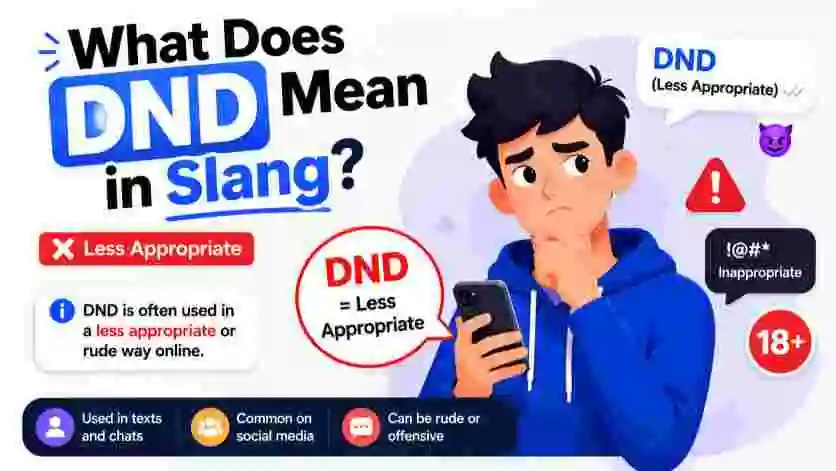
Avoid using only “DND” if you think your audience may not understand the abbreviation. In formal emails, writing “Do Not Disturb” is clearer.
When Should You Avoid Using DND?
Avoid using DND when:
- Writing formal reports
- Academic assignments
- Official documents
- Speaking with people unfamiliar with texting abbreviations
- Giving important instructions where clarity matters
In these situations, write the full phrase Do Not Disturb instead.
Common Misunderstandings
DND always means Do Not Disturb.
Not always.
In gaming communities, DND often means Dungeons & Dragons, the popular tabletop role-playing game.
DND blocks all phone calls.
Not necessarily.
Many phones let users allow calls from favorite contacts or repeated callers even when DND mode is enabled.
DND means someone is ignoring you.
No.
Usually, it simply means the person is busy or has notifications turned off. It does not automatically mean they do not want to talk.
DND is only used on phones.
No.
People also use DND in messaging apps, online games, Discord servers, and workplace communication to show they are unavailable.
DND on Different Platforms
| Platform | Common Usage |
| Snapchat | Status showing you’re unavailable |
| Mentioning delayed replies in DMs | |
| Phone or chat on Do Not Disturb | |
| Discord | User status showing “Do Not Disturb” |
| TikTok | Videos about phone settings or busy schedules |
| Discussions about notifications and gaming | |
| iPhone | Built-in Do Not Disturb feature |
| Android | Built-in Do Not Disturb feature |
Frequently Asked Questions
1. What does DND mean in slang?
DND usually means “Do Not Disturb.” It tells others that someone is busy, unavailable, or has turned on their phone’s Do Not Disturb mode.
2. What is the full form of DND?
The most common full form of DND is Do Not Disturb. In gaming, however, it can also mean Dungeons & Dragons.
3. What does DND mean in texting?
In texting, DND means the sender is unavailable or has notifications turned off. It often explains why they may reply later.
4. What does DND mean on Snapchat?
On Snapchat, DND usually refers to Do Not Disturb, either as a phone setting or Snapchat’s notification control for specific friends or groups.
5. What does DND mean on Discord?
On Discord, DND stands for Do Not Disturb. It is a status that lets others know you do not want to receive notifications while you’re busy.
6. Is DND rude?
No. DND is not rude or offensive. It is simply a polite way to let others know that you are unavailable at the moment.
7. Does DND always mean Do Not Disturb?
No. While Do Not Disturb is the most common meaning, DND can also stand for Dungeons & Dragons in gaming communities. The meaning depends on the context.
8. Can I use DND at work?
Yes. Using DND to mean Do Not Disturb is acceptable in many workplaces, especially in chat apps like Microsoft Teams, Slack, or Discord. In formal writing, spelling out Do Not Disturb may be clearer.
9. Why do people put their phone on DND?
People use Do Not Disturb mode to avoid interruptions while sleeping, studying, working, driving, attending meetings, or relaxing.
10. Is DND still popular?
Yes. DND remains one of the most common internet abbreviations because smartphones, messaging apps, and gaming platforms all support a Do Not Disturb feature.
Conclusion
If you’ve been wondering what does DND mean in slang, the answer is simple: it most commonly stands for Do Not Disturb. People use it to show they are busy, unavailable, or have silenced notifications on their phone or messaging app.
Although DND can also mean Dungeons & Dragons in gaming communities, the intended meaning is usually clear from the conversation
. if you’re chatting on Snapchat, Instagram, Discord, WhatsApp, or texting a friend, understanding DND helps you interpret messages correctly and use the abbreviation naturally.
Find out more!
- Native Slang: Meaning, Uses & Common Examples
- Heater Definition Slang: Meaning, Uses, Examples & Origin
- SIC Meaning Slang: What Does SIC Mean?
- What Does SU Mean in Slang? Meaning, Uses & Examples

Daniel Brooks is an English vocabulary educator and content editor with experience creating educational resources about English words, idioms, and everyday communication. He reviews language content for clarity, accuracy, and readability to ensure readers receive reliable and easy-to-understand information.