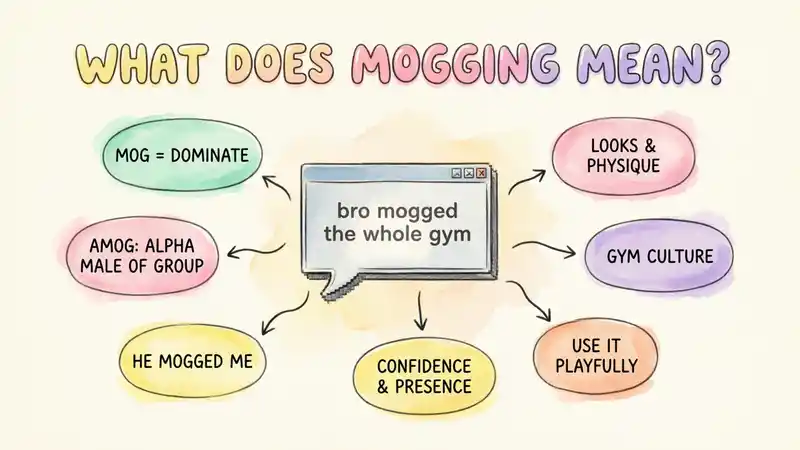
What does mogging mean slang? In simple terms, mogging means making someone else look less impressive by comparison, usually because you appear more dominant, confident, stylish, athletic, or noticeable.
The word is strongly linked to internet and social-media culture, especially appearance-based comparison.
People often see “mogging” in TikTok comments, memes, Reddit discussions, gaming communities, and other online spaces
. The meaning can change slightly depending on the context. Sometimes it is used as a joke between friends, while other uses can focus heavily on comparing people’s looks or status.
This guide explains what mogging means, where the term came from, how people use it online, and when it may be better to avoid it.
Quick Answer: Mogging is internet slang for clearly outshining or dominating another person in comparison, often in appearance, presence, confidence, or physical performance.
What Does Mogging Mean in Slang?
Simple Definition
Mogging describes a situation where one person is seen as noticeably superior to another person in a particular area.
The comparison is often visual. For example, someone might say that a person is “mogging” another person because they appear taller, more stylish, more confident, or more physically impressive.
However, mogging does not always mean physical appearance. Online users may also use it more broadly for someone who dominates a situation or makes another person seem less impressive by comparison.
What Does “Mogged” Mean?
“Mogged” is the past-tense form commonly used online.
If someone says, “He got mogged,” they usually mean that another person clearly outshone him in some way.
The exact reason depends on the conversation. It might refer to appearance, confidence, performance, social presence, or another form of comparison.
What Does “Mog” Mean?
“Mog” can work as both a noun and a verb in informal internet language.
For example:
- “He mogged everyone in the photo.”
- “That outfit is a total mog.”
- “She got mogged by her friend.”
The surrounding conversation usually makes the intended meaning clear.
How Is Mogging Used Online?
TikTok and Short-Video Content
On TikTok, “mogging” is often used in comments, memes, edits, and comparison-based posts.
Users may describe someone as mogging another person when one person appears more noticeable or dominant in a video.
The term is often used humorously, so not every use should be taken as a serious judgment.
On Reddit, mogging can appear in discussions about internet culture, appearance, fitness, fashion, confidence, or social behavior.
Because Reddit has many different communities, the meaning can vary. A word used jokingly in one community may be used more seriously in another.
Discord and Gaming Communities

Gaming communities sometimes use “mogging” more broadly.
A player might say that someone “mogged” another player after an impressive performance. In this setting, the comparison may have little to do with physical appearance.
For example:
“He absolutely mogged the other team that round.”
Here, the meaning is closer to “completely outperformed.”
Instagram and Other Social Platforms
On image-focused platforms, mogging is more likely to involve appearance, fashion, posing, or overall visual presence.
A comment such as “He is mogging everyone” may simply mean that the person stands out strongly in the picture.
What Does Mogging Mean in Different Contexts?
Appearance Mogging
Appearance is one of the most common contexts for the term.
In this use, mogging means one person appears noticeably more impressive than another person.
This could involve clothing, hairstyle, posture, facial presentation, or overall style.
Importantly, this is a social comparison rather than an objective measurement. Different people can have very different opinions about who looks impressive.
Height or Physical Presence
Some online communities use mogging when comparing physical presence.
A taller person standing beside a shorter person may be described as “mogging” them.
This usage is usually informal and can be playful, but it can also make the conversation unnecessarily focused on comparing people’s bodies.
Confidence or Presence
Mogging can also describe social presence.
Someone who appears confident, calm, or highly noticeable may be described as mogging people around them.
In this sense, the word is not necessarily about physical features. It can describe the impression someone gives in a social situation.
Performance Mogging
The term can also be used when someone clearly performs better than another person.
For example, in gaming:
“She mogged everyone in that match.”
Here, the meaning is closer to “she completely outperformed everyone.”
This broader use shows why context matters when interpreting the slang.
Is Mogging Rude or Offensive?
Usually Informal
Mogging is informal internet slang. It is not normally appropriate for formal writing, professional reports, or serious academic communication.
Among friends, the word may be used as a joke or playful compliment.
It Can Become Insulting
The term can become rude when it is used to put another person down.
For example, saying that someone “mogged” another person may suggest that the second person is less attractive, less confident, or less capable.
That can feel embarrassing, especially when the comparison is public.
Context Matters
The tone depends heavily on who says it, who receives it, and why it is being said.
| Context | Likely Tone |
| Friends joking | Playful |
| Meme or comment | Humorous |
| Appearance comparison | Potentially judgmental |
| Gaming | Competitive |
| Workplace | Too informal |
| School | Usually unnecessary |
| Public insult | Potentially hurtful |
Important: “Mogging” is not automatically offensive, but using it to rank or shame another person can make the comment disrespectful.
Real-Life Examples of Mogging
Friendly Example
A group of friends may use the term as a joke when one friend wears an especially striking outfit.
“You really mogged us with that jacket.”
The speaker may simply be giving the person a playful compliment.
Casual Texting Example
“Bro was mogging everyone in those photos.”
This means the person appeared to stand out strongly compared with the others.
Gaming Example
“Our new player mogged the whole lobby.”
Here, the speaker is probably talking about skill or performance rather than appearance.
Social Media Example
“He walked into the frame and started mogging.”
This suggests that the person immediately became the most noticeable person in the scene.
Competitive Example
“She mogged him during the final round.”
In this context, the word suggests that she clearly outperformed him.
Appearance-Focused Example
“That outfit is mogging the rest of the group.”
This describes one person’s style as standing out compared with the others.
Where Did the Slang Mogging Come From?
Connection to “AMOG”
The modern internet use of “mogging” is commonly connected to the term “AMOG,” which has been used as an abbreviation for “Alpha Male of the Group.”
The expression became associated with online communities discussing social dominance and status.
Over time, forms such as “mog,” “mogged,” and “mogging” developed and spread beyond their earlier communities.
How the Meaning Expanded
The word gradually became more common in online meme culture.
Instead of referring only to social dominance, users began applying it to appearance, physical presence, fashion, confidence, gaming performance, and other situations where one person seemed to outshine another.
Because internet slang changes quickly, there is no single context in which the word must be used.
Modern Internet Usage
Today, mogging is most recognizable as informal online slang.
It is especially common in meme-heavy spaces and social-media conversations where people make quick comparisons.
Its exact meaning still depends on context.
Mogging vs. Similar Slang
Mogging vs. Outshining
“Outshining” is a normal English expression meaning that someone performs better or attracts more attention.
“Mogging” is more informal and has a stronger internet-slang feel.
Mogging vs. Flexing
“Flexing” usually means showing off something you have, can do, or are proud of.
“Mogging” focuses more on the comparison between people.
Mogging vs. Dominating
“Dominating” means being clearly superior or highly successful in a situation.
“Mogging” can have a similar meaning but is more associated with one person making another person look less impressive by comparison.
Quick Comparison
| Term | Main Idea | Typical Context |
| Mogging | Outshining someone by comparison | Internet slang |
| Outshining | Being more impressive | General English |
| Flexing | Showing off | Social media |
| Dominating | Being clearly superior | Sports, gaming, competition |
| Showing off | Displaying ability or possessions | Everyday speech |
When Should You Avoid Using Mogging?
In Professional Communication
Avoid using “mogging” in formal emails, reports, applications, and workplace documents.
A clearer phrase such as “outperformed,” “stood out,” or “performed better” will usually communicate the idea more professionally.
When Discussing Someone’s Appearance
Be careful when using mogging to compare people’s bodies or physical features.
Even if the speaker intends it as a joke, public comparisons can make someone feel uncomfortable or embarrassed.
When Someone May Take It Personally
Avoid the term when the comparison could turn into an insult.
If the goal is to compliment someone, it is often better to compliment them directly rather than suggest that they are better than another person.
With Teachers or Formal Audiences
Internet slang may not be understood by everyone.
If your audience may not know the term, use plain English instead.
Polite Alternatives to Mogging
When You Mean “Looking Great”
You could say:
- “You look great.”
- “That outfit really stands out.”
- “You look stylish.”
- “You look confident.”
When You Mean “Performed Better”
Try:
- “You outperformed them.”
- “You did really well.”
- “You clearly performed better.”
- “You had a stronger performance.”
When You Mean “Stood Out”
You can say:
- “You really stood out.”
- “You caught everyone’s attention.”
- “You made a strong impression.”
These alternatives are easier to understand and less likely to sound like an insult.
Why Do People Use Mogging?
It Is Short and Expressive
Internet users often prefer short words that communicate a bigger idea quickly.
“Mogging” can summarize the idea of one person clearly outshining another without a long explanation.
It Fits Meme Culture
The word is often used in jokes, captions, comments, edits, and memes.
Its exaggerated tone can make ordinary comparisons sound humorous.
It Signals Internet Culture
Using terms such as “mog,” “mogged,” and “mogging” can also show familiarity with online slang communities.
However, slang changes quickly, so a term that feels current in one online group may feel dated or overused somewhere else.
Part 2 mein FAQ numbering, common misunderstandings, platform/context comparison, safety, aur practical usage continue kar raha hoon. Har H2 se pehle separator line aur H2 ke andar H3 subheadings hain.
Common Misunderstandings About Mogging
Mogging Does Not Always Mean Appearance
A common misunderstanding is that mogging always refers to physical appearance. That is not true.
Online users may use the word for many types of comparison. Someone can be described as mogging another person because of their style, confidence, social presence, gaming ability, or performance.
The sentence around the word is usually the best clue.
Mogging Is Not an Objective Measurement
When someone says one person is “mogging” another, it is usually an opinion or exaggeration.
There is no fixed measurement that proves someone is mogging another person. The speaker is describing how the comparison looks to them.
For example, two people may appear very different to different viewers. One person may think someone is more stylish, while another person may disagree.
Mogging Is Not Always an Insult
The word can be used positively or humorously.
A friend might say:
“You were mogging in that outfit.”
The speaker could simply mean that the person looked especially good.
However, the same word can sound insulting if it is used to make another person seem inferior.
Mogging on Different Platforms
TikTok
On TikTok, mogging is often connected with short videos, memes, edits, comments, and appearance-based comparisons.
Users may describe someone as “mogging” when that person appears especially confident or noticeable in a video.
The term is often exaggerated for humor, so it should not automatically be interpreted as a serious judgment.
On Instagram, the slang may appear in comments under photos, reels, or fashion-related content.
Here, “mogging” can refer to style, confidence, posing, or overall visual presence.
Reddit has many communities with different slang habits.
In one subreddit, mogging may be used as a joke. In another, it may be part of a more serious discussion about appearance, social status, or confidence.
Always consider the specific community before deciding what the speaker means.
Discord
Discord conversations are usually fast and informal, so users may use “mog,” “mogged,” or “mogging” as quick reactions.
For example:
“You mogged him in that round.”
This could refer to gaming performance rather than appearance.
Gaming Communities
Gaming is one of the clearest examples of how the meaning can expand.
If one player performs much better than another, someone may jokingly say that the stronger player “mogged” the weaker player.
In this situation, the term is closer to “outperformed” or “dominated.”
Text Messages
In ordinary texting, meaning depends strongly on the people involved.
Friends who already understand internet slang may use the word casually. Someone unfamiliar with online slang may not understand it at all.
For clear communication, especially with unfamiliar people, plain English is usually better.
Is Mogging Safe to Use on Social Media?
Generally, the Word Itself Is Not Dangerous
“Mogging” is ordinary internet slang and is not inherently harmful.
The main concern is how it is used.
A playful comment between friends is very different from repeatedly comparing or insulting someone’s appearance.
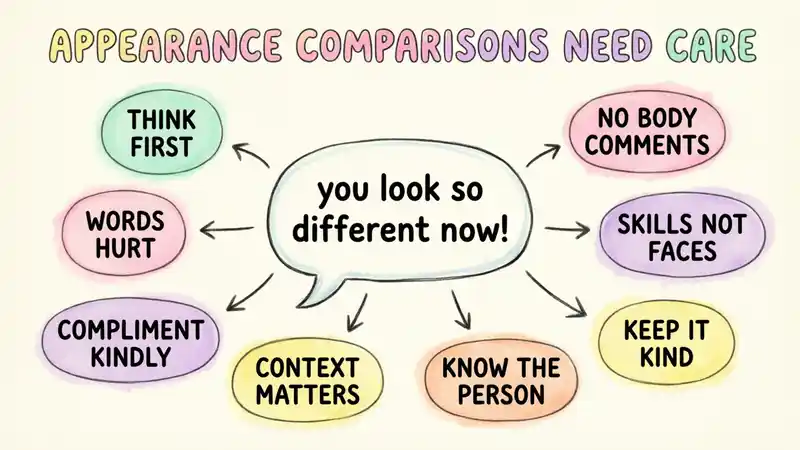
Appearance Comparisons Need Care
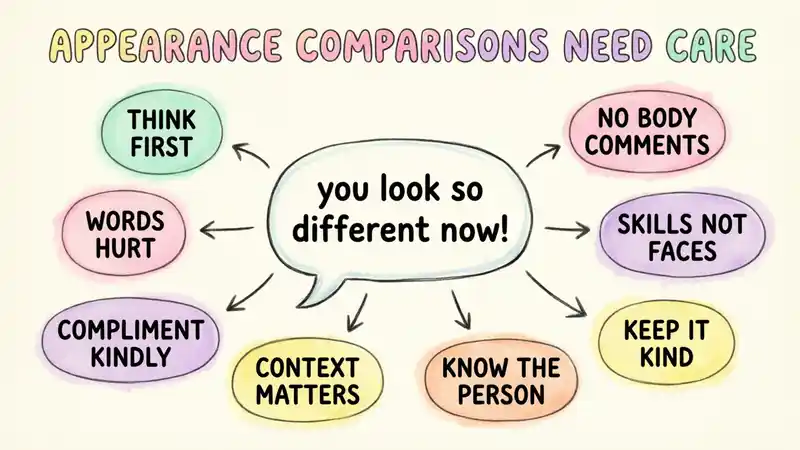
When mogging is used to rank people’s bodies or looks, it can encourage unhealthy comparison or make someone feel judged.
That does not mean every use is harmful. It simply means context matters.
A respectful compliment is usually a better choice than publicly ranking people against each other.
Avoid Using It to Bully Someone
Using slang as part of repeated teasing or public humiliation can turn a harmless joke into bullying.
If someone clearly dislikes the comparison, continuing to use the term about them is not respectful.
Best practice: Use mogging casually only when the people involved understand the joke and are comfortable with the context.
Is Mogging Appropriate at School or Work?
School
Mogging is informal slang, so it is usually not the best choice for essays, assignments, presentations, or formal school communication.
If you are explaining the word itself, however, you can use it as a subject of discussion.
For example:
“The term ‘mogging’ is commonly used in internet slang to describe outshining another person.”
Workplace
“Mogging” is generally too informal for professional communication.
Instead of saying:
“He mogged the whole team.”
A professional version would be:
“He significantly outperformed the rest of the team.”
The second sentence is clearer and more suitable for a workplace.
Formal Writing
In formal writing, use words such as:
- outperformed
- surpassed
- stood out
- performed better
- made a stronger impression
These expressions communicate the idea without relying on internet slang.
What Is the Tone of Mogging?
Playful Tone
Among friends, mogging can be playful.
“Bro was mogging everyone in that picture.”
The speaker may simply be joking about how much the person stood out.
Competitive Tone
In gaming or sports-related conversations, the word can sound competitive.
“He mogged the other players.”
Here, it suggests that one person performed much better.
Teasing Tone
The word can also be used for teasing.
The meaning may still be lighthearted, but the person being discussed may not find the joke funny.
Insulting Tone
If the word is used to publicly compare someone’s appearance or status, it can become insulting.
That is why the relationship between the speakers and the surrounding context matter so much.
Mogging vs. “Outshining”
Meaning of Outshining
“Outshining” means attracting more attention or being more impressive than someone else.
It is standard English and can be used in both casual and formal situations.
Difference From Mogging
“Mogging” has a stronger internet-culture flavor.
For example:
“She outshined everyone at the event.”
This sounds neutral and polished.
“She mogged everyone at the event.”
This sounds much more like informal online slang.
| Expression | Formality | Main Meaning |
| Mogging | Very informal | Outshining someone by comparison |
| Outshining | Neutral | Being more noticeable or impressive |
| Outperforming | Formal/neutral | Doing better in performance |
| Standing out | Neutral | Being especially noticeable |
| Dominating | Informal/neutral | Clearly controlling or outperforming |
Mogging vs. “Flexing”
What Flexing Means
“Flexing” usually means showing off something you have, achieved, or can do.
For example, someone may “flex” a new phone, achievement, skill, or expensive item.
How It Differs From Mogging
Mogging usually involves comparison.
Flexing focuses more on displaying something impressive.
For example:
“He is flexing his new car.”
This means he is showing off the car.
“He is mogging everyone in the photo.”
This suggests he is standing out compared with the other people.
Why Mogging Became Popular
Short Internet Language
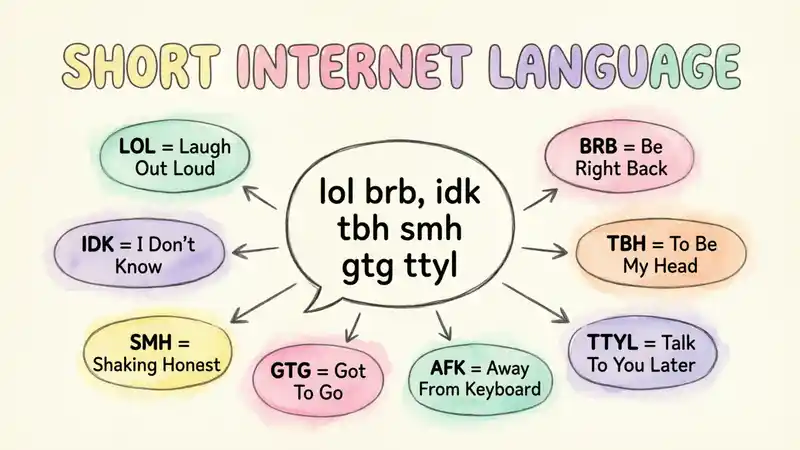
Internet slang often turns longer ideas into short, memorable words.
“Mogging” gives users a quick way to describe a strong comparison.
Instead of saying:
“That person looks much more noticeable than everyone else.”
Someone can simply say:
“He is mogging.”
Meme Culture
The word also works well in memes because it can be exaggerated.
A person doing something ordinary may be humorously described as “mogging” everyone.
This playful exaggeration is part of why the term became recognizable across different online communities.
Changing Meanings
Internet slang does not always keep one fixed meaning.
As words move from one community to another, their meaning can become broader.
Mogging is a good example. It can now describe appearance, confidence, performance, style, or general dominance depending on the conversation.
How to Understand Mogging in a Sentence
Look at the Subject
First, identify who is doing the “mogging.”
If the sentence says:
“Alex mogged everyone.”
Alex is being described as the person who stood out or dominated the comparison.
Look at What Is Being Compared
Next, check the surrounding words.
If the conversation mentions:
- clothes → likely style
- photos → likely appearance or presence
- height → physical comparison
- gaming → performance
- competition → dominance or skill
The topic usually reveals the intended meaning.
Check the Tone
Finally, ask if the statement sounds serious, complimentary, competitive, or humorous.
The same word can have very different emotional effects depending on the situation.
Common Forms of the Word Mog
Mog
“Mog” is the short base form.
Example:
“He can mog anyone in that game.”
Mogging
“Mogging” describes the action happening now.
Example:
“She is mogging everyone in the comments.”
Mogged
“Mogged” describes something that already happened.
Example:
“He got mogged in the final round.”
Mogger
“Mogger” may be used informally for someone who frequently “mogs” others.
This is highly casual internet language and is not a standard formal English term.
Frequently Asked Questions About Mogging
1. What does mogging mean in slang?
Mogging means outshining or appearing more dominant than another person by comparison. It can refer to appearance, style, confidence, social presence, gaming ability, or performance.
2. What does “mogged” mean?
“Mogged” means that someone was outshone or outperformed by another person.
The exact comparison depends on context.
3. Is mogging an insult?
Not always. Friends may use it as a joke or compliment, but it can become insulting when used to shame, rank, or embarrass another person.
4. Is mogging only about looks?
No. Appearance is a common context, but people also use the word for performance, confidence, gaming, style, and general dominance.
5. Is mogging appropriate at work?
Usually not. It is informal internet slang. In professional settings, phrases such as “outperformed,” “stood out,” or “performed better” are clearer.
6. Where is mogging used?
The term can appear on TikTok, Reddit, Discord, Instagram, gaming communities, memes, and informal text conversations. Its meaning can vary by community.
Conclusion
Mogging slang is used online to describe a situation where someone is seen as clearly outperforming or outshining another person, often in appearance, confidence, status, or overall presence.
The term is especially common in social media and online communities, where people use it casually, humorously, or sometimes as an insult.
The meaning depends heavily on context. A joking comment between friends may simply mean that one person stands out, while a serious comment can be used to compare people in an uncomfortable or judgmental way.
When you see “mogging” on TikTok, Instagram, Reddit, Discord, or other online spaces, look at the surrounding conversation before deciding what the speaker means. It is informal slang and is generally not suitable for professional or formal communication.
The safest approach is to understand mogging as a comparison term rather than a fixed judgment about someone.
Read more about!
- Bitchin Slang: Meaning, Origin, Examples & How to Use It
- BTK Meaning Slang: Is It Common in Text Messages?
- Grape Slang Meaning: What Does Grape Mean in Slang?
- Birdie Slang Meaning: Everything You Need to Know

Daniel Brooks is an English vocabulary educator and content editor with experience creating educational resources about English words, idioms, and everyday communication. He reviews language content for clarity, accuracy, and readability to ensure readers receive reliable and easy-to-understand information.