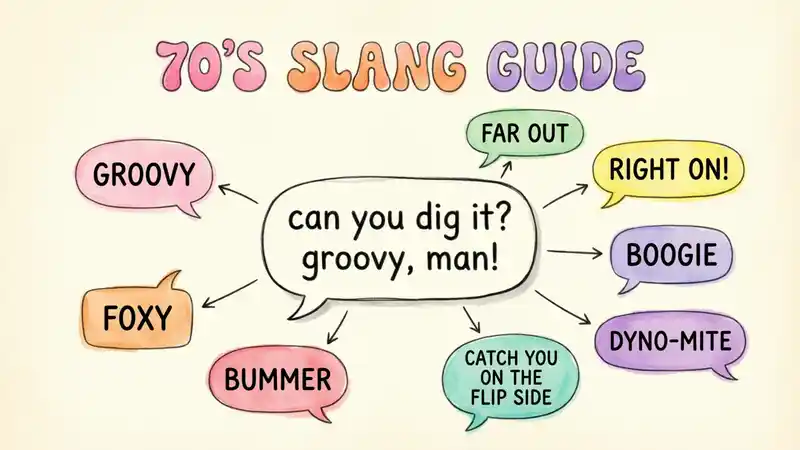
70’s slang refers to the informal words and phrases associated with American English in the 1970s. Popular examples include “groovy,” “far out,” “right on,” “bummer,” “can you dig it?”, and “keep on truckin’
” Many of these expressions reflected the decade’s music, youth culture, counterculture, and changing social attitudes.
People often search for 70’s slang because they see these expressions in old movies, TV shows, songs, books, family conversations, or modern posts that use retro language.
However, not every phrase commonly labeled “70s slang” was actually created in the 1970s. Some were older expressions that became especially popular during that decade.
This guide explains the most useful 70s slang words and sayings, what they meant, how they sounded, where they came from when known, and which ones still work today.
Quick Answer: 70’s slang is a group of informal expressions strongly associated with the 1970s. Terms such as “groovy,” “far out,” “right on,” and “bummer” were used to express approval, excitement, disappointment, understanding, or agreement.
What Does 70’s Slang Mean in Text?
70’s Slang Has a Retro Meaning Today
When someone uses 70s slang in a modern text, they are usually using an old-fashioned expression for humor, nostalgia, or a retro style.
For example:
“That jacket is groovy!”
Today, this sounds playful or deliberately vintage. In the 1970s, however, “groovy” could be used more naturally to describe something appealing, fashionable, or enjoyable.
The same is true for phrases such as “far out” and “right on.” Their meaning can still be understood, but their tone may sound distinctly old-school.
Why Do People Still Use 70s Slang?
Modern speakers may use these expressions when:
- Talking about 1970s culture
- Writing a historical character
- Making a joke
- Creating a retro-themed post
- Discussing classic movies or music
- Showing nostalgia
- Giving a conversation an intentionally vintage feel
Not every expression was equally common among all people in the 1970s. Slang varied by age, region, race, social group, and subculture.
Popular 70’s Slang Words and Their Meanings
1. Groovy
“Groovy” meant cool, enjoyable, fashionable, or pleasing.
Example:
“That new record is really groovy.”
The word had roots before the 1970s, especially in earlier jazz and counterculture usage, but it remained strongly associated with the late 1960s and early 1970s
2. Far Out
“Far out” could describe something amazing, unusual, surprising, or unconventional.
Example:
“That concert was far out!”
The phrase is closely connected with counterculture language and became a recognizable expression of excitement or admiration.
3. Right On
“Right on” expressed agreement, approval, or support.
Example:
“You’re starting a community project? Right on!”
The phrase could communicate something like “I agree,” “That’s good,” or “I support you.”
4. Bummer
A “bummer” was a disappointing, unpleasant, or unfortunate situation.
Example:
“You missed the concert? What a bummer.”
Unlike some strongly dated expressions, “bummer” has survived in modern informal English.
5. Can You Dig It?
“Can you dig it?” could mean “Do you understand?” or “Do you appreciate or agree with this?”
Example:
“This is the plan. Can you dig it?”
The phrase had roots before the 1970s, including earlier Black American speech and jazz-related usage, so it should not be treated as an expression invented during the decade.
6. Outta Sight
“Outta sight” was used to describe something extremely impressive or excellent.
Example:
“That new car is outta sight!”
It could be a strong compliment.
7. Funky
“Funky” could describe something connected to funk music, but in informal speech it could also mean unusual, stylish, or distinctive.
Example:
“I like the funky design of that room.”
The word has a much older history than the 1970s, so its association with the decade comes partly from the popularity of funk and related music cultures.
8. Fab
“Fab” is a shortened form of “fabulous.”
Example:
“That outfit is fab!”
It was a quick way to describe something excellent or attractive.
9. Nifty
“Nifty” meant neat, clever, useful, or pleasing.
Example:
“That is a nifty little gadget.”
10. Keep on Truckin’
“Keep on truckin’” meant to keep going or continue moving forward.
Example:
“Things are difficult right now, but keep on truckin’.”
The expression has roots before the 1970s and became especially visible in 1970s popular culture through cartoon imagery and merchandise.
70’s Slang Phrases for Everyday Conversation
“Catch My Drift?”
This meant something like:
“Do you understand what I mean?”
Example:
“I don’t want to argue with him, catch my drift?”
It was a casual way to check if someone understood the speaker’s point.
“Check Ya Later”
This was an informal way to say goodbye.
Example:
“I’m heading home. Check ya later!”
It has a deliberately casual sound.
“What’s Your 20?”
“What’s your 20?” meant “Where are you?”
The expression came from radio communication and was used before the 1970s, but it became familiar to wider audiences through trucker and popular culture.
“Do Me a Solid”
This means:
“Do me a favor.”
Example:
“Do me a solid and save me a seat.”
The expression is often associated with informal American speech and has continued into later decades.
“Out to Lunch”
Someone who was “out to lunch” could literally be away at lunch, but informally the phrase could mean someone was distracted, unaware, or not paying attention.
Example:
“He was completely out to lunch during the meeting.”
Is 70’s Slang Rude, Offensive, or Neutral?
Most 70s Slang Is Harmless
Words such as “groovy,” “far out,” “nifty,” and “bummer” are generally harmless.
They describe feelings, reactions, people, situations, or things.
Some Terms Need Cultural Context
Not every phrase associated with 1970s popular culture should be used casually today.
Some expressions came from particular cultural communities and may have meanings or histories that are more complicated than a simple “retro slang” label suggests.
For example, “jive” and related expressions have important connections to African American language and culture. Treating every such expression as a generic costume for sounding “70s” can remove important cultural context.
Tone Matters
A phrase can be harmless but still sound unnatural today.
For example:
“That pizza is groovy.”
Most people would understand it, but it may sound intentionally retro rather than like ordinary modern speech.
Where Was 70’s Slang Commonly Used?
Everyday Conversation
Teenagers and young adults used informal expressions among friends, although actual usage varied greatly.
Music Culture
Music played a major role in spreading expressions and styles associated with different communities.
Movies and Television
Entertainment helped spread certain phrases beyond the groups that originally used them.
Counterculture
Some expressions were closely connected with the broader youth and counterculture movements of the era.
Disco and Nightlife
The later 1970s brought disco culture, which added its own vocabulary and social expressions.
It is important not to imagine that everyone in the 1970s spoke the same way. A person in a small town, a college student, a musician, and a teenager in a large city could have very different slang.
Real-Life Examples of 70’s Slang
Friendly Example
“That new record is groovy!”
Meaning: The record is cool or enjoyable.
Casual Example
“Can you dig it?”
Meaning: Do you understand or agree?
Excited Example
“That concert was far out!”
Meaning: The concert was amazing or unusual.
Disappointed Example
“The game got canceled. What a bummer.”
Meaning: The cancellation is disappointing.
Supportive Example
“You’re starting your own business? Right on!”
Meaning: I approve or support you.
Goodbye Example
“I’ve got to go. Check ya later.”
Meaning: See you later.
Motivational Example
“Things aren’t easy, but keep on truckin’.”
Meaning: Keep going.
70’s Slang vs. Modern Slang
| 70s Expression | Meaning | A Modern Equivalent |
| Groovy | Cool or enjoyable | Cool |
| Far out | Amazing or unusual | Awesome |
| Right on | Agreement or approval | For sure / Absolutely |
| Bummer | Disappointment | That sucks / That’s rough |
| Can you dig it? | Do you understand or agree? | You get me? |
| Outta sight | Extremely impressive | Amazing |
| Keep on truckin’ | Keep going | Keep going |
| Nifty | Neat or clever | Nice / Cool |
| Fab | Fabulous | Great |
| Check ya later | Goodbye | See you later |
These are approximate comparisons, not exact replacements. Slang carries tone and cultural meaning, so two expressions with similar dictionary meanings may not feel identical.
Origin and Background of 70’s Slang
The 1970s Did Not Create All of Its Famous Slang
One of the biggest misunderstandings about 70s slang is assuming that every famous expression began between 1970 and 1979.
That is not true.
Many expressions had already appeared in earlier decades. The 1970s simply helped make certain words more visible through music, television, film, advertising, youth culture, and popular fashion.
“Keep on truckin’,” for example, became strongly associated with 1970s culture even though the phrase and its imagery had earlier roots.
Different Communities Used Different Slang
The United States in the 1970s contained many different speech communities. African American English, youth culture, regional dialects, music scenes, college communities, and working-class speech all influenced the language people heard.
This means a list of “70s slang” should be viewed as a collection of expressions strongly associated with the period, rather than a complete record of how everyone talked.
Why Some Words Survived
Some expressions remained useful because their meanings were easy to understand.
“Bummer,” for example, can still sound natural in informal conversation.
Other words, such as “groovy,” are now often used deliberately to create a vintage or humorous tone.
Why Do People Use 70’s Slang Today?
For Nostalgia
Someone discussing the 1970s may use period expressions to create a stronger sense of the era.
For Humor
Retro slang can sound funny when deliberately mixed with modern language.
For Characters
Writers may use period slang to make dialogue fit a historical setting.
For Style
Some people enjoy vintage fashion, music, movies, and language.
For Social Media Content
Retro language can also appear in posts about classic culture, old television, vintage fashion, or historical topics.
The key is knowing if the expression is being used naturally or intentionally for a retro effect.
When Should You Avoid Using 70’s Slang?
In Formal Writing
Avoid expressions such as “groovy” or “far out” in formal essays unless you are discussing the language itself.
In Professional Communication
A workplace email usually needs clear, modern wording.
Instead of:
“That plan is far out!”
write:
“That plan is very impressive.”
When Discussing Cultural History
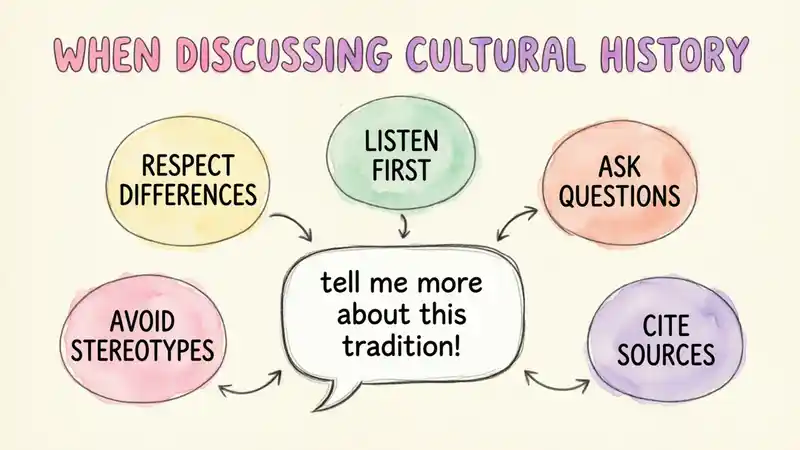
Be careful with expressions that have roots in specific communities. Do not use culturally specific slang simply as a costume for sounding retro.
When Accuracy Matters
If you are writing a story set in the 1970s, research the specific year, location, and character. Slang changed throughout the decade.
A phrase that sounds “70s” may actually be more strongly associated with the 1960s, 1980s, or a particular subculture.
Are 70’s Slang Words Still Used Today?
Some Are Still Common
Words such as “bummer,” “chill,” and “cool” have continued across generations, although their meanings and popularity can shift.
Some Are Mostly Retro
“Groovy” and “far out” are still understandable, but modern speakers may use them mainly for humor, nostalgia, or a vintage feel.
Some Have Become Dated
Certain phrases are now more recognizable from old movies, television, or cultural references than from everyday speech.
That does not make them useless. It simply means their social meaning has changed.
How to Use 70’s Slang Naturally
If you want to use retro expressions today, less is usually better.
Good Approach
“That record is groovy. I really dig it.”
Two expressions create a clear retro feel.
Overdone Approach
“Hey, groovy dude, can you dig it? That far-out fab thing is outta sight!”
This can sound like a parody because too many period expressions are packed together.
For historical writing, authenticity matters more than using as many slang words as possible.
Frequently Asked Questions
1. What is 70’s slang?
70’s slang refers to informal words and phrases strongly associated with American culture during the 1970s. Examples include “groovy,” “far out,” “right on,” and “bummer.”
2. What was the most popular slang in the 70s?
There was no single slang word used by everyone. “Groovy,” “far out,” “right on,” “bummer,” and “can you dig it?” are among the expressions strongly associated with the period.
3. What does “groovy” mean in 70s slang?
“Groovy” generally meant cool, enjoyable, fashionable, or pleasing. It had roots before the 1970s but remained strongly associated with the era.
4. What does “far out” mean in 70s slang?
“Far out” was an expression of excitement or admiration for something unusual, impressive, or unconventional.
5. What does “right on” mean in 70s slang?
“Right on” expressed agreement, approval, or support. It could be similar to saying “I agree” or “That’s great.”
6. Is 70’s slang still used today?
Yes. Some expressions remain part of informal English, while others are mainly used for humor, nostalgia, historical writing, or retro themes.
Conclusion
70’s slang gives us a useful look at how language, music, youth culture, and social groups shaped everyday communication during the 1970s. Expressions such as “groovy,” “far out,” “right on,” “bummer,” and “can you dig it?” are among the best-known examples.
The important thing to remember is that 70’s slang was never one single language used by everyone. Some terms came from earlier decades, while others became popular through particular communities, music scenes, media, or youth culture.
Today, these expressions can still be fun to use, especially when talking about retro culture or creating a vintage tone. Just keep the context in mind. A word that sounds natural in a historical conversation may sound playful or dated in modern speech.
Read more about!
- What Does Shark Mean in Slang? Meaning and Uses
- Stomach in Spanish Slang: Meanings, Words, and Everyday Use
- What Does Preppy Mean in Slang? Meaning, Origin & How People Use It
- Mofongo Slang Explained: Meaning, Origin, and Usage

Hi, I’m Nathan Collins. I create easy-to-understand English language content focused on internet slang, texting abbreviations, modern expressions, vocabulary, and word meanings. My goal is to help students, writers, professionals, and English learners communicate with confidence through clear explanations, practical examples, and reliable language guides.