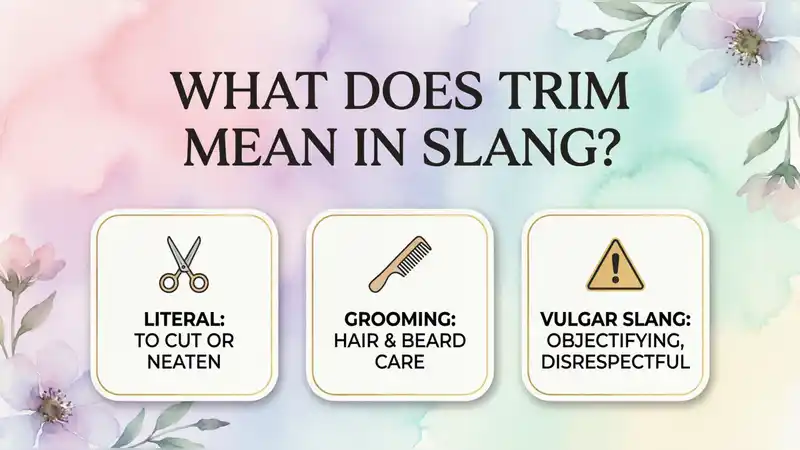
What does trim mean slang can be confusing because the word has several meanings depending on the situation. In everyday English, trim can mean cutting something shorter or making something look neat.
In casual conversations, however, it can also describe a fresh haircut, a neat appearance, or, in some regional slang, an attractive person. There is also an older and more vulgar slang meaning that appears in historical writing and older music references.
That is why context matters. A message such as “Nice trim” is very different from an older slang reference to “trim.” Understanding the surrounding words, the speaker’s region, and the tone can help you choose the right meaning.
Quick Answer
“Trim” in slang can refer to a haircut or neat appearance, while some regional and older uses refer to an attractive person. An older vulgar meaning also exists, so context is important.
What Does Trim Mean Slang?
The slang meaning of trim is not limited to one definition. The most useful way to understand it is to look at the context in which the word appears.
1. Trim Can Mean a Haircut
One common informal use is simply a haircut or small haircut adjustment.
For example, someone might say:
“I’m getting a trim tomorrow.”
Here, trim means getting some hair cut or cleaned up. This is a normal, casual use and is not offensive.
You may also see:
- “Got a fresh trim.”
- “That trim looks good.”
- “I need a trim before school.”
In this context, the word is about grooming and appearance.
2. Trim Can Mean Looking Neat or Well-Groomed
The word can also describe someone or something that looks neat, tidy, or well put together. This meaning is closely connected to the standard English adjective trim. Major dictionaries describe trim as neat, tidy, and attractive, and it can also describe a person’s appearance.
For example:
“He looks pretty trim in that outfit.”
Depending on the context, this could mean that the person looks neat, fit, or well presented.
This meaning is more descriptive than slangy, so it should not automatically be treated as internet slang.
3. Trim Can Mean an Attractive Person in Some Slang
In some informal or regional slang, particularly in British or urban contexts, trim can be used to describe an attractive person. This use is highly context-dependent and can sound objectifying or disrespectful when directed at someone.
For example, a person might use trim informally when talking about someone’s appearance.
However, this is not a good word to use casually about someone you do not know. A safer choice is simply:
- attractive
- good-looking
- stylish
- well-dressed
The meaning can also vary by region, so you should not assume that every person who uses trim means the same thing.
4. An Older Vulgar Meaning of Trim
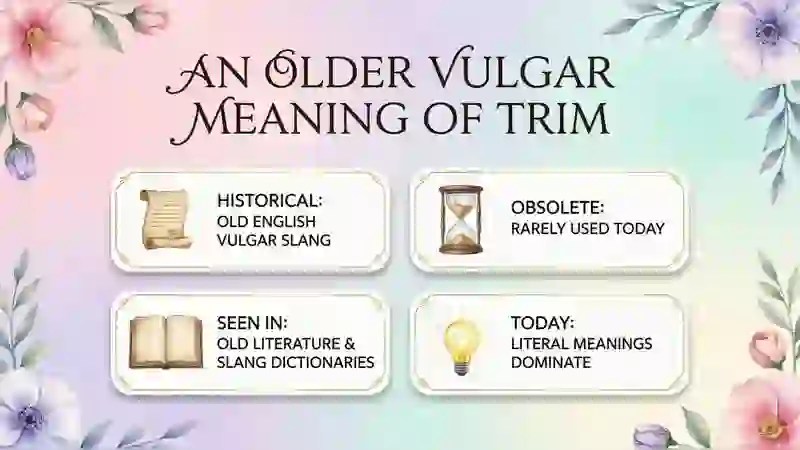
There is also an older, vulgar slang meaning of trim connected with sexual references. Historical slang sources document this usage in American English going back many decades, including references in blues culture.
Because this meaning can be inappropriate, it is important to recognize it without treating it as normal everyday vocabulary.
If you encounter trim in an old song, movie, book, or historical discussion, the surrounding sentence may indicate this older meaning.
For modern readers, the key point is simple: trim does not always mean a haircut or neat appearance. In some older slang contexts, it has a vulgar meaning.
Trim Full Form: Is It an Acronym?
No. Trim is not an acronym or abbreviation.
It is an ordinary English word that has developed several informal meanings over time.
So, unlike slang such as “LOL” or “IDK,” there is no expanded trim full form to memorize.
Its meaning comes from context rather than from individual letters.
Is Trim Rude, Offensive, or Neutral?
It depends on how it is used.
| Use of “trim” | Tone | Usually appropriate? |
| A haircut | Neutral/casual | Yes |
| Neat appearance | Neutral | Yes |
| Attractive person in some regional slang | Informal | Use caution |
| Older vulgar meaning | Vulgar | Avoid in normal conversation |
For example, “I need a trim” is completely ordinary when talking about a haircut.
On the other hand, using trim to describe a person can sound disrespectful depending on the speaker, audience, and region.
When in doubt, use clearer words instead.
Where Is Trim Commonly Used?
The meaning of trim changes across communities and situations.
Everyday Conversation
The haircut meaning is easy to hear in casual conversation:
“I’m going to get a trim this weekend.”
This is probably the safest informal meaning.
Texting
In a text message, trim can still mean a haircut:
“Got my trim today.”
The surrounding words usually make the meaning obvious.
Social Media
Social media posts can use trim when discussing hair, fashion, or appearance. Because social media brings together people from different regions, however, slang meanings can vary.
A phrase that seems obvious to one group may have a completely different meaning somewhere else.
Music and Older Media
The older slang meaning has appeared in blues, hip-hop, films, and other forms of popular culture. Historical sources specifically document trim as slang in blues culture.
This is one reason people sometimes search for what does trim mean slang after hearing the word in an older song or movie.
Real-Life Examples of Trim
Here are examples showing how the meaning changes with context.
Friendly Example
“Your new trim looks great.”
Meaning: The person’s haircut looks good.
Tone: Friendly and positive.
Casual Example
“I need a trim before the weekend.”
Meaning: The speaker wants a haircut.
Tone: Normal and casual.
Appearance Example
“He always looks trim and well dressed.”
Meaning: He looks neat and well presented.
Tone: Neutral.
Regional Slang Example
“They called her trim.”
Meaning: In some slang contexts, the word can describe an attractive person.
Tone: Informal and potentially disrespectful, depending on the context.
Historical Slang Example
In an older cultural or literary reference, trim may have a vulgar meaning connected with sex. That meaning is dated and can be offensive, so it is better understood as historical slang rather than something to casually repeat.
Trim Meaning Slang vs. Regular English
The easiest way to understand the word is to separate its ordinary meaning from its slang uses.
| Meaning | Example | Tone |
| Haircut | “I got a trim.” | Casual |
| Make shorter/neater | “Trim the edges.” | Neutral |
| Neat or well-groomed | “The garden looks trim.” | Neutral |
| Attractive person | Regional slang use | Informal |
| Older vulgar meaning | Historical slang context | Vulgar |
This shows why simply looking up one definition may not answer the question.
Trim vs. Similar Slang Terms
Several words can overlap with some meanings of trim, but they are not exact replacements.
| Term | Meaning | Tone |
| Trim | Haircut or neat appearance; other slang meanings vary | Casual |
| Fresh cut | A recently styled haircut | Casual |
| Clean-cut | Neat and well-groomed appearance | Neutral |
| Sharp | Looking stylish or well dressed | Positive |
| Attractive | Good-looking | Neutral |
| Fit | Can mean physically healthy or attractive depending on context | Informal |
If you mean someone’s haircut, fresh cut is usually clearer.
If you mean someone’s appearance, well-groomed or well-dressed is more precise.
Origin and Background of Trim
The ordinary English word trim is much older than its modern slang uses. Its history is connected with ideas such as making something firm, arranging it, or making it neat. Oxford traces the word’s origin back to Old English forms related to making firm or arranging.
Over time, the word developed many everyday uses. We can trim hair, trim plants, trim material, or describe something as neat and well cared for.
Slang developed separately in different communities.
Historical sources document a vulgar meaning of trim in American slang from at least the mid-20th century. It also became associated with blues language and later appeared in other popular culture.
This history explains why the word can look completely harmless in one sentence and have a very different meaning in another.
When Should You Avoid Using Trim as Slang?
You should be careful when using trim to describe another person.
Avoid it when:
- You are speaking to someone you do not know well.
- You are in a school or professional setting.
- You are unsure which regional meaning the listener knows.
- The word could be interpreted as a comment about someone’s appearance.
- The context could make it sound vulgar or disrespectful.
If your meaning is simply haircut, say haircut or fresh cut.
If your meaning is good-looking, say attractive or well-dressed.
Clear language prevents unnecessary misunderstandings.
Polite Alternatives to Trim
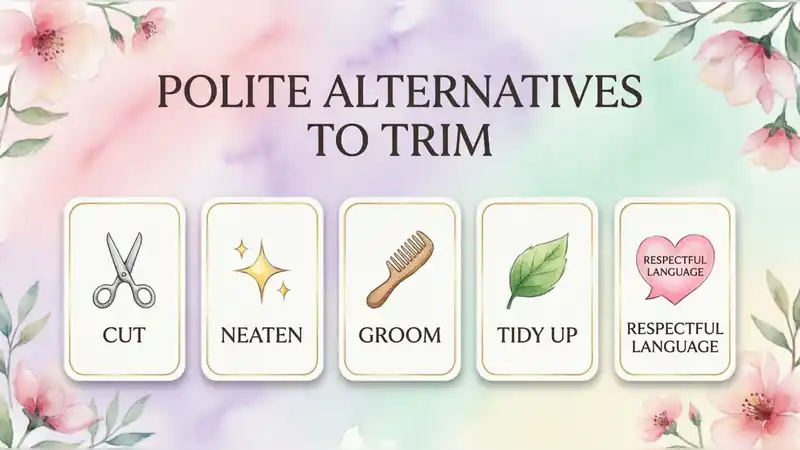
If you’re talking about grooming, these alternatives are easy to understand:
- Haircut
- Fresh cut
- Haircut appointment
- Hair cleanup
- New hairstyle
If you’re describing someone’s appearance:
- Well-groomed
- Well-dressed
- Stylish
- Attractive
- Smart-looking
These choices make your meaning much clearer and avoid the older slang interpretations.
Why Do People Use Trim?
People use slang because it can make conversation shorter and more informal.
With trim, the reason may simply be convenience. Saying “I need a trim” is a quick way of saying that you need a haircut.
In other contexts, regional slang can help people identify with a particular community or style of speech.
The problem is that slang is not universal. A word can have one meaning in one community and another meaning somewhere else.
That is especially important online, where people from different regions communicate in the same comment section.
How Trim Can Affect Communication
Using slang can make a message feel friendly and relaxed, but it can also create confusion.
For example:
“I need a trim.”
Most readers will probably understand that the speaker means a haircut.
But:
“He’s trim.”
requires more context. Depending on the speaker’s region, it could refer to appearance or a different slang meaning.
This is why context is essential when interpreting short messages.
Is Trim Safe for Social Media?
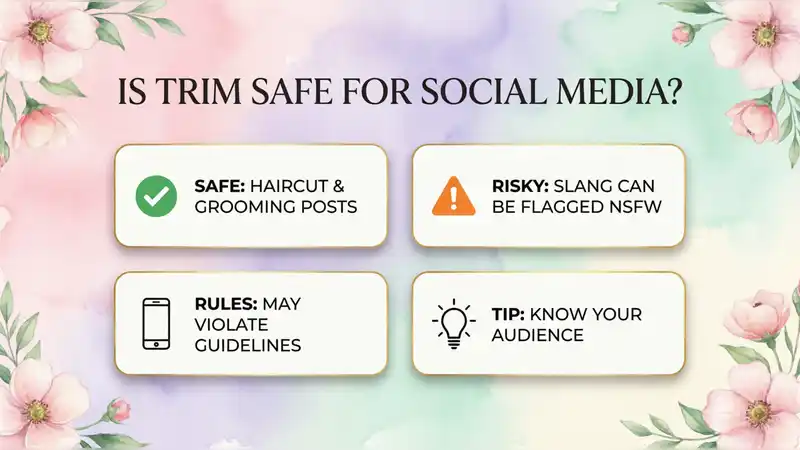
The word trim itself is not inherently unsafe. The meaning depends on the context.
Using it to talk about a haircut is ordinary:
“Fresh trim!”
However, some slang meanings are vulgar or can objectify people. For public posts, school-related communication, or conversations with people you do not know well, clearer wording is usually better.
If you see trim in a social-media comment, look at the words around it before deciding what it means.
What Does “Fresh Trim” Mean?
“Fresh trim” usually means a recent haircut or a newly cleaned-up hairstyle.
For example:
“Fresh trim before the big event.”
Here, trim has nothing to do with the older slang meanings. It simply means a haircut or grooming session.
This is one of the most common harmless uses you may encounter.
What Does “Get a Trim” Mean?
“Get a trim” normally means to get some hair cut or cleaned up.
Example:
“I’m going to get a trim tomorrow.”
The phrase is common in casual speech and does not require a special slang interpretation.
What Does “Trim” Mean in Different Contexts?
Context is the best clue.
If the conversation is about hair:
Trim = haircut or small haircut adjustment.
If the conversation is about appearance:
Trim = neat, fit, or well-presented, depending on the sentence.
If it is regional slang about a person:
Trim may describe an attractive person, but this can sound objectifying.
If it appears in older music or historical slang:
It may carry an older vulgar meaning.
Frequently Asked Questions
1. What does trim mean slang?
In slang, trim can mean a haircut, a neat appearance, or, in some regional contexts, an attractive person. An older vulgar meaning also exists, so context matters.
2. Is trim a slang word?
Trim is a normal English word that also has several slang uses. It is not an acronym or abbreviation.
3. What does “fresh trim” mean?
“Fresh trim” usually means a recent haircut or newly groomed hairstyle.
4. Is calling someone trim rude?
It can be. When trim is used as slang to describe a person, it may sound objectifying or disrespectful. A clearer term such as “attractive” is usually safer.
5. Does trim have an older slang meaning?
Yes. Historical slang sources document a vulgar meaning related to sexual references. This use is much older and should not be confused with the ordinary haircut meaning.
6. What does “get a trim” mean?
“Get a trim” usually means to get a haircut or have your hair slightly shortened.
Conclusion
So, what does trim mean slang? The answer depends strongly on context. In everyday conversation, trim can mean a haircut or a neat, well-groomed appearance. In some regional slang, it can describe an attractive person, while older slang sources document a separate vulgar meaning.
If you see phrases such as “fresh trim” or “I need a trim,” the haircut meaning is usually clear. When the word describes a person, however, it is better to consider the speaker’s region and tone before interpreting it.
Understanding these differences helps you read slang more accurately and avoid using a word in a way that could be misunderstood.
Read more about!
- HP Meaning Slang: What Does HP Mean in Text, Gaming & Online?
- Slaying Meaning Slang: Definition, Origin, Examples
- Grape Slang Meaning: What Does Grape Mean in Slang?
- What Does Fade Mean in Slang and Text? Uses & Examples

Daniel Brooks is an English vocabulary educator and content editor with experience creating educational resources about English words, idioms, and everyday communication. He reviews language content for clarity, accuracy, and readability to ensure readers receive reliable and easy-to-understand information.