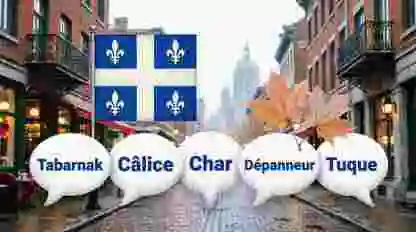
French Canadian slang refers to informal words and expressions commonly used by French speakers in Canada, especially in Quebec
. These terms often differ from standard French spoken in France. Many people search for French Canadian slang to better understand conversations, travel in Quebec, watch TV, or communicate with native speakers
. In this guide, you’ll learn the meanings of popular expressions, where they’re used, when to avoid them, and real-life examples.
1. Quick Answer About French Canadian Slang
French Canadian slang is a collection of informal words, phrases, and expressions used mainly in Quebec and other French-speaking parts of Canada. These expressions reflect local culture, history, and everyday life. While some slang is friendly and humorous, other terms are considered rude or should only be used in casual conversations.
2. What Is French Canadian Slang?
Definition
French Canadian slang includes informal vocabulary that differs from standard French. It helps people express emotions, humor, surprise, excitement, or frustration in everyday conversations.
Unlike formal French taught in schools, slang changes over time and varies by region.
Why Is It Different from French in France?
Although both varieties share the same language, Canadian French developed separately over hundreds of years.
This led to:
- Different pronunciation
- Unique vocabulary
- Local expressions
- English language influence in some regions
- Cultural references unique to Canada
Because of this, visitors from France may hear unfamiliar slang while visiting Quebec.
3. Where Is French Canadian Slang Commonly Used?
Everyday Conversations
Friends and family use slang naturally at home and while socializing.
Social Media
Young Canadians frequently use slang on:
- TikTok
- Snapchat
- X (Twitter)
Online Gaming
Gamers often mix French Canadian slang with English gaming terms during multiplayer games.
Television and Comedy
Many Quebec TV shows, movies, and comedians regularly use local slang to sound natural.
4. Common French Canadian Slang Words
| Slang | Meaning | Example |
| Char | Car | “My char is outside.” |
| Blonde | Girlfriend | “My blonde is coming tonight.” |
| Chum | Boyfriend | “Her chum studies in Montreal.” |
| Magasiner | To go shopping | “Let’s magasiner this weekend.” |
| Dépanneur (Dep) | Convenience store | “I’ll stop at the dep.” |
| Fun noir | Very funny | “That movie was fun noir!” |
| Pantoute | Not at all | “I don’t understand pantoute.” |
| Ben | Well | “Ben, let’s go.” |
| C’est le fun | It’s fun | “This game is le fun.” |
| Asteure | Right now / Nowadays | “Asteure everyone uses smartphones.” |
5. Popular Quebec Expressions
“C’est le fun”
Meaning: It means “It’s fun” or “It’s enjoyable.”
Example:
“The festival was vraiment le fun.”
“Pantoute”
Meaning: Not at all.
Example:
“I don’t like winter pantoute.”
“Ben”
Meaning: Well.
Example:
“Ben, what should we do now?”
“Char”
Meaning: Car.
Example:
“My char needs gas.”
“Magasiner”
Meaning: To shop.
Example:
“We’re going to magasiner for new clothes.”
6. Are French Canadian Slang Words Rude?
However, some expressions are considered vulgar, especially traditional Quebec swear words known as sacres.
Harmless Slang
- Char
- Blonde
- Chum
- Ben
- Magasiner
These are commonly used in casual conversations.
Slang to Use Carefully

Some Quebec swear words have religious origins and may sound offensive depending on the situation. They are common among close friends but should be avoided in:
- Business meetings
- School presentations
- Formal conversations
- Speaking with people you do not know well
Always pay attention to the setting before using unfamiliar slang.
7. Real-Life Examples of French Canadian Slang
Learning through examples makes slang much easier to understand.
Friends Talking
Emma: “On va magasiner demain?”
Lucas: “Oui! Ça va être le fun.”
(Translation: “Are we going shopping tomorrow?” “Yes! It’ll be fun.”)
At a Convenience Store
Friend: “I’m going to the dep.”
You: “Can you grab me a drink too?”
Talking About a Car
Mike: “Where’s your char?”
Alex: “I parked it outside.”
School Conversation
Student A: “Do you understand the homework?”
Student B: “Pantoute!”
Meaning: “Not at all.”
Family Conversation
Mom: “Where’s your chum?”
Daughter: “He’s waiting outside.”
Social Media Post
“That concert was tellement le fun! 🎉”
Gaming Chat
Player 1: “Ready to play?”
Player 2: “Ben, let’s start!”
8. Origin and History of French Canadian Slang
Early French Roots
Many expressions came from older French dialects spoken by settlers from regions such as Normandy, Brittany, and western France. Some words disappeared in modern France but continued to be used in Quebec.
Influence of English
As English and French speakers lived together in Canada, some English words entered everyday Canadian French. In many cases, these words were adapted to fit French pronunciation and grammar.
Quebec Culture
Local traditions, humor, music, television, and daily life also shaped modern French Canadian slang. Today, new slang continues to appear through social media, online gaming, and popular culture.
9. Similar Slang and Related Terms
| Term | Meaning |
| Quebec French | French spoken in Quebec |
| Canadian French | French spoken across Canada |
| Joual | A well-known working-class dialect from Montreal |
| Sacres | Traditional Quebec swear words with religious origins |
| Franglais | A mix of French and English |
| Colloquial French | Informal spoken French |
| Informal French | Casual everyday language |
| Quebec expressions | Local sayings used in Quebec |
| Canadian idioms | Popular Canadian expressions |
| Regional slang | Slang unique to a particular area |
These terms are related but not identical. For example, Joual is one variety of Quebec speech,.
10. When Should You Avoid Using French Canadian Slang?
Not every situation is appropriate for slang.
Formal Business Settings
Use standard French instead of slang during:
- Business meetings
- Job interviews
- Official emails
- Customer service
- Professional presentations
School Assignments
Teachers generally expect formal French in essays and exams.
Speaking With Older People

Some older speakers may prefer more traditional or standard language, especially in formal conversations.
Using Unfamiliar Expressions
If you do not fully understand a slang word, it is safer not to use it. Listening first helps you learn how native speakers use it naturally.
Using slang respectfully shows cultural awareness and helps avoid misunderstandings.
11. Why Do People Use French Canadian Slang?
People use French Canadian slang because it sounds natural, friendly, and reflects local culture. It helps speakers connect with family, friends, and their community.
Common Reasons
- To sound more natural in everyday conversations.
- To express local identity and Quebec culture.
- To make conversations more relaxed.
- To communicate quickly using familiar expressions.
- To add humor and personality.
- To fit in with friends and local speakers.
12. Common Misunderstandings About French Canadian Slang.
Not Everyone Uses the Same Slang
Different regions of Canada have different expressions. A word common in Montreal may be less common elsewhere.
It Is Not the Same as Standard French
Many slang words are unique to Canada and may not be understood by people from France.
Not All Slang Is Rude
Most expressions are friendly and harmless. Only certain traditional swear words, known as sacres, are considered offensive.
Slang Changes Over Time
New words appear through social media, music, and popular culture, while older expressions may become less common.
13. Frequently Asked Questions
1. What is French Canadian slang?
Informal language used by French speakers in Canada, especially in Quebec.
2. Is French Canadian slang different from French spoken in France?
Yes. While both use French, Canadian French has many unique words, pronunciations, and expressions.
3. Where is French Canadian slang most common?
It is most common in Quebec but is also used in other French-speaking parts of Canada.
4. Is French Canadian slang rude?
Most slang is harmless. However, some traditional Quebec swear words can be offensive and should be used carefully.
5. What does “char” mean in Quebec slang?
“Char” means a car or automobile.
6. What does “magasiner” mean?
It means “to go shopping.”
7. Can tourists use French Canadian slang?
Yes. Using simple and common expressions politely is usually appreciated, but avoid swear words unless you fully understand their meaning.
8. Is French Canadian slang used online?
Yes. It is widely used on TikTok, Instagram, Facebook, Discord, Reddit, Snapchat, and in text messages.
9. What is Joual?
Joual is a well-known dialect of Quebec French associated with Montreal and working-class speech. It includes many slang expressions.
10. Is learning French Canadian slang useful?
Yes. It helps you understand local conversations, TV shows, movies, music, and everyday communication in Quebec.
14. Conclusion
French Canadian slang is an important part of everyday communication in Quebec and other French-speaking regions of Canada. It includes unique words, local expressions, and cultural phrases that make conversations sound natural and friendly
.If you are traveling, studying French, watching Quebec television, or chatting with Canadian friends, learning these expressions will help you understand real-life conversations more easily
. Start with common words like char, magasiner, ben, and c’est le fun, and remember to avoid informal or offensive slang in professional or formal situations.
Find out more!
- UK Slang Words Roadman: Meaning, Popular Terms & Examples
- British Insults Slang: Meanings, Examples & When to Use Them

Hi, I’m Olivia Harper. I create clear and easy-to-understand English language content, including word meanings, slang explanations, idioms, synonyms, and everyday vocabulary. My goal is to help students, writers, professionals, and English learners improve their communication skills with simple explanations, practical examples, and reliable language guides.