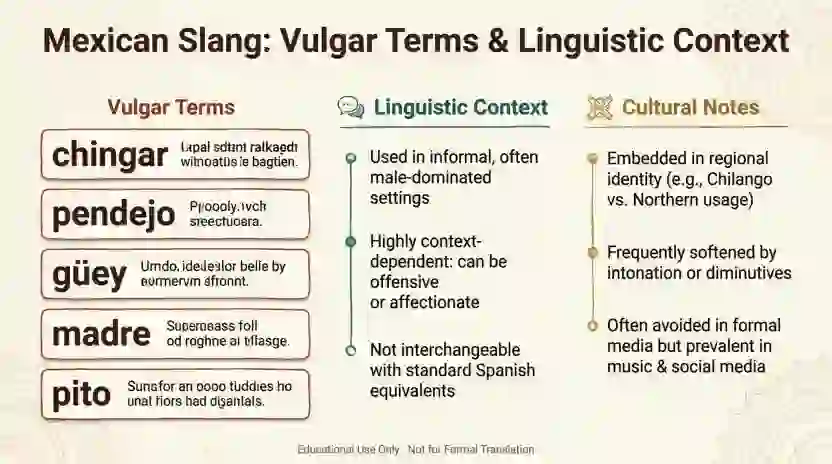
You may see the phrase “Mexican slang for pussy” when someone is trying to understand a Spanish word used in a Mexican movie, song, meme, text, or social-media post. The important point is that Mexican Spanish has many regional expressions, and a word that sounds normal in one place can sound crude or offensive somewhere else.
For educational or everyday communication, “vagina” is the clear and neutral English medical term. In Spanish, “vagina” is also a standard anatomical word. Informal expressions exist, but they are not all interchangeable.
This guide focuses on how these expressions work as language, including tone, regional differences, and when a neutral word is better. Because vulgar slang can be inappropriate in school or professional settings, it is useful to understand the difference between informal language and respectful language.
Quick Answer
| Question | Answer |
| Meaning | Informal or vulgar Mexican Spanish expressions referring to female genitals |
| Neutral Spanish word | Vagina |
| Tone | Depends on the expression; some are crude or insulting |
| Used by | Varies by age, region, and social group |
| Common online? | Vulgar expressions can appear in memes, jokes, music, and chats |
| Appropriate everywhere? | No |
| Best formal choice | “Vagina” or another medically accurate term |
The biggest issue is context. Mexican Spanish is spoken across many regions, so there is no single slang word that represents every Mexican speaker.
What Does “Mexican Slang for Pussy” Mean?
The English word in the search phrase is a vulgar slang term for female genitalia. When someone searches for its Mexican equivalent, they are usually looking for an informal Spanish expression rather than the standard anatomical word.
In Mexican Spanish, vulgar expressions can have different meanings depending on the sentence. A term may refer to anatomy, be used as an insult, or appear in a joke without literally describing anatomy.
That is why translating slang word-for-word can be misleading.
The neutral term
The standard Spanish anatomical term is vagina.
It is suitable for:
- Health education
- Medical information
- School assignments
- Formal writing
- Clear communication
It is different from slang because it describes anatomy without adding a vulgar or insulting tone.
Why Mexican Slang Can Be Hard to Translate
Slang does not work like a simple dictionary.
A Spanish expression can carry information about:
- Region
- Age group
- Relationship between speakers
- Humor
- Anger
- Sexual context
- Social setting
A direct translation may therefore miss the real meaning.
For example, an expression that sounds extremely offensive in English might be used differently in a particular Spanish-speaking community. The reverse can also happen.
This is why subtitles and automatic translators sometimes produce awkward translations of slang.
Regional Differences in Mexican Spanish
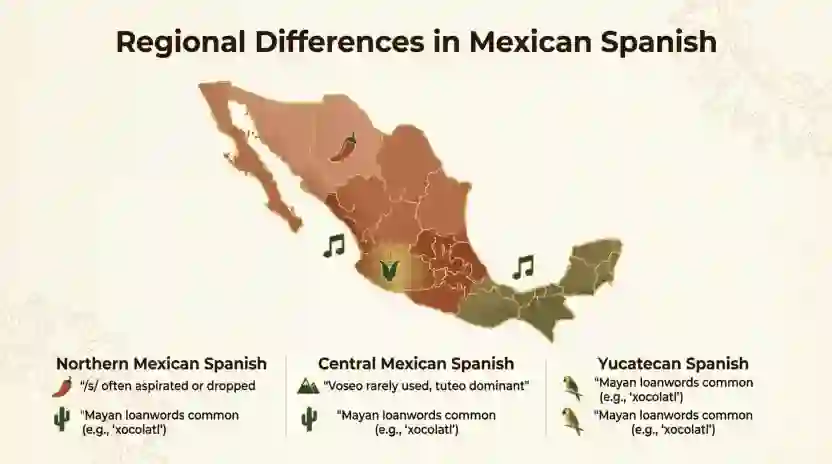
Mexico has many regional varieties of Spanish. Vocabulary can differ between areas such as northern Mexico, central Mexico, and southern Mexico.
The same informal expression may also have different levels of familiarity between communities.
Because of this, it is safer to say:
“This is a vulgar or informal Mexican Spanish expression”
rather than claiming that one slang word is used by everyone in Mexico.
There is also a difference between Mexican Spanish and Spanish from countries such as Spain, Argentina, Colombia, or Chile. A slang term that is common in one country may be uncommon or have another meaning elsewhere.
Where This Language May Appear
| Setting | What to Expect |
| Text messages | Informal language between friends |
| Social media | Jokes, memes, comments, or quoted content |
| Music | Explicit or suggestive language may occur |
| Movies and TV | Slang may appear in dialogue |
| Gaming chats | Informal or insulting language |
| School | Neutral anatomical vocabulary is usually better |
| Workplace | Vulgar sexual slang is generally inappropriate |
Seeing a word online does not automatically mean it is polite or widely used.
Vulgar vs. Neutral Spanish
The easiest way to understand this topic is to separate anatomical vocabulary from vulgar slang.
| Type | Example | Tone |
| Medical/neutral | Vagina | Neutral |
| Informal | Regional expressions | Depends on context |
| Vulgar | Explicit slang | Crude or inappropriate in many settings |
| Insult | Sexualized insult | Potentially offensive |
This distinction matters when translating Mexican Spanish. A translator should consider tone, not only literal meaning.
Is This Slang Offensive?
It can be.
Some vulgar expressions for body parts are used casually among people who know each other well. Others can sound insulting, disrespectful, or sexually explicit.
There is no universal rule that an informal expression is acceptable simply because people use it online.
If you do not know the social context, the neutral anatomical term is the safer choice.
Common Mistakes When Translating Mexican Slang
1. Assuming every Mexican speaker uses the same word
Mexico has many regional speech patterns. One expression should not be treated as universal Mexican Spanish.
2. Using slang in formal writing
A slang translation may be correct linguistically but still be unsuitable for a school paper, email, or professional conversation.
3. Ignoring tone
A dictionary translation may give the basic meaning while missing if the word sounds playful, vulgar, insulting, or offensive.
4. Treating online usage as normal speech
A word appearing frequently in memes does not prove that everyone uses it in everyday conversation.
5. Confusing slang with anatomy
A vulgar expression and the medical word “vagina” may refer to related anatomy, but they do not have the same tone.
When Should You Use the Neutral Word?
Use “vagina” when you need to communicate clearly and respectfully.
It is especially appropriate for:
- Biology
- Health education
- Medical discussions
- Schoolwork
- Educational websites
- Formal writing
If your goal is simply to understand something you heard in Mexican Spanish, you can recognize that slang exists without needing to use the vulgar expression yourself.
Mexican Spanish Slang vs. Standard Spanish
| Feature | Standard Spanish | Slang |
| Main purpose | Clear communication | Informal expression |
| Tone | Neutral | Can be crude |
| Regional variation | Lower | Often higher |
| Suitable for school | Usually | Often not |
| Suitable for medical writing | Yes | No |
| Meaning from context | Usually straightforward | Often important |
Real-Life Language Examples
Text Message
A student sees an unfamiliar Spanish expression in a group chat and asks what it means.
Student: “What does that word mean here?”
Friend: “It is a vulgar expression. It is not the formal word for female anatomy.”
The important detail is that understanding a word does not require using it.
Social Media
Someone may encounter an explicit Spanish expression in a meme or comment.
The meaning may depend on if the post is joking, insulting someone, quoting a song, or discussing anatomy.
School Conversation
For a biology assignment, a student would normally use the standard anatomical term rather than vulgar slang.
That keeps the writing clear and appropriate.
Is There One Correct Mexican Slang Word?

No.
That is one of the most important points about this search term.
Mexican Spanish contains regional slang, youth slang, internet language, insults, and expressions influenced by popular culture. Their use can vary greatly.
A reliable explanation should therefore describe the type and tone of an expression rather than presenting one vulgar word as the universal Mexican translation.
Key Takeaways
- “Mexican slang for pussy” refers to vulgar or informal Spanish expressions for female genitalia.
- “Vagina” is the neutral anatomical term in Spanish.
- Slang varies by region, age group, and social context.
- Some expressions can sound crude or insulting.
- A literal translation does not always preserve the original tone.
- Neutral anatomical language is better for school, health, and formal communication.
FAQs
1. What is the formal Spanish word for pussy?
The neutral anatomical word is “vagina.” It is appropriate for medical, educational, and formal contexts. Informal or vulgar expressions may exist, but their tone and use can vary by region and situation.
2. Is Mexican Spanish different from other Spanish?
Yes. Mexican Spanish has vocabulary and expressions that may differ from Spanish used in Spain or other Latin American countries. Slang tends to vary even more, so regional context is important when translating informal language.
3. Is slang for female anatomy always offensive?
Not necessarily, but vulgar expressions can easily sound crude or disrespectful. The relationship between speakers and the setting matter. When the tone is unknown, neutral anatomical vocabulary is the safer option.
4. Why do translations of Mexican slang sometimes sound strange?
Slang carries more than literal meaning. It can show humor, anger, familiarity, regional identity, or social attitude. A translation that only replaces one word with another may miss those details.
5. Can I use slang in a school assignment?
It is generally better to use standard, neutral vocabulary in schoolwork. For anatomy, “vagina” is clear and appropriate. If slang itself is the subject of the assignment, explain it as language rather than using it casually.
6. Does every Mexican person use the same slang?
No. Mexico has many regions and communities, and informal vocabulary differs between them. Age, location, social group, and situation can all affect which expressions someone knows or uses.
7. Can the meaning change depending on context?
Yes. A slang expression can refer to anatomy in one sentence and function as an insult or joke in another. The surrounding words and relationship between speakers help determine the intended meaning.
8. Is “vagina” considered slang?
No. “Vagina” is a standard anatomical term in Spanish and English. It is much more neutral than vulgar slang and is normally the better choice when discussing anatomy in an educational or formal setting.
Conclusion
Searching for “Mexican slang for pussy” can lead to confusing translations because Mexican Spanish has many regional and informal expressions. There is no single slang term that represents every Mexican speaker.
For clear and respectful communication, “vagina” is the standard Spanish anatomical term. Vulgar expressions belong to a different part of the language and can carry meanings related to humor, insults, sexuality, or informal speech.
If you encounter an unfamiliar expression in a Mexican movie, song, message, or social-media post, look at the full sentence and the situation before deciding what it means. Context is often more important than a word-for-word translation.
Read more about!
- Dale Spanish Slang Meaning in Text
- What Is Mewing Slang Meaning in Text?
- Marple Definition Slang: Meaning in Text

Daniel Brooks is an English vocabulary educator who creates simple, practical guides on slang, word meanings, and everyday English. His goal is to help students, writers, and English learners expand their vocabulary and communicate with confidence.