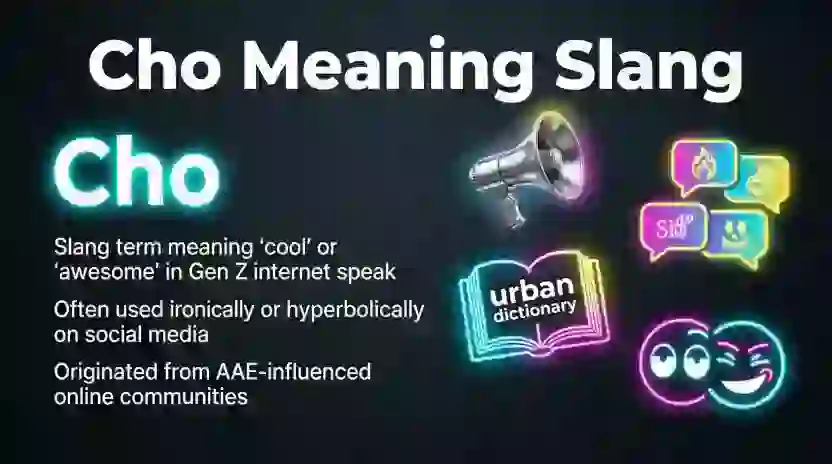
“Cho” can have different meanings depending on where you see it. In Jamaican Patois, cho is an exclamation used to show annoyance, frustration, impatience, disappointment, or dismissal.
In informal online writing, some people also use “cho” as a playful spelling of “you” or “your,” but that meaning is much less universal.
That is why searching for cho meaning slang can be confusing. The word is not a standard English abbreviation with one fixed definition. Its meaning depends on the speaker, language variety, and sentence around it.
This guide explains the main slang use, where it comes from, how it differs from standard English, and how to understand “cho” when it appears in texts, comments, social media posts, or casual conversation.
Cho Meaning Slang: Featured Snippet Answer
Cho is a slang or informal expression whose meaning depends on context. In Jamaican Patois, cho is an exclamation showing annoyance, frustration, impatience, disappointment, or dismissal. In some online slang, “cho” may also represent “you” or “your.”
Cho Meaning Slang: Quick Answer
If someone writes “Cho!” by itself, they may be expressing frustration or annoyance, especially in Jamaican Patois.
For example:
- “Cho! I forgot my keys.” = an annoyed reaction.
- “Cho, stop bothering me.” = frustration or dismissal.
- “What cho doing?” = in some informal online usage, “What you doing?”
The safest approach is to look at the surrounding sentence and the speaker’s language background.
What Does Cho Mean Slang?
The most clearly documented slang meaning of cho comes from Jamaican Patois.
In this use, cho works as an interjection, meaning a short expression that shows a person’s reaction or feeling. The Open Grammar Project’s Jamaican glossary defines cho as an expression of exasperation.
Other Jamaican language resources describe it as expressing feelings such as:
- Annoyance
- Frustration
- Impatience
- Disappointment
- Disgust
- Dismissal
- Exasperation
For example:
“Cho! I missed the bus.”
Here, “cho” does not literally translate to one English word. It communicates the speaker’s frustrated reaction.
Another example is:
“Cho, man, leave me alone.”
The exact English equivalent could be something like “Ugh,” “Come on,” or “Darn,” depending on the situation.
“Cho” Can Depend on Context
Slang does not always work like a dictionary word with one fixed translation.
For example, “Cho!” after receiving disappointing news may express frustration. The same expression in another conversation may sound more like dismissal or disbelief.
This is why translating slang word-for-word can sometimes give the wrong result.
Cho in Online Slang
Some websites that track informal internet language also report cho as a stylized form of “you” or “your.” For example, phrases such as “cho problem” or “cho turn” may be intended as playful spellings.
However, this meaning is not universal English. You should not assume that every person who writes “cho” means “your.”
The Origin of Cho
The documented Jamaican use of cho is connected to Jamaican Patois and has a long history as an expression of exasperation.
A learner’s glossary from the Open Grammar Project lists cho with the pronunciation /tʃo/ and defines it as an expression of exasperation.
Historical linguistic research has also discussed cho in Jamaican English as an exclamation associated with feelings such as scorn, impatience, annoyance, disagreement, and disappointment. The research notes that the expression has been connected with other Caribbean and African-language forms, although its deeper history is not simple or completely settled.
So it is better to say that cho is an established Jamaican Patois expression rather than claim that it was recently invented as internet slang.
How “Cho” Reached Online Conversations

Informal language often moves from speech into writing.
Today, people may write dialect words exactly as they hear them. Social media and messaging also make casual spellings more visible.
This can lead to different uses of “cho” appearing online. Some are connected to Jamaican Patois, while others are informal spellings created by individual online communities.
Because these uses are different, context matters.
British English vs American English
Cho is not a standard British-versus-American spelling difference. It is better understood as a regional, dialectal, or slang expression.
| British English | American English | Example |
| Standard English | Standard English | “I am frustrated.” |
| Informal slang varies | Informal slang varies | Slang depends on community |
| “Cho” is not standard English | “Cho” is not standard English | Context is needed |
| Jamaican Patois use is possible | Jamaican Patois use is possible | “Cho!” as an exclamation |
British and American English both have their own slang, but cho does not function as a normal British or American English word.
If you see it in an English-language post, consider if the writer is using Jamaican Patois, another regional variety, or internet slang.
Which Version Should You Use?
There is no universal rule saying that one English-speaking country should use “cho.”
United States
Use standard English in formal situations. If you are quoting Jamaican Patois or talking with someone who uses it naturally, cho may appear in the original wording.
United Kingdom
The same principle applies. “Cho” should not replace standard English simply because it appears online.
Canada
Canadian English uses standard forms in formal writing. Informal slang depends heavily on the community and context.
Australia
Australian English has many informal expressions, but cho is not a standard replacement for ordinary English.
International Writing
For international readers, write the intended meaning in standard English unless you are specifically discussing the slang term.
Academic Writing
Avoid using “cho” as casual wording in academic work. If your subject is language or Jamaican Patois, you can discuss the word directly and explain its meaning.
Business Writing
Avoid slang unless you are intentionally quoting informal speech. In a professional email, words such as frustrated, disappointed, or unfortunately are clearer.
Common Mistakes
Mistake 1: Assuming “Cho” Always Means “You”
Incorrect assumption:
“Cho” always means “you.”
Better approach:
Check the context first.
Some online sources use “cho” as a stylized form of “you” or “your,” but Jamaican Patois uses cho as an exclamation of exasperation.
Memory tip:
If “Cho!” appears as a reaction, think frustration or exasperation first.
Mistake 2: Treating It Like a Formal English Word
Incorrect:
“Cho is the correct formal spelling of your.”
Correct:
“Cho can be an informal slang spelling in some online contexts.”
Slang varies by community, so it should not automatically replace standard English.
Mistake 3: Giving Every Meaning Equal Weight
Online slang websites can contain many user-created definitions. Some are highly local or personal.
For a reliable explanation, separate established language use from isolated internet definitions.
Everyday Examples
Text Messages
“Cho! I forgot my homework.”
Here, “cho” expresses frustration.
Social Media
“Cho! That was a long day.”
The writer may be expressing annoyance or tired frustration.
Casual Conversation
“Cho, man. Give me a minute.”
This can express impatience or mild irritation in Jamaican Patois.
Business Writing
Instead of:
“Cho! The meeting was canceled.”
Write:
“Unfortunately, the meeting was canceled.”
The second version is clearer and more professional.
Academic Writing
Instead of using slang casually, explain it:
“The Jamaican Patois expression ‘cho’ can communicate exasperation.”
News Writing
A journalist would normally explain the expression rather than use it without context.
Blog Writing
If your article is about Jamaican language or internet slang, you can introduce it directly:
“In Jamaican Patois, ‘cho’ is an exclamation used to express exasperation.”
Google Trends & Modern Usage
People search cho meaning slang, what does cho mean, and similar phrases because “cho” can appear in different language communities.
One major reason for confusion is that the same spelling can represent different informal uses.
For example, Jamaican Patois resources consistently describe cho as an expression of exasperation, while some modern internet-slang sources describe another use connected with “you” or “your.”
There is no reliable basis here for claiming a specific search-volume number or saying that one meaning is universally dominant across the internet.
Why Context Matters
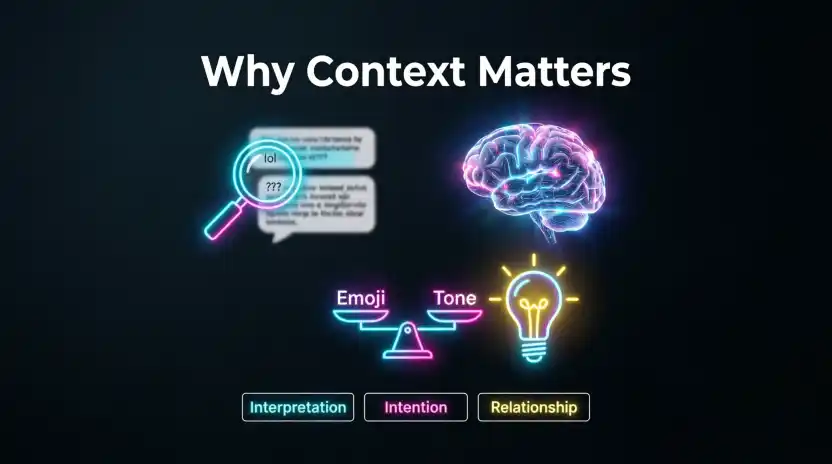
Compare these:
“Cho!”
This looks like an emotional reaction.
“What cho doing?”
This may be an informal spelling of “What you doing?” in a particular online style.
The surrounding words give you important clues.
Quick Comparison Table
| Version | Meaning | Correct? | Region | Example |
| Cho! | Exasperation or annoyance | Yes, in the relevant dialect | Jamaican Patois | “Cho! I forgot.” |
| Cho | Informal “you/your” | Context-dependent | Some online usage | “Cho problem” |
| You | Standard second-person pronoun | Yes | Standard English | “What are you doing?” |
| Your | Standard possessive determiner | Yes | Standard English | “Your phone is here.” |
| Ugh | Frustration or annoyance | Yes, informal English | Broad English use | “Ugh, not again.” |
The important difference is that “cho” is not one fixed English replacement for “you,” “your,” or “ugh.”
Cho vs. Similar Expressions
Cho vs. Ugh
Both can express frustration, but ugh is ordinary informal English, while Jamaican Patois uses cho as a specific exclamation.
Cho vs. Darn
Both can sometimes communicate annoyance. However, cho carries its own cultural and linguistic context.
Cho vs. You
These are not automatically interchangeable.
If someone writes “cho” to mean “you,” that is an informal usage. It does not mean that every instance of “cho” should be translated as “you.”
Cho vs. Chuh
Chuh is listed as another spelling associated with the Jamaican expression cho.
The spelling may vary when people write speech sounds, especially in informal settings.
When Should You Avoid Using “Cho”?
Avoid using “cho” simply because you want to sound casual.
It may confuse readers who do not know the expression. It can also sound unnatural if you use a dialect term without understanding its context.
Be especially careful in:
- School assignments
- Academic papers
- Job applications
- Professional emails
- Formal reports
- Official documents
- International business writing
If you are writing about Jamaican Patois, however, using cho as the subject of your discussion is completely appropriate.
Key Takeaways
- Cho has more than one informal use.
- In Jamaican Patois, cho is an exclamation of exasperation or annoyance.
- It can express frustration, impatience, disappointment, or dismissal.
- Some online slang sources use cho as a playful form of “you” or “your.”
- Context is essential when interpreting the word.
- “Cho” is not a standard British or American English spelling.
- Use standard English in formal and academic writing.
- Do not assume every online use of “cho” has the same meaning.
FAQs
1. What does cho mean in slang?
In Jamaican Patois, cho is an exclamation that expresses exasperation, annoyance, frustration, impatience, or disappointment. It can be similar to saying “ugh,” “darn,” or “come on,” depending on the situation. Some online communities also use “cho” as an informal spelling for “you” or “your,” so the surrounding words are important.
2. Is cho a Jamaican slang word?
Yes. Cho is documented as a Jamaican Patois expression of exasperation. The Open Grammar Project lists cho as an expression of exasperation, while Jamaican language references describe it as an expression of annoyance, impatience, frustration, or disappointment.
3. What does “cho!” mean in a text?
When someone sends “Cho!” as a standalone reaction, it may express annoyance, frustration, disappointment, or disbelief. For example, someone who forgets their keys might write “Cho!” to show frustration. However, slang varies by community, so you should consider the person’s language background and the rest of the conversation.
4. Does cho mean “you”?
Sometimes, in informal online slang, cho is used as a stylized form of “you” or “your.” However, this is not a universal meaning. A source discussing modern texting slang gives examples such as “cho problem” and “cho turn.” Therefore, you should not automatically translate every use of “cho” as “you.”
5. Is cho a bad word?
Not necessarily. In Jamaican Patois, cho is generally an exclamation of frustration or exasperation rather than a highly offensive swear word. Its tone can change with the situation. Like many slang expressions, it is better understood as informal language rather than something suitable for every formal setting.
6. What is another word for cho?
The best English equivalent depends on context. If cho expresses frustration, possible equivalents include ugh, darn, come on, or that’s annoying. There is no single perfect translation because the expression communicates emotion rather than a simple dictionary meaning.
7. Is cho formal English?
No. Cho is not a standard formal English word. It is associated with Jamaican Patois and other informal uses. In school, business, or professional writing, use standard English unless you are specifically discussing or quoting the slang term.
8. What is the difference between cho and chuh?
Cho and chuh can be alternative spellings of the Jamaican expression. Jamaican Patwah lists “chuh” as another spelling for cho. The exact spelling may depend on how a speaker chooses to represent the sound in writing.
9. Can I use cho in an academic essay?
You can use cho when the essay is discussing Jamaican Patois, slang, dialect, or language. In that case, introduce and explain the term. You should not use it as a casual replacement for standard English in an academic argument unless the context specifically requires that informal wording.
10. Why does cho have different meanings online?
Slang develops inside different communities, and the same spelling can appear in unrelated varieties of informal language. Cho is a good example. Its documented Jamaican Patois meaning differs from some newer internet uses, which is why context is more reliable than assuming one universal definition.
Conclusion
The meaning of cho slang depends strongly on context. The clearest documented use is in Jamaican Patois, where cho works as an exclamation of exasperation, frustration, impatience, disappointment, or dismissal. Linguistic resources and Jamaican language references support this use.
You may also encounter cho in online writing as an informal spelling connected with “you” or “your.” That usage exists in some internet communities, but it should not be treated as a universal English definition.
For formal writing, standard English is the safest choice. When reading slang online, look at the complete sentence, the speaker’s language background, and the tone before deciding what “cho” means.
The easiest rule to remember is: “Cho” needs context.
If you enjoy learning internet slang and informal language, explore more slang terms to understand how different words are used in real conversations.
Read more about!
- SU Meaning in Texting: Slang Definition & Examples
- Biker Slang: Common Motorcycle Terms & Meanings
- Peng Slang Meaning: What Does Peng Mean?
Hi, I’m Ryan Mitchell. I write simple guides about slang, internet language, and everyday English to make modern expressions easy to understand. My goal is to help learners use real-life English with confidence.