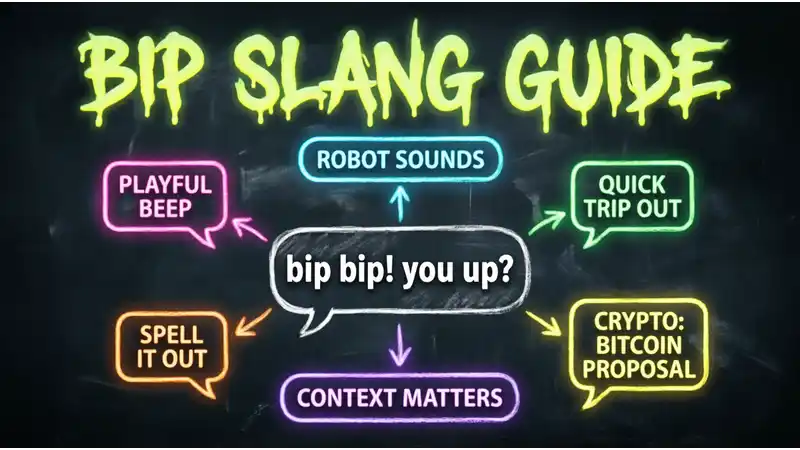
BIP slang is a term that can confuse many people because it does not have just one meaning. Depending on the conversation, BIP may refer to a short beep-like sound, a light hit, or a community-specific slang expression
. This is why many users search for phrases like “BIP meaning slang,” “what does BIP mean in text,” and “BIP full form in chat.” The meaning often changes based on the platform, region, and the people using it.
You might see BIP in text messages, social media comments, gaming chats, online forums, or casual conversations.
In some cases, it is simply used to imitate a notification sound, while in others it may describe a quick action or have a completely different slang meaning within a specific group. Because there is no single universal definition, understanding the context is very important.
In this guide, you’ll learn the different meanings of BIP slang, where it is commonly used, whether it is rude or harmless, real-life examples, and how to understand it correctly in online conversations.
What Does BIP Mean in Slang?
BIP does not have one universal slang definition. Its meaning changes by context, community, and region.
Common meanings of BIP
Some documented uses include:
- A short beeping or blipping sound
- To hit something lightly
- A regional slang term with a specific local meaning
- An abbreviation that can mean something unrelated to slang
The standard informal verb “bip” is documented as meaning to make or cause a short beep, or to hit lightly.
Why context matters
If someone writes “the machine went bip,” they are probably describing a sound.
If someone says “I bipped the ball,” they may mean they hit it lightly.
So, reading the complete sentence is the safest way to understand BIP.
Callout: BIP is a context-dependent term. Do not assume that every use has the same meaning.
BIP Full Form and Definition
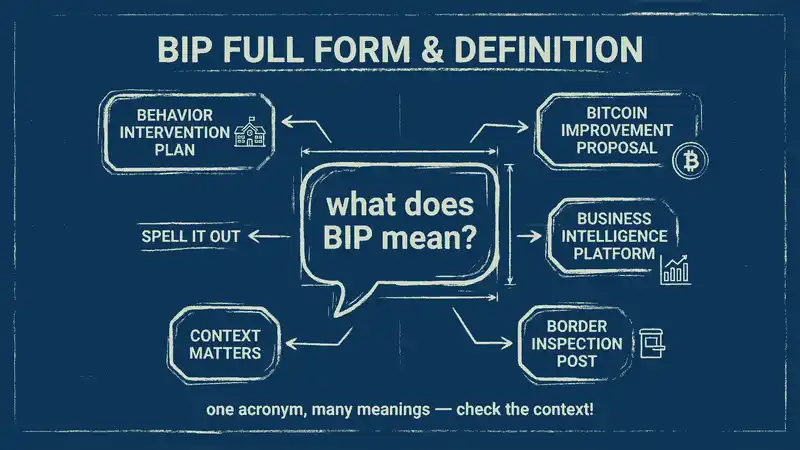
Not always an acronym with one fixed full form.
BIP as a word
In some informal English, “bip” works as a verb. It can describe a short beep or a light hit. This use is related to sound imitation, similar to words such as “beep” or “blip.”
BIP as an abbreviation
Uppercase BIP can also appear as an abbreviation in areas that have nothing to do with slang. For example, Wiktionary lists “basis point” as one financial meaning.
This is why “BIP full form” does not have one answer that works in every situation.
Is BIP Rude, Offensive, or Neutral?
In its ordinary informal meanings, BIP is generally neutral.
Neutral use
When BIP refers to a sound, it is simply descriptive.
Example:
“The phone went bip when the message arrived.”
There is nothing offensive about this use.
Casual use
When “bip” means a light hit, the tone depends on the situation.
Example:
“The ball bipped the edge of the table.”
Again, this is simply informal wording.
Other community-specific meanings
Some slang dictionaries record additional regional or community-specific meanings for “bip.” These meanings should not automatically be applied to ordinary texting.
Where Is BIP Commonly Used?
The word “bip” is not a single platform-specific slang term. Its use depends heavily on context.
Text messages
In texting, a person may use “bip” to imitate a sound or describe a quick action.
Example:
“My phone went bip again.”
Online conversations
People may also use sound-like words for jokes, reactions, or playful descriptions.
Example:
“Bip! The notification scared me.”
Casual conversation
Because “bip” is informal, it can fit relaxed conversations when both people understand what the speaker means.
Callout: There is no reliable reason to assume that BIP has one special meaning on every social platform.
Real-Life Examples of BIP Slang
The following examples show how context changes the meaning.
Friendly example
“Bip! Your phone is ringing.”
Here, BIP imitates a short notification or alert sound.
Casual example
“I bipped the ball by accident.”
Here, “bipped” means hit lightly.
Descriptive example
“The machine made a little bip.”
The word describes a brief electronic sound.
Online conversation
“Bip, bip — my computer is warning me again.”
This uses BIP as a playful imitation of a sound.
Context-based example
“Did you hear that bip?”
Here, the meaning is clear because the sentence is talking about a sound.
Origin and Background of BIP
The documented English word “bip” has an imitative origin. In other words, it is connected to the sound it represents. Wiktionary records informal uses involving a short beep or blipping sound.
An older slang history
BIP also has historical slang uses that are different from modern casual internet language. The Routledge Dictionary of Modern American Slang records “bip” as an older U.S. slang noun for “the head” and also records a historical verb use.
This is important because it shows that the word is not necessarily a new internet invention.
Why meanings change
Short words can develop separate meanings in different communities. Regional slang, online communities, and everyday speech can all give the same word different uses.
That is why a single “official” BIP slang meaning can be misleading.
BIP vs Beep
BIP and “beep” can look similar because both can represent a short sound.
| Term | General Meaning | Tone |
| BIP | Informal spelling or slang-like sound word | Casual |
| Beep | A short electronic or mechanical sound | Neutral |
| Blip | A short signal, mark, or interruption | Neutral |
| Buzz | A humming or vibrating sound | Neutral |
| Ping | A short alert or notification sound | Casual |
“Beep” is the standard English word for a short mechanical or electronic sound. Cambridge Dictionary defines it as making or causing a high, brief mechanical sound,
Which word is clearer?
“Beep” is usually clearer in standard English.
“Bip” may feel more playful or informal, depending on the speaker.
BIP as a Light-Hit Expression
One documented informal meaning of “bip” is to hit something lightly.
How it works
The word can function as a verb:
- bip
- bips
- bipping
- bipped
For example:
“I bipped the ball.”
This means the ball was hit lightly.
Tone
This meaning is informal. It is not usually the best choice for formal writing.
A more standard alternative would be:
“I lightly hit the ball.”
BIP in Different Contexts
The same word can mean different things depending on the sentence.
| Context | Possible Meaning |
| Electronic sound | A short beep |
| Sports or physical action | A light hit |
| Historical slang | A community-specific meaning |
| Finance | Basis point abbreviation |
| Casual online use | Depends on the community |
This table shows why it is risky to give BIP one fixed slang definition.
The safest approach
Ask yourself:
- What is the sentence talking about?
- Is BIP being used as a noun or verb?
- Is the conversation about sound, action, or something else?
- Does the speaker belong to a specific community?
These clues usually make the intended meaning easier to identify.
Why Do People Use BIP?
People may use BIP because it is short, expressive, or sound-like.
It imitates a sound
“Bip” can visually represent a short electronic noise.
It is quick to type
Short informal words are common in casual digital communication.
It can sound playful
A made-up or sound-based spelling can make a sentence feel less formal.
It depends on community
Some meanings only make sense within particular groups or regions. A reader outside that group may not recognize the expression.
Callout: Slang works best when the people in the conversation share the same understanding.
When Should You Avoid Using BIP?
Because BIP has multiple meanings, clarity should come first.
Formal writing
Avoid using BIP when a standard word would be clearer.
Instead of:
“The device made a bip.”
You could write:
“The device made a short beep.”
Professional communication
If the meaning might be unclear, use direct wording.
For example:
“Please notify me when the update is ready.”
is clearer than using an unfamiliar slang expression.
With unfamiliar audiences
If readers may not know your community’s slang, explain the term or use standard English.
Important messages
Do not rely on ambiguous slang when accuracy matters.
Polite Alternatives to BIP

The best alternative depends on what you mean.
If you mean a sound
Use:
- Beep
- Blip
- Alert
- Tone
- Sound
If you mean a light hit
Use:
- Tap
- Hit lightly
- Touch
- Bump
If you mean notification
Use:
- Alert
- Notify
- Message
- Ping
These alternatives make your meaning easier to understand.
Common Misunderstandings About BIP
BIP can be confusing because different sources list different definitions.
Mistake 1: Assuming BIP has one full form
It does not. BIP can be a word, abbreviation, or regional slang term depending on context.
Mistake 2: Treating every online definition as universal
User-generated slang sites often contain many highly specific meanings. Those meanings may describe a particular community rather than general English.
Mistake 3: Assuming it is always internet slang
The documented history of “bip” includes older slang and informal uses, so it is not accurate to treat every use as a recent internet invention.
Is BIP Safe for Social Media?
The ordinary sound-related or light-action uses of BIP are generally harmless.
However, because the term has other regional and community-specific meanings, readers should consider the context before using it publicly.
Good practice
- Use clear wording when possible.
- Do not assume everyone knows the same slang.
- Check the surrounding conversation.
- Avoid using an ambiguous term in serious messages.
- Explain unusual slang when writing for a broad audience.
For most everyday conversations, a standard word such as “beep,” “tap,” or “notify” will be easier to understand.
BIP Slang: Quick Comparison
| Question | Answer |
| Is BIP slang? | It can be informal slang, but it also has standard and abbreviation uses. |
| Does BIP have one full form? | No. Its meaning depends on context. |
| Can BIP mean “beep”? | It can imitate or describe a short beep-like sound. |
| Can BIP mean “hit lightly”? | Yes, this informal verb use is documented. |
| Is BIP offensive? | Its ordinary sound-related use is neutral. |
| Is BIP always internet slang? | No. It has documented older and regional uses. |
| Should I use it in formal writing? | Usually, a clearer standard word is better. |
Frequently Asked Questions
1. What does BIP mean in slang?
BIP can have several informal meanings. It may describe a short beep-like sound or mean to hit something lightly. The exact meaning depends on context.
2. What does BIP stand for?
BIP does not have one universal full form. In different contexts, it can be an abbreviation or an informal word.
3. Is BIP a rude word?
Not in its ordinary sound-related meaning. However, some communities use BIP in specialized ways, so context is important.
4. What is the difference between BIP and beep?
“Beep” is the standard English word for a short mechanical or electronic sound. “Bip” can be an informal or playful spelling of a similar sound.
5. Can BIP mean a light hit?
Yes. Wiktionary documents “bip” as an informal verb meaning to hit lightly.
6. Should I use BIP in formal English?
Usually, no. If clarity matters, use a standard word such as “beep,” “tap,” “hit,” or “notify,” depending on the intended meaning.
Conclusion
BIP is a short word with more than one documented meaning. In informal English, it can describe a short beep-like sound or mean to hit something lightly. It can also appear as an abbreviation or as specialized regional slang.
The most important point is context. If BIP appears in a message about a phone or machine, it may refer to a sound. If it appears as a verb describing an object, it may refer to a light hit.
When writing for a wide audience, standard words such as “beep,” “tap,” or “notify” are usually clearer. Understanding the sentence around BIP will help you identify the intended meaning without guessing.
Read more about!
- What Does Shark Mean in Slang? Meaning and Uses
- What Does Preppy Mean in Slang? Meaning, Origin & How People Use It
- Slang for Coke: Common Terms and Their Meanings
- Reckless in Italian Slang: Meaning and Common Words

Hi, I’m Nathan Collins. I create easy-to-understand English language content focused on internet slang, texting abbreviations, modern expressions, vocabulary, and word meanings. My goal is to help students, writers, professionals, and English learners communicate with confidence through clear explanations, practical examples, and reliable language guides.