Hoss slang meaning is something many people search for after hearing the word in an old movie, TV show, country conversation, text message, or casual American speech. At first, “hoss” may sound like a spelling mistake for “horse,” but in slang, it has its own meaning and personality.
The word is commonly used as an informal way to address a man, especially someone who is strong, big, tough, friendly, or impressive. Depending on the tone, calling someone “hoss” can be a compliment, a nickname, or simply a casual way of saying “buddy” or “man.”
You may hear it in Southern American English, rural communities, sports conversations, and old-fashioned slang.
Quick Answer:
In slang, hoss is an informal term for a man, often suggesting that he is strong, large, tough, or impressive.
It can also be used like “buddy,” “big guy,” or “man” in a friendly conversation.
What Does Hoss Mean in Slang?
The Main Hoss Slang Meaning
In American slang, hoss is usually used to refer to a man or boy in a friendly and informal way.
Depending on the situation, it can mean:
- A strong man
- A big or powerful person
- A tough person
- A friend or buddy
- An impressive person
For example:
“Nice job, hoss!”
Here, hoss works like a friendly nickname. The speaker may not literally mean that the person is large or strong. It can simply show friendliness or admiration.
Hoss Can Suggest Strength
The word often carries an image of physical strength or toughness.
For example:
“That guy is a real hoss.”
This usually means the person is big, powerful, hardworking, or difficult to compete against.
The meaning is similar to calling someone a “beast” in modern slang, although hoss has a more traditional American tone.
Hoss Can Also Mean Buddy
Sometimes the physical meaning is less important.
A person might say:
“How are you doing, hoss?”
In this case, the word simply acts as a casual form of address.
It is similar to:
- Buddy
- Pal
- Man
- Dude
- Big guy
The exact meaning depends on tone and the relationship between speakers.
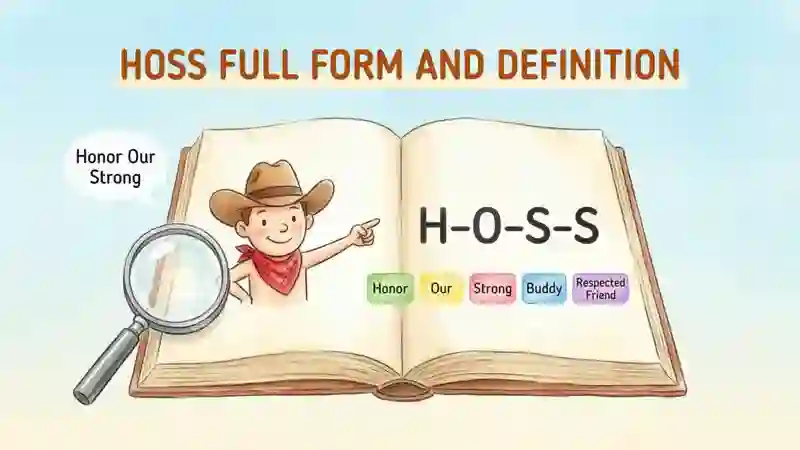
Hoss Full Form and Definition
Does Hoss Have a Full Form?
No. Hoss is not an acronym or abbreviation.
It does not have a full form like LOL, BTW, or BRB.
Hoss is a complete slang word and informal expression.
People searching for “hoss full form” are usually looking for the definition or meaning of the word.
What Does Hoss Stand For?
Hoss does not officially stand for anything.
The term is generally understood as an informal American expression. In some contexts, it developed as a variation connected to the word “horse,” which has long been associated with strength and size.
Over time, hoss became a nickname and slang term for a strong or large person.
Is Hoss Rude, Offensive, or Neutral?
Hoss Is Usually Friendly
In most situations, hoss is not offensive.
It is commonly used in a friendly, humorous, or respectful way.
For example:
“Thanks for helping me, hoss.”
This sounds casual and friendly.
Tone Can Change the Meaning
Like many slang terms, tone matters.
If someone says:
“Listen here, hoss.”
The phrase could sound friendly, serious, or slightly confrontational depending on the speaker’s voice and situation.
The word itself is generally not a serious insult.
Is Hoss a Compliment?
It can be.
Calling someone a “real hoss” may suggest that they are:
- Strong
- Tough
- Reliable
- Hardworking
- Impressive
In sports or physical activities, the word can be used as praise.
For example:
“She carried the whole team. She’s a hoss.”
Although traditionally associated more often with men, modern informal usage may sometimes describe anyone seen as strong or impressive.
Where Is Hoss Commonly Used?
Southern American English
Hoss is strongly associated with informal American speech, particularly Southern and rural language.
You may hear it in:
- Southern communities
- Rural areas
- Country culture
- Informal conversations
However, not every American uses the term regularly.
Sports Conversations
The word can describe a powerful or dominant athlete.
For example:
“That linebacker is a hoss.”
This means the player is physically strong and difficult to stop.
In sports, hoss often emphasizes size, strength, and toughness.
Country and Rural Culture
The word fits naturally into country-style speech and traditional American expressions.
It may appear in conversations about:
- Farming
- Ranching
- Hunting
- Sports
- Physical work
Movies and Television
Many people recognize the name “Hoss” from older American television culture.
The nickname became especially famous through the character Hoss Cartwright from the classic Western television series Bonanza. This helped strengthen the public association between “Hoss” and a large, strong, friendly man.
Real-Life Examples of Hoss Slang
Friendly Example
“Good to see you, hoss. How have you been?”
Here, hoss means something similar to buddy or pal.
The tone is warm and informal.
Casual Example
“Hey hoss, can you give me a hand with this?”
The speaker uses hoss as a casual way to address someone.
Compliment Example
“You lifted all of that by yourself? You’re a hoss!”
Here, the word is clearly a compliment about strength.
Argumentative Example
“Easy there, hoss. Let’s calm down.”
In this context, hoss may sound slightly sarcastic or confrontational.
The word itself is not necessarily offensive, but tone changes how it feels.
Sports Example
“Our new defensive player is an absolute hoss.”
This means the player is big, powerful, and impressive.
Social Media Example
“That guy finished the entire challenge without stopping. What a hoss.”
The slang can appear online, although it is less strongly connected to modern platforms like TikTok than newer Gen Z terms.
Origin and Background of Hoss Slang
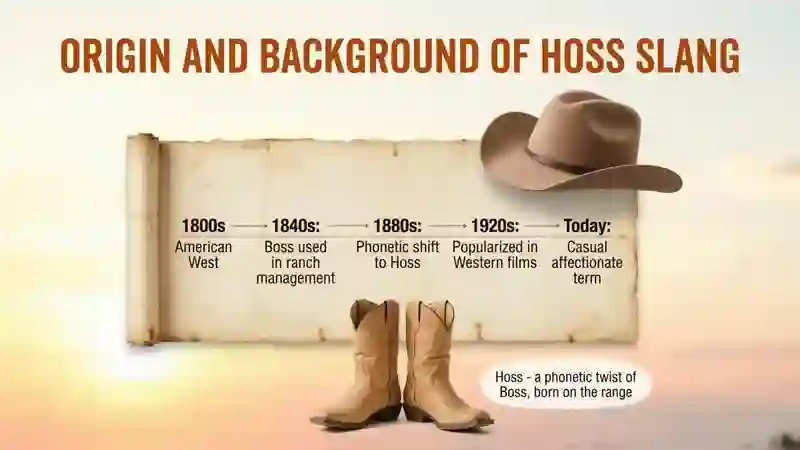
Where Did Hoss Come From?
Hoss is generally considered an informal American variation of “horse.”
Historically, “horse” and related expressions were sometimes used to describe a large, strong, or hardworking person.
The altered pronunciation and spelling “hoss” became part of regional American speech.
Why Is It Connected to Strength?
Horses have traditionally represented:
- Physical strength
- Hard work
- Power
- Endurance
Calling a person a hoss naturally developed into a way of suggesting that someone was strong or powerful.
Hoss as a Nickname
Hoss also became a common nickname.
A person might be called Hoss because they were:
- Large
- Strong
- Friendly
- Older than other children
- Known for physical ability
Nicknames often develop from personality or appearance, and hoss fits this traditional American style.
Hoss Meaning Compared With Similar Slang Words
Hoss vs. Boss
However, boss usually shows respect, approval, or friendliness.
Example:
“Thanks, boss.”
Hoss more strongly suggests toughness, size, or a traditional masculine nickname.
Hoss vs. Dude
Dude is much more common in modern casual English.
Hoss has a stronger connection to traditional American and Southern speech.
Example:
“What’s up, dude?”
versus:
“What’s up, hoss?”
The second phrase sounds more old-fashioned or regional.
Hoss vs. Big Guy
Big guy directly refers to someone who is large or strong.
Hoss can imply the same thing but often sounds more playful and informal.
| Term | Main Meaning | Tone | Common Usage |
| Hoss | Strong person, buddy, tough guy | Friendly and informal | American regional slang |
| Boss | Friend or respected person | Casual and positive | Everyday conversation |
| Dude | Person or friend | Casual | Modern informal English |
| Big guy | Large or strong person | Neutral or friendly | General English |
| Beast | Extremely strong or impressive person | Modern and energetic | Sports and internet slang |
When Should You Avoid Using Hoss?
Avoid It in Very Formal Settings
Hoss is informal slang.
It may not fit well in:
- Business emails
- Formal presentations
- Academic writing
- Official documents
For example, writing “Great work, hoss” in a professional report would sound unusual.
Be Careful With Strangers
Some people may not be familiar with the term.
A stranger could misunderstand it as a comment about their body size or appearance.
Although hoss is usually friendly, it is better to understand the relationship and setting first.
Avoid Using It Sarcastically
Tone can turn a friendly word into something negative.
For example:
“Sure, hoss. Whatever you say.”
Depending on the tone, this may sound dismissive or sarcastic.
Polite Alternatives to Hoss
Use Buddy
Buddy is one of the closest alternatives when you simply want a friendly word for another person.
Example:
“Thanks, buddy.”
Use Friend
Friend is more neutral and works in many situations.
Example:
“How can I help you, my friend?”
Use Man
In casual American English, man is a common alternative.
Example:
“Good job, man.”
Use Their Name
When you are unsure if slang is appropriate, using someone’s name is always safer.
This is especially useful in professional or unfamiliar settings.
Why Do People Use Hoss as Slang?
To Show Friendship
Hoss can make a conversation feel relaxed.
Instead of formally addressing someone, the speaker uses an informal nickname.
To Compliment Strength
The word often celebrates physical or personal strength.
Someone described as a hoss may be seen as:
- Strong
- Reliable
- Tough
- Hardworking
- Dominant in sports
To Create a Traditional American Tone
Some slang words immediately create a certain cultural feeling.
Hoss can make speech sound:
- Southern
- Rural
- Old-fashioned
- Country-inspired
- Friendly
This is one reason writers and filmmakers sometimes use the term for character dialogue.
The Impact of Using Hoss in Communication
It Can Make Speech Feel More Personal
Informal nicknames can make conversations feel warmer.
Calling a close friend hoss may create a sense of familiarity.
It Can Show Cultural Identity
Regional slang is an important part of language.
Words like hoss can reflect local traditions and speech patterns.
It May Confuse Younger or International Users
Not everyone knows traditional American slang.
A person learning English might think hoss is simply a misspelling.
This is why explaining context is useful.
Is Hoss Safe to Use on Social Media?
Generally, Yes
Hoss is usually harmless slang.
It is not commonly considered a slur or offensive term.
People can generally use it in casual social media conversations.
Context Still Matters
A comment such as:
“You’re a hoss!”
is likely to be understood as a compliment.
However:
“Calm down, hoss.”
could sound sarcastic depending on the situation.
It Works Best in Casual Conversations
Hoss is suitable for:
- Friendly posts
- Sports discussions
- Casual comments
- Group chats
- Informal conversations
It is less suitable for serious professional communication.
Hoss Slang Examples in Different Tones
Friendly Tone
“Thanks for coming through for me, hoss.”
Meaning: Thanks, buddy or friend.
Casual Tone
“What’s going on, hoss?”
Meaning: What is going on, man?
Complimentary Tone
“You finished that project in one day? You’re a hoss!”
Meaning: You are incredibly hardworking or impressive.
Argumentative Tone
“Slow down, hoss. You’re getting ahead of yourself.”
Meaning: Calm down. The tone may be serious or sarcastic.
Sports Tone
“That player is a hoss on the field.”
Meaning: The player is strong and powerful.
Social Media Tone
“He carried the entire team today. Absolute hoss.”
Meaning: A strong compliment for someone who performed extremely well.
Frequently Asked Questions About Hoss Slang Meaning
1. What does hoss mean in slang?
Hoss is an informal slang term for a person, usually a man, who is strong, big, tough, or impressive. It can also mean buddy or friend.
2. Is hoss a compliment?
Yes, often. Calling someone a “real hoss” usually suggests that they are strong, hardworking, or powerful.
3. Is hoss the same as horse?
Hoss is related to an informal pronunciation or variation of horse, but as slang it developed its own meaning when referring to a person.
4. Is hoss rude?
Generally, no. Hoss is usually friendly and informal. However, tone can make it sound sarcastic or confrontational.
5. Where is hoss slang commonly used?
Hoss is mainly associated with American English, especially Southern, rural, country, and traditional informal speech.
6. Can I use hoss in a text message?
Yes, if the conversation is casual and the other person understands the term. It works best among friends or in informal settings.
Final Thoughts on Hoss Slang Meaning
Hoss slang meaning is simple once you understand the context. The word is an informal American expression usually used for a strong, tough, large, hardworking, or impressive person. It can also work as a friendly nickname similar to buddy, pal, or man.
Unlike many modern internet slang terms, hoss has a more traditional and regional feeling. You are more likely to hear it in Southern American speech, country culture, sports conversations, and older forms of casual English.
The word is generally harmless and friendly, but tone still matters. Used warmly, hoss can be a compliment or casual greeting. Used sarcastically, it can sound slightly confrontational.
If you see “hoss” in a text or conversation, look at the context. Most of the time, the speaker is simply referring to someone as a strong person, buddy, or impressive individual.
Understanding regional slang like hoss can help you better understand American English and the many ways informal language changes across communities.
Read more about!
- Honey Badger Meaning Slang: Definition, Origin & Examples
- Bitchin Slang: Meaning, Origin, Examples & How to Use It
- Pittsburgh Slang Meaning : 30+ Pittsburgh Words & Expression

Daniel Brooks is an English vocabulary educator who creates simple, practical guides on slang, word meanings, and everyday English. His goal is to help students, writers, and English learners expand their vocabulary and communicate with confidence.